How Hitchcock Turned An Empty Field Into Pure Terror in ‘North By Northwest’
The crop duster scene redefined cinematic suspense.
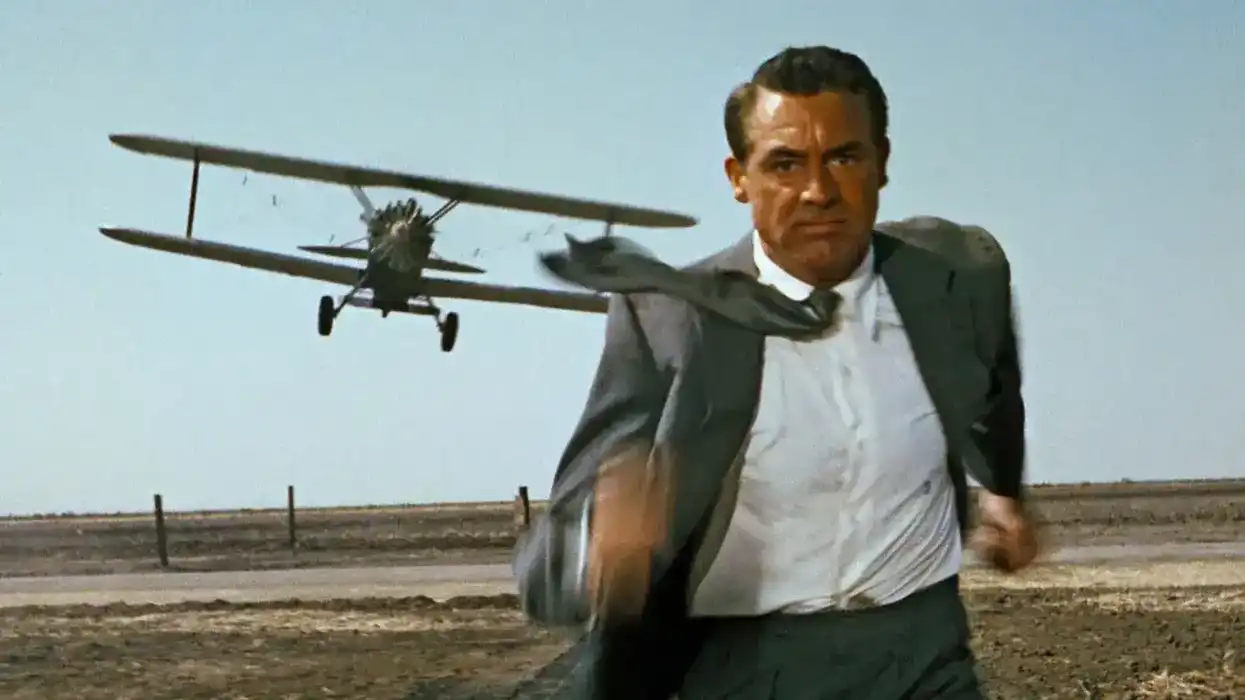
'North by Northwest' (1959)
Alfred Hitchcock was rightfully considered the master of suspense. But how did he maintain this reputation across decades, so much so that, to this day, few have done it better than him?
Well, by revolutionizing the very idea of cinematic suspense through pathbreaking audience manipulation techniques and by building unbearable tension through novel and exciting ways. Hitchcock never “repeated his tricks.” With every film and every scene that demanded a suspenseful outcome, he did something that had never been done before.
In his 1959 classic North by Northwest, Alfred Hitchcock delivered one of cinema’s most iconic sequences: the crop duster attack. In this unforgettable, dialogue-free scene, he transformed a vast, endless, seemingly “safe” field into a landscape of inescapable terror.
Let’s jump right in and explore what makes this sequence so special.
Context Of The Scene
In North by Northwest, Roger Thornhill, an advertising executive played by Cary Grant, is mistakenly identified as government agent George Kaplan by foreign spies. The crop duster sequence takes place about midway through the movie.
Roger, ensnared in a web of espionage, finds himself on a dusty highway. Large, endless fields occupy both sides of the road. After a bus departs, a deep sense of isolation creeps in. Roger appears stranded. Hitchcock masterfully brings our attention to ambient sounds, only elevating Roger’s sense of isolation.
A crop duster can be seen taking a rather intriguing turn on the horizon. Hitchcock cuts between Cary Grant’s increasingly troubled expression and the approaching duster plane. The absence of dramatic music makes the threat feel more immediate and real. The crop duster plane, potentially an instrument of assassination, deliberately follows Roger with the intention of smashing into him.
Roger has no place to hide. Within seconds, a seemingly “safe” and open field becomes a death trap, proving yet again how few directors could match up to Hitchcock’s expertise in creating tension, building suspense, and subverting audience expectations.
How Hitchcock Creates Suspense In Broad Daylight
Audiences often associate suspense with darkness, confined spaces, or other cinematic moments that are set up to be tense and thrilling. Most importantly, their idea of a safe space is precisely what Hitchcock uses against them.
As soon as the bus departs in this scene, the audience is expectedly relaxed. Hitchcock leaves no breadcrumbs to make us anticipate danger. The road is open, the field is clear. The audience assesses the situation and knows one thing for sure - there is absolutely no danger. Except the danger actually comes from a place you’d least expect: the sky.
Since this sequence doesn’t take place at the end of the movie, we don’t expect something as outlandish as a plane attack. This is another reason why Hitchcock masterfully subverts our expectations. With the high-key light of the day, a threat approaches from the sky, leaving Roger in an unexpected dilemma. Who has ever had to dodge a duster plane in their life? If one of them chases you down, what are you even supposed to do? Neither the audience nor the protagonist has an answer to this question. This only amplifies the suspense.
Let’s take an example of a chase sequence in a movie that takes place late at night. You’d expect the one being chased to find plenty of places to hide. Maybe behind a wall or even under a car. Well, it turns out, these options aren’t available to a man being chased by a duster plane in broad daylight, in an open field with literally no place to cover.
What makes this scene even more special to me personally is how Hitchcock chooses to end it. The plane doesn’t just disappear into the horizon. It crashes into a large vehicle, confirming its intention of chasing Roger down to kill him.
Alfred Hitchcock shocked moviegoers by creating one of the most suspenseful sequences in film history in broad daylight, where his protagonist had all the places in the world to run, but nowhere to hide. Great filmmakers don’t rely on familiar techniques to create suspense. They invent new ones.
What The Scene Teaches Us About Cinematic Fear
The crop duster scene demonstrates how potent cinematic fear stems from moments of primal vulnerability, subverted expectations, and the ordinary made extraordinary. Alfred Hitchcock places the crop duster sequence at a point in the film where we least expect it. Not only is Roger vulnerable to attack, but we, as an audience, are also vulnerable.
Cinematic fear will always grow significantly within the context of a scene if the audience is unprepared for any threat whatsoever. When we first see the plane making a dramatic turn, we don’t expect much. But through absolute silence and cuts between Grant’s face and the approaching plane, Hitchcock masterfully escalates the tension, with not much time left for us to process solutions.
One of the biggest reasons this scene creates organic fear is that the very concept of a duster plane chasing someone is outlandish to begin with. To add to that, Hitchcock wastes no time in establishing the scene or the context. We are directly thrown into a situation we never considered possible or likely.
Hitchcock strips away conventional terror norms to create a new brand of cinematic fear, which is crafted from anticipation, isolation, and unpredictability. It is truly one of the finest sequences in the history of film.
Final Thoughts
With the crop duster sequence in North by Northwest, Alfred Hitchcock redefined suspense by subverting audience expectations and creating impeccable cinematic tension in broad daylight. His quiet confidence as a filmmaker can be seen with every frame of this sequence that does not rely on darkness or thumping music but on pure visual storytelling techniques.
Which is your favorite Alfred Hitchcock movie? Tell us in the comments below.
- Was 'North by Northwest' the Original James Bond Movie? ›
- 9 Classic Noir Horror Films That Invented Psychological Terror | No Film School ›
- How Are Classic Films Restored to Their Former Glory? | No Film School ›
- What Are the Five Key Elements to Classic Hollywood Storytelling? | No Film School ›
- Film Quote of the Day: The Eva Marie Saint Line That Made 'North by Northwest' Impossible to Forget | No Film School ›