Your Big Break Might Be on YouTube and Not In An Agency Mailroom
Hollywood has completely changed over the last few years, and most are not keeping up.
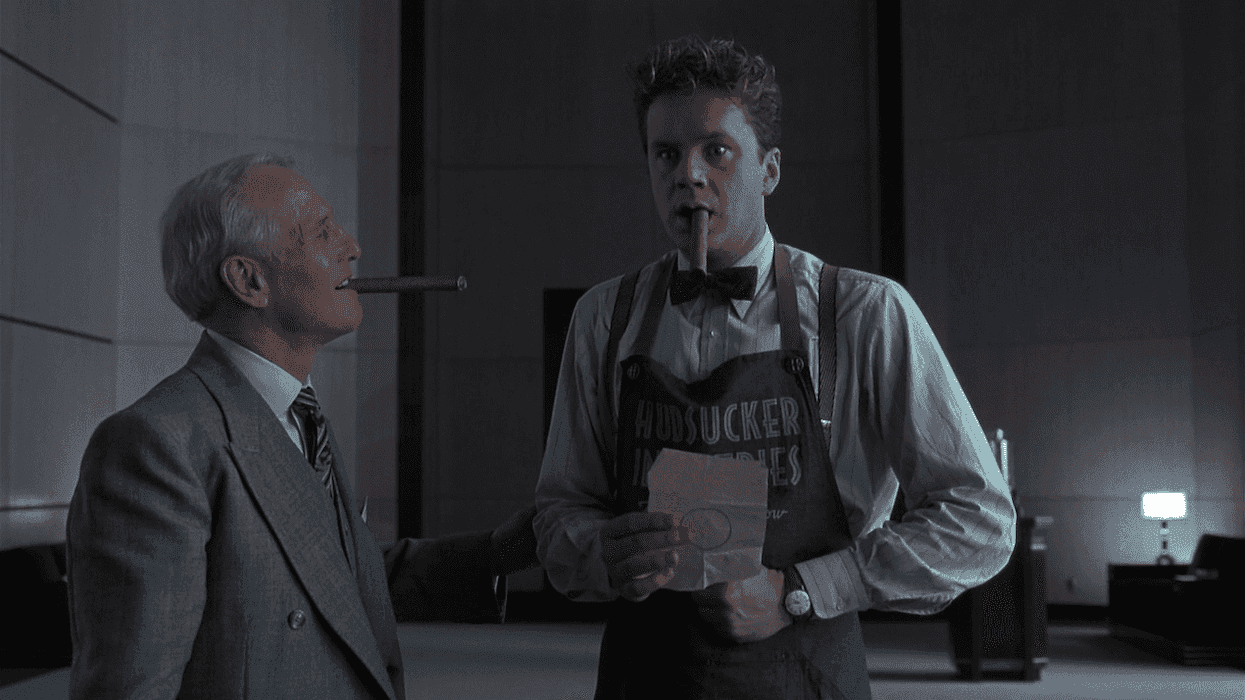
'The Hudsucker Proxy'
I broke into Hollywood almost fifteen years ago. I started as an intern, worked my way up to being an assistant, and then was able to make connections, sell a script, and become a writer.
For years, I gave people advice based on my story, but I am beginning to realize that the way I did it is no longer the way. Sure, it can happen, but the new mailroom is not at an agency or working for a producer...and it may not even be in Hollywood.
I recently read this amazing blog by Mitch Camarda, who argues in a recent deep dive for Open Gardens, that the ladder is being replaced by something much more dynamic, digital, and decentralized.
The new Hollywood mailroom isn’t a physical room at all—it’s the Creator Economy.
Let's dive in.
The Death of the Traditional Gatekeeper
Like I said at the top, what used to happen was that you got a job in the mailroom and worked your way up. It was the only way to get close enough to the decision-makers to learn how the "business" actually worked. I know I learned more in my 3 months as an intern than I did in all of film school.
Today, however, the gatekeepers have lost their monopoly on attention.
The industry is undergoing massive consolidation. There are fewer mailrooms and fewer jobs to be able to move up into.
Meanwhile, creators like MrBeast are building media empires with more reach and higher engagement than most cable networks.
They have entry-level jobs working for them, and you don't have to live in Los Angeles, which is a barrier to entry for many people.
Why MrBeast is the New Talent Pipeline
I'm using Beast as kind of a stand-in for all content creators, but the point is, these are people creating a ton of companies and jobs...while they disappear in Hollywood.
The article I read posits that working for a major creator is the modern equivalent of the agency mailroom, but with a much higher ROI for your skills.
And I agree. It comes with a ton of clout and translates into moving up where jobs are actually happening.
And these are real jobs, too, not delivering mail.
In a traditional mailroom, you might not touch a script or a budget for years. In a creator’s "studio," a 22-year-old might be responsible for production design, data-driven editing, or managing a multi-million dollar thumbnail strategy from day one.
I am jealous, because this is a world where I have no experience, and if it's the future, I don't know if I can hang.
Learning how to capture and hold attention in a fragmented digital landscape is a more valuable skill set in 2025 than knowing how to format a physical call sheet.
What This Means for People Breaking In
If you’re an aspiring filmmaker, writer, or producer, the message is clear: Stop waiting for a desk job in Beverly Hills. And maybe, don't even come to Hollywood.
- Seek out the "New Studios": Look for roles within creator-led companies, gaming houses, or digital-first production startups.
- Build Your Own "Mailroom": Start your own channel or collaborate with others to prove you can build an audience from scratch.
- Be a Hybrid: The future belongs to those who can bridge the gap—who have the storytelling soul of a filmmaker but the data-driven mindset of a YouTuber.
Summing It All Up
The idea of a job in entertainment is broader than ever. And has left the Hollywood-centric thinking of the last 100 years, and gone worldwide. If you want to break in, all you need is a camera phone. And when you're sending out resumes, there are probably thousands of influencers who you could work for, if you wanted.
This is the start of something new, and we'll try to keep track of it.
Let me know what you think in the comments.