5 Iconic Movie Scenes Where the Lead Character Said Nothing (But We Heard Everything)
These moments proved the power of cinematic presence.
'Drive' (2011)
Some of the greatest moments in film history relied purely on their filmmaking fundamentals and visual storytelling to such an extent that even without any dialogue, a lead character conveyed everything they intended.
No monologues. No long speeches. Not even an understated verbal response. Just pure action.
It is precisely this verbal silence that brings attention to the very essence of an actor’s performance and a filmmaker’s craft. These moments never felt like they needed dialogue, and in fact, proved the power of cinematic presence over the need to put emotions and thoughts into words.
In these iconic scenes, the camera lingered, and the actors performed, yet the emotional weight of the scene felt unmistakably present.
Let’s take a look at five incredible scenes in which the lead character remained absolutely silent but conveyed everything they had to.
5 Exceptional Scenes Where The Lead Character Remained Silent
Here are five unforgettable movie scenes in which the lead character did not say a word.
1. ‘The Door’ - The Godfather (1972)
Directed by Francis Ford Coppola
In a film that is brimming with effortless symbolism, one of the most memorable scenes from Coppola’s epic is actually the movie’s ending. Michael Corleone, played by Al Pacino, stands in the doorway of his study as Kay, played by Diane Keaton, tries to confront him. Michael’s character arc sees him go from being reluctant about his family affairs to taking charge of the whole empire. The ending of the film serves as an iconic bookend to both his character and his relationship with his wife, who witnessed his transformation as clearly as one possibly could. Michael is no longer the person she fully knows and understands. He is now burdened with the Corleone family’s business affairs, and the door is a colossal, symbolic, and metaphorical reminder of the “distance” between them. Words were not needed in this scene. Coppola preferred to let his exceptional actors work their way through pure silences. Dialogue in this scene was never likely to achieve what silence did so effortlessly. What’s most important here is Coppola’s making room for the audience to bring their own understanding of Michael and Kay’s equation into what is essentially the ending of a crime film. He did not wish to burden the closing scene of his epic with words, and there’s a lesson in that.
2. ‘Freedom’ - The Shawshank Redemption (1994)
Directed by Frank Darabont
After years of quiet planning, the most admirable level of patience, Tim Robbins’s Andy Dufresne escapes from prison. While the audience breathes a sigh of relief, Darabont leverages the power of silence to depict the true nature of Dufresne’s freedom. The entire sequence of Andy’s escape, which in a parallel universe could have used words to express his nearly insurmountable difficulties, remains silent. Red, played by Morgan Freeman, later narrates Dufresne’s journey. However, during the escape itself, Andy does not interact with anybody or say a single word to himself. Few are likely to forget Dufresne’s triumphant moment in the rain. No words. Pure elation.
3. ‘Secret Goodbye’ - Lost In Translation (2003)
Directed by Sofia Coppola
The secret goodbye at the end of Sofia Coppola’s charmingly tender film about isolation and longing is perhaps one of the most debated cinematic endings of the mid-2000s. Bob, played by Bill Murray, spots Scarlett Johansson’s Charlotte in a crowded street, hugs her, and whispers something into her ear. Coppola intentionally keeps these words inaudible to the audience and open to interpretation. What must have felt like a truly brave decision while making the movie has become one of the most iconic endings in film history.
4. ‘Kiss Before Violence’ - Drive (2011)
Directed by Nicolas Winding Refn
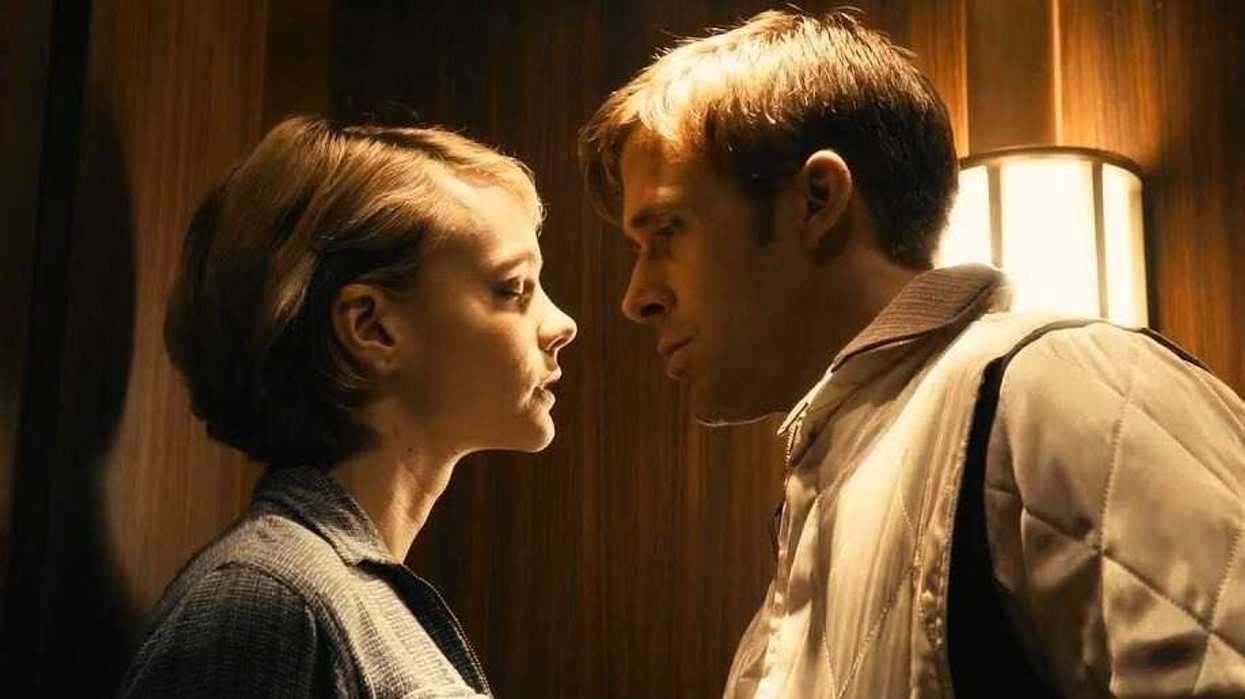
Nicolas Winding Refn is one of those modern-day filmmakers who thrives on silent moments. His films are popular for long moments devoid of any dialogue. The elevator scene in Drive, featuring Ryan Gosling as The Driver and Carey Mulligan as Irene, is a stellar example of Winding Refn’s ability to transform stillness into well-crafted movie violence. In the scene, The Driver kisses Irene in a soft, intimate manner and then, in an instant, he turns to the assassin lurking behind them and unleashes fierce violence. The kiss serves as a silent goodbye to the possibility of normalcy before embracing the savagery with part reluctance and part intent.
5. ‘Oil Digging’ - There Will Be Blood (2007)
Directed by Paul Thomas Anderson
Few directors would dare to open a movie with a long, uninterrupted silent moment, but if you had to take a bet on who might be a likely candidate to do so, Paul Thomas Anderson would be high up on that list. In the opening of There Will Be Blood, Anderson throws us deep into his oil-driven cinematic world with a keen sense of immediacy. Without saying a single word, Daniel Day-Lewis’s Daniel Plainview is alone in a desolate mine, hammering away in total silence. The raw, primal nature of Plainview’s line of work, as seen clearly in this sequence, creates a foundation for his hunger and obsession with success, far more than dialogue could.
Summing It Up
These moments prove, without a single word, how movie silences can be a powerful tool in revealing character and deeper layers of a story. While dialogue can also bring depth to a movie, when characters go entirely silent, the movie allows us to peek into their minds to understand who they really are and what drives them.
Which is your favorite silent moment in film history? Tell us in the comments below.