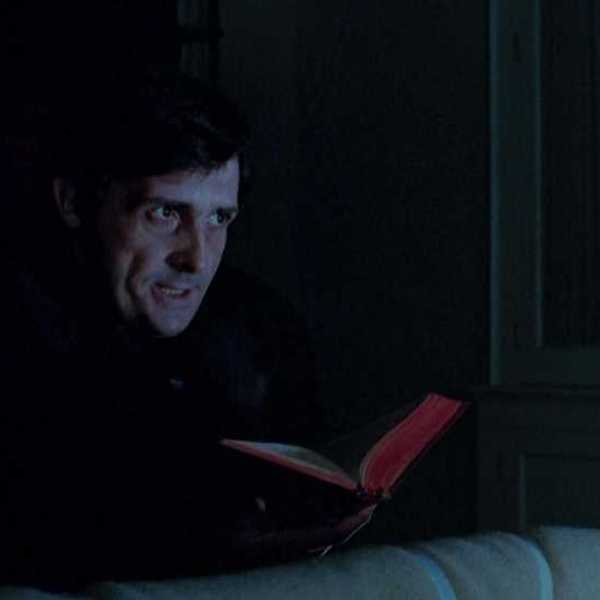
Silent Protagonists Explained: Why Some Heroes Barely Speak
They said so much by saying nothing.
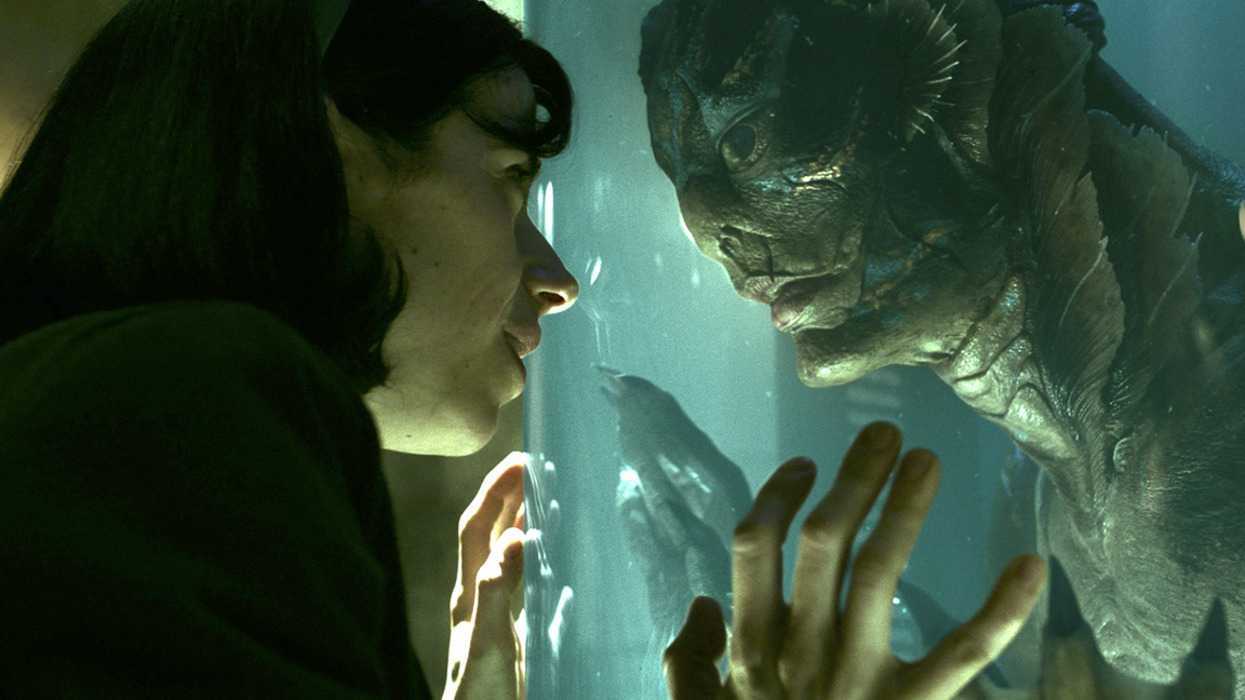
The Shape of Water (2017)
Silence is the most universal language.
Think about the last time a character put you through a rollercoaster of emotions without uttering a single word. You may have smiled, felt a little emotional, or simply appreciated how they made you feel.
Just like in regular life, silence is a powerful tool in cinema. And silent protagonists are profound cinematic choices filmmakers make to enhance their storytelling and deliver their messaging in a very specific way. They let audiences think and feel for themselves instead of being told everything through dialogue.
Before we jump into a list of memorable silent protagonists in cinema, let’s try and understand what silent protagonists are and why filmmakers continue to use them.
What Is A Silent Protagonist?
In the strictest sense, a silent protagonist is a lead character in a film who does not speak a single word throughout the runtime of the movie. They could be muted by choice, disability, or storytelling design.
Still considered a bold cinematic choice, silent protagonists often create a deep emotional connection with the audience. The lack of dialogue, which tends to involve audiences on another level, brings a tremendous amount of focus to these characters and their situations.
Interestingly, there is a long list of films that have “almost silent” protagonists. But I have specifically chosen silent protagonists in the purest sense, as I thought they would make for a more exciting list.
Let’s explore 5 incredible silent protagonists in cinema.
What Makes Silent Protagonists Powerful Storytellers?
Silent protagonists let us, the audience, fill in gaps left by their words, with our own thoughts and feelings. When a character does not speak, every facial expression, every glance, every blink, every movement, holds more weight and meaning.
The lack of dialogue immediately adds mystery and intrigue to a character and to the film. It is typical of movie characters to express how they feel, explain what pains them, and build a case for themselves. But silent protagonists explain nothing. They allow you, or rather, force you to feel what they feel. Since different people feel things differently, this allows for a more personal and intimate connection with movie characters.
Silent protagonists remind us that some things are too powerful to be reduced to mere words. They bring us into the story and make the story partly our own.
Now, let's take a look at five iconic silent protagonists in movies.
5 Iconic Silent Protagonists In Movies
Here is a list of 5 iconic movie characters who chose silence over dialogue and… Delivered.
1. The Shape of Water (2017)
In this Guillermo del Toro film, Elisa Esposito is played effortlessly by Sally Hawkins. Elisa is a mute cleaning lady in a 1960s secret government research facility who falls in love with a captured amphibious creature.
Throughout the film, she doesn’t utter a single spoken word. Her entire performance relies on her facial expressions, sign language, and other physical gestures. Her unfaltering performance, guided by her silence, deepens our understanding of her complicated romantic relationship with the creature. With her silence, she makes her loneliness more visible, relatable, and universal. Since she does not speak, we never get a toned-down, simplified, verbal explanation of her plight or her love for the creature. We are invited to live with her and the monster, in their shared solitude.
For a film that in itself is so bafflingly original, The Shape of Water is oddly relatable. Hawkins plays Elisa with such finesse and expertise that even her Oscar nomination underscored her work in the film.
My favorite moment in the film is her “I love you” moment, conveyed, of course, in pure, unadulterated silence. Every authoritative figure in the film, the Scientists, bureaucrats, and Strickland in particular, continuously speaks. This brings heightened attention, power, and sheer importance to Elisa and her romantic connection with the creature.
Elisa’s quiet daily routine feels poignantly poetic and touching. With every expression, Sally Hawkins carries the weight of a full dialogue with immense confidence, making her portrayal of Elisa one of the finest silent protagonist performances in recent memory.
2. Valhalla Rising (2009)
Directed by Nicolas Winding Refn, who has a penchant for silent and almost silent protagonists, Valhalla Rising is an obscure film about a one-eyed mute slave warrior. Played by Mads Mikkelsen, One-Eye escapes his captors to join a band of Christian crusaders on a devastating journey to the Holy Land.
One-Eye is mute throughout the film. He communicates through daunting, fierce stares and violent action. By making him a silent protagonist, Refn brings out a tormenting mythical element to One-Eye’s character. Because he does not speak, every action becomes a further discovery for us, the audience, about his character. We keep hunting for meaning, and he gives it to us, on his own silent terms. His mutedness elevates the inherent terror of the film.
By increasing our focus on the visual aspects of the film and the use of sound, Refn cleverly avoids the use of monologues or heavy-handed dialogue that are common in action films. The absence of dialogue makes the brutality more haunting. It makes One-Eye more frightening and unpredictable. By not reducing his ambitions to cliché lines, One-Eye solidifies his purpose with his actions and his silence.
Just like in many other films by Nicolas Winding Refn, Valhalla Rising is mysterious, ambiguous, and brutal. We don’t learn about his past or where he came from. We know what he wants and follow him through Mikkelsen’s towering performance.
3. WALL-E (2008)
In Andrew Stanton’s 2008 film that won hearts worldwide, seven hundred years in the future, a waste-cleaning robot falls in love with a sleek probe named EVE.
WALL-E does not speak throughout the film, which was an interesting and bold choice for an animated movie, at least at the time. He expresses himself and his loneliness through beeps, body language, and expressive eyes. In the first 30 minutes of the film, specifically, there is no spoken language at all, just WALL-E’s sounds.
His silence makes seven hundred years of loneliness feel real, relatable, and poignant. A talkative robot in an animated film could have explained his isolation to us in simplistic terms. But WALL-E’s silence deepens our connection with him, and makes us feel for him much more than words would. The romantic angle of the film also benefits from WALL-E’s silence. Instead of sweet-sounding words, WALL-E plays music and tries to hold EVE’s hand.
This is a powerful expression of his innocent intentions and helps us empathize with him. Defying genre expectations, WALL-E does not narrate his emotions; he makes us feel for him, understand him, and root for him, without a single uttered word.
With this film, Pixar proved that silent protagonists could work even in animated movies. They also showed that audiences, young and old, would emotionally connect with characters devoid of words.
4. The Artist (2011)
This 2011 (mostly) silent film by Michel Hazanavicius is set in 1920s Hollywood. In the film, George Valentin (Jean Dujardin) plays a celebrated movie star who refuses to accept the arrival of talking pictures. George accidentally bumps into a young dancer, Peppy Miller, and helps her get a part in a studio production. As years roll by, their fortunes change.
The decision to make George Valentin a silent protagonist seems to be backed by deep meaning. His opinion of sound in movies being a fad, his reluctance to accept technological advances, and his adoration for classic cinema as he knows it, justify the use of only silence and music in the film.
The power of George’s silence lies in the fact that we never quite understand his rationale for his stubbornness. We only get to see the impact of it, which builds intrigue and makes the film more dramatic. The contrast between his successful and unsuccessful eras is exaggerated by his silence. We don’t get to hear him moan; we see his downfall and feel it ourselves. Again, the romantic aspect of the film, George’s connection with Peppy, feels like a throwback to the silent era due to its wordlessness. But also, it makes the era feel more relatable. Something a dialogue-heavy film about talking pictures vs silent pictures would not be able to convey with the same effectiveness.
In many ways, George’s wordlessness is a tribute to the silent era of cinema and to the actors who performed purely based on their expressions, charm, and dance moves. I consider this film’s opinion of dialogue to have symbolic relevance today, as digital technology, on a general level at least, has ousted celluloid and other analogue filmmaking techniques.
5. Sympathy for Mr. Vengeance (2002)
Park Chan-wook achieved auteuristic status with Oldboy, and the films that followed only gave impetus to that statement. However, this 2002 film preceded Oldboy and is considered to be the first part of his ‘Vengeance Trilogy’, which ended with Lady Vengeance.
In this 2002 film, Ryu, a deaf-mute young man, kidnaps a rich man’s daughter to pay for his sister’s kidney transplant. As expected, this sets off a brutal chain of events with the primary, recurring theme of vengeance.
Ryu is a silent protagonist. He communicates only through sign language and written notes. His disability as a kidnapper adds a quirk to a plot that is thrilling, fast-paced, and brutal. His quiet desperation is loud only through his actions and facial expressions. The absence of dialogue forces the audience to see things from his perspective and to feel the weight of his pain.
The world shouts at Ryu. They mock him, order him around. And he isn’t able to answer them. This heightens the tension, gives an impetus to his eventual aspirations, and forces us to empathize with him. Without the use of words, his desperation feels raw and unstoppable.
We can feel the fragility of his character, and his eventual turn towards vengeance feels more intimate and personal, as though we have been there, right beside him, and witnessed his plight.
Summing It Up
Silent protagonists are a reminder that cinema is inherently a visual medium. When words are taken away, every expression, every breath, every blink gets a heightened sense of focus. We get into the character’s body, feel what they feel, think what they think. Films become more intimate, often more haunting and alluring.
Have you written silent protagonists in your stories? If not, would you?
Let us know in the comments!