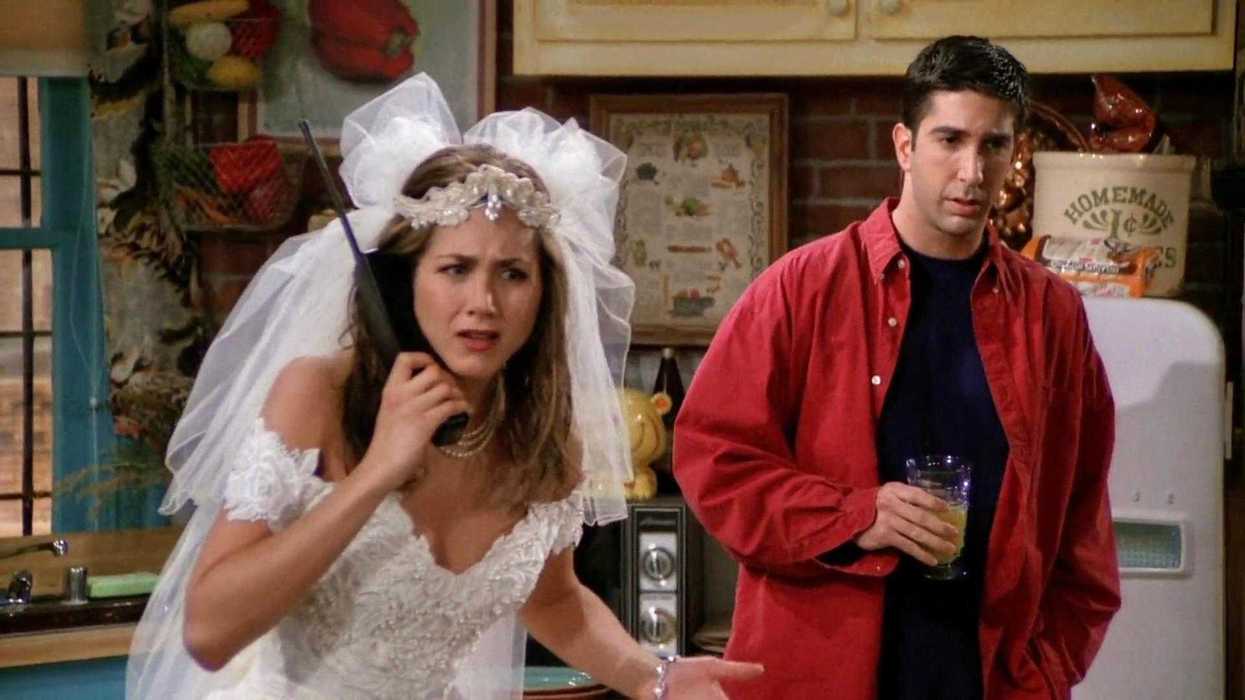
We're pretty far removed from the pilot of Friends, the New York-based sitcom that follows a group of hot young professionals all living in and around the same building and getting into various hijinks. The show is over 30 years old at this point.
Even so, Friends just topped a fan-voted list of the greatest sitcoms ever made, edging out millennial workplace cringe-fest The Office by more than 17,000 votes.
Per a Ranker crowdsourced tally, the NBC hangout comedy pulled 55,052 votes to Dunder Mifflin's 37,506, as FandomWire reported.
Okay, we get this is all opinion. We're not here to relitigate whether the crowd got it right. The more useful question for writers and aspiring showrunners is why a 1994 multicam is still ahead of the single-cam mockumentary that supposedly made shows like Friends feel obsolete. Here's what we can learn.
- YouTube www.youtube.com
Two Shows, Two Formats
First, let's acknowledge the differences. Friends is a multi-camera sitcom shot on a proscenium set in front of a live audience. It's about chosen family. These six 20-somethings all have their own hopes and dreams and loves but orbit the same coffee shop and apartment building.
Meanwhile, The Office is a single-camera mockumentary shot in a documentary style, with characters constantly breaking the fourth wall, complete with talking-head confessionals and a fictional film crew you're never supposed to forget is part of the storytelling. The premise is the workplace. Characters are often in love-hate relationships, with dynamics people can relate to.
Both are ensemble comedies. That's about where the similarities end. If you're not clear on how the mechanics of multicam differ from single-cam, we've broken it down before. The two formats are doing different jobs, and each comes with a distinct set of tools and limits.
Which Premise Can Go Bigger?
In short, the hangout premise of Friends can get broader. The workplace setting of The Office just... can't.
The Office is pretty bound by its setting as a workplace comedy. The show is Dunder Mifflin. Whenever the writers pulled characters out of it, for example when Michael Scott went to Colorado, the documentary crew was revealed in Season 9, and a lot of the post-Steve Carell run, the show started to fall apart slightly. The premise didn't travel well.
Friends can move outside Central Perk and even New York City. Its premise is the people, not the location. That's why we're able to see their dates, their workplaces, a wedding in London, babies, and an eventual move to the suburbs. The show relied on the relationships.
If you're pitching a hangout comedy show and want to think about reaching that coveted 100th episode, consider tying the premise to the characters, not a specific location. Our longer piece on writing sitcoms has more advice for you.
- YouTube www.youtube.com
Using a Live Audience
I'll grant that multicams do have a slightly dated feel in many cases since many modern popular shows have gone single-cam. And the format gets dismissed because of its canned laughter feel. But the live studio audience can be beneficial for more than just its noise. It's like a real-time punch-up room.
If your joke dies in front of 300 people? Yikes. If you have the showrunner there, you can use the in-the-moment feedback to rewrite the punchline. Friends was famously rewritten on the floor during rehearsals and tapings, and the actors could improvise, week after week, for 10 seasons. The audience was like a spare writer.
Obviously, mockumentary can't do that. What The Office has instead is interiority. Those talking heads could never work in a live setting unless you're using stagecraft like live theater. Multicam has gags and theatrical rhythm.
If you want to learn structure, check out our guide to sitcom beats.
Six Leads or No Lead?
The Office is Michael Scott's show until it's... well, no one's show. The drop-off after Carell left in Season 7 could be used as a modern television case study. The show was built around the single fool archetype (a role we've written about at length), and when he was gone, the show suddenly had to try to prove it could survive without him. It only lasted two more seasons.
Meanwhile, Friends was a six-hander. Everyone got equal weight, and roughly equal screentime throughout the series run. Characters got thrown together in interesting ways, including romantically. You could have different pairings in any given episode (Chandler and Joey, Ross and Rachel, Monica and Phoebe, etc.) without the show flopping.
Our very own Jason Hellerman talked about the various characters in his piece on the Friends pilot script.
 'The Office' Credit: NBC
Comfort Can Be a Craft Choice
Sometimes, people are just looking for a cozy watch. (Just look at the cozy horror trend.) And the Ranker result is really about comfort-rewatching. Both shows are in syndication already and in heavy streaming rotation, so no one really loses. But Friends is one people put on to feel seasons (much like Gilmore Girls in the fall), to fall asleep to, to cook to, sometimes for the twelfth time.
What makes it cozy? It's less "cringe" than The Office, which loves to make its characters uncomfortable, and you could probably think of several moments in the show that feel dated in a different way—as in, looking back, some of the jokes don't really hold up and wouldn't really fly today despite being closer to the present day. Like, sometimes characters are just straight-up sexually harassing each other or being overtly racist.
The show's cringe is load-bearing, and for some people, that discomfort isn't something they want to revisit.
That's not to say Friends doesn't have its own issues, but it benefits from not actually trying to make characters or audiences actively uncomfortable. It has low-stakes A/B/C structure, easy resolutions within the runtime, and a warm '90s color palette.
If you're writing a hangout comedy, are you wanting to be quotable/memeable, or rewatchable for comfort? Both are great goals, but the ensemble mechanics will be different.
Both of these are critically acclaimed shows, and a fan poll isn't proof of quality. It is, however, proof of what the majority of viewers will want to turn on after a long day. And that can be useful if you're trying to come up with your own series ideas.