“I’m the Guy You Buy”: The Line That Burned Hollywood
Unpacking the loaded line that turned Michael Clayton from a solid thriller into a biting critique of power, corruption, and moral compromise.
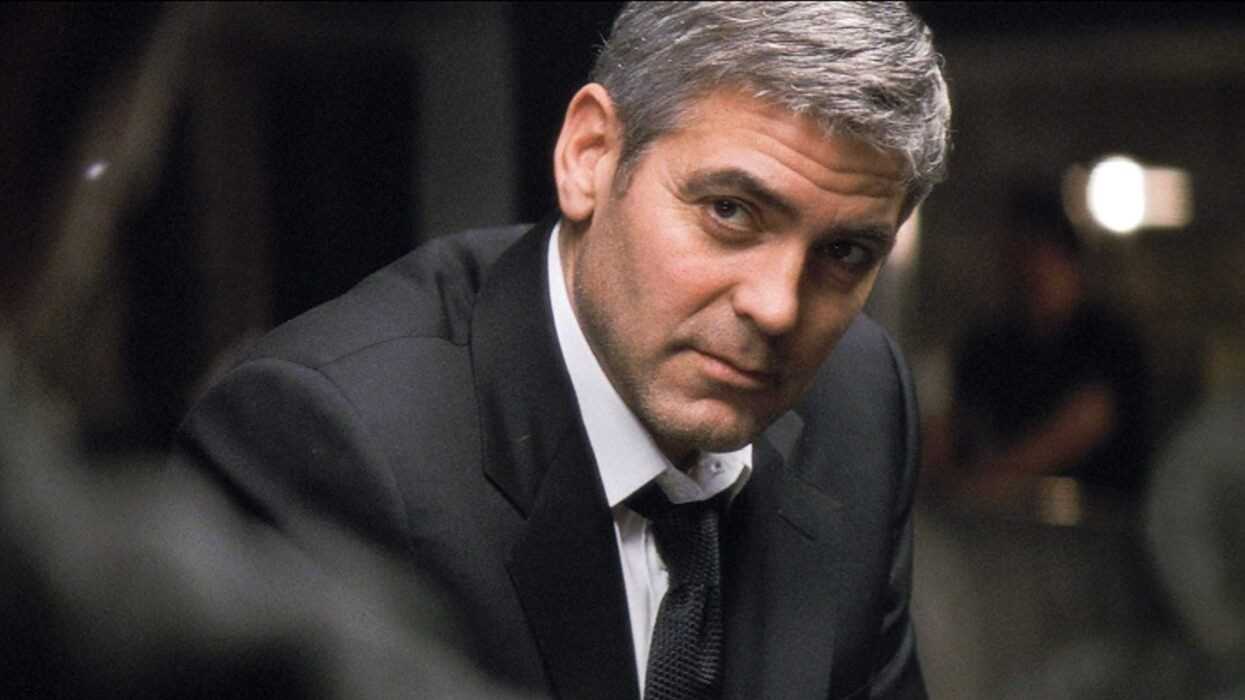
Michael Clayton (2007)
There’s something deeply unsettling about watching someone calmly admit their own corruption. No yelling, no dramatics—just a quiet surrender wrapped in confidence.
And this exact sentiment makes Michael Clayton (2007) hit differently. In a genre where monologues often do the heavy lifting, this film delivers its gut punch in a few words:
“I’m not the guy you kill. I’m the guy you buy.”
A straight-out thesis, not a confession.
Directed by Tony Gilroy, Michael Clayton was never trying to be loud. It didn’t need to be. Released during the late-2000s wave of corporate thrillers, the film earned critical acclaim for its tightly coiled script, atmospheric direction, and stellar performances—especially from George Clooney, Tilda Swinton, and Tom Wilkinson.
However, what truly carved its place in pop culture wasn’t a courtroom speech or a final act twist—it was a single line, delivered with surgical precision.
This article unpacks why this line works. We’re talking full context—where it shows up, what it means, how it was written, and why it stuck.
Because sometimes, one sentence doesn’t just summarize a character—it sums up the entire system they’re trapped in.
The Scene: Breaking Down the Moment
The line lands in the film’s third act, when Michael Clayton (George Clooney), corporate “fixer” and human Band-Aid, corners Karen Crowder (Tilda Swinton) in the lobby of her company’s skyscraper. She thinks she’s outwitted him. She thinks she’s bought him off. And for a second, so do we. Until he says it.
This isn’t a scene built on theatrics. There’s no big music cue or camera trick. It’s just two people in an empty lobby—one spiraling, the other finally in control. Karen’s all nerves and panic. Clayton’s got the calm of someone who’s already made peace with the cost of his conscience. The way Clooney delivers the line—flat, steady, unblinking—makes it more devastating than if he’d shouted it. It’s quiet violence.
From that moment, the power dynamic flips. The line functions like a trapdoor beneath Karen’s feet. This climactic moment of the scene pivots the whole film. The fixer stops fixing. The lawyer stops lawyering. And the mask finally drops.
- YouTube www.youtube.com
The Meaning: What “I’m the Guy You Buy” Really Says
On the surface, the line sounds transactional—Clayton admitting he’s a man for hire. But underneath, it’s scorched-earth honesty. This is Clayton naming his role in a morally bankrupt system that thrives on silence and complicity. He’s not proud of it, but he is fluent in it.
He is the kinda fixer they send when everything else fails. The guy who cleans up messes that should never exist in the first place. So when he says, “I’m the guy you buy,” it’s both an indictment of himself and the people who created him. It’s a mirror turned on the powerful. He’s telling Karen: You think you’re unique? You’re just one more buyer in a long line.
It also reveals the rage bubbling under Clayton’s cool exterior. This is the moment he stops toeing the company line. This is not resignation. This is an out-and-out confrontation. It’s him reclaiming his agency in a system that’s spent decades commodifying his loyalty.
The Screenwriting Genius: How Tony Gilroy Crafted Perfection
What primarily works for this line—as it does for all great ones—is that Tony Gilroy didn’t overwrite it. He didn’t dress it up or weigh it down. That’s why it works. Its power lies in what’s not said. “I’m the guy you buy” leaves space for subtext to do the talking. It tells you everything about the character, the company, and the world they operate in—without a single wasted word.
In interviews, Gilroy has never suggested there were alternate versions of the line. And it makes sense. This isn’t a sentence you workshop. It’s a line that feels inevitable, like it wrote itself through the character. It’s also a culmination—it wouldn’t have hit as hard without the ninety minutes of tension, corruption, and quiet compromises leading up to it.
What’s brilliant is how the line doesn’t only resolve the scene, but also underlines the film’s central question: What’s the cost of staying silent in a system that buys everything and everyone? That’s screenwriting that respects the audience. It trusts us to catch the weight behind the words.
The Production: How the Line Came to Life
George Clooney has said in an interview with Time that, despite being a first-time director, Gilroy knew exactly what he wanted. That kind of precision and clear vision can put pressure on an actor. Aside from this, Michael Clayton must have been tough to shoot, not because of physical demands, but because of the emotional control the role required. The “I’m the guy you buy” scene had to be played at exactly the right temperature. Too angry, and it’d feel like a rant. Too soft, and it’d slip past unnoticed.
Tony Gilroy, directing his own screenplay for the first time, was reportedly hyper-focused on tone—which, in his words, was to be uncomfortable—and he achieved that by skipping rehearsals.
“This was a movie about people that are uncomfortable with one another and in exile with one another,” he stated. Rehearsals give actors a sense of comfort, which was not only not needed but was detrimental to Gilroy’s creative vision. This is why we can see that throbbing sense of discomfort between the characters, in this matter, between Michael (Clooney) and Karen (Swinton).
As for Tilda Swinton, she played the role with visible unraveling. Her reaction isn’t loud—it’s internal. You can see her calculating, realizing, panicking.
The Legacy: Why This Line Endures
Years later, the quote still shows up in thinkpieces, film essays, and political commentary. It’s been referenced in articles about everything from corporate lobbying to crisis PR. Because the line, aside from being good writing, is terrifyingly accurate. It's how the world often works behind the curtain.
Michael Clayton wasn’t a box office juggernaut, but it’s become a slow-burning classic. Critics have revisited the film over the years, praising its surgical takedown of corporate rot and moral ambiguity.
And this line? It’s become the shorthand for the film’s entire worldview. You don’t need to explain the plot. Just quote the line, and the tone is set.
It also resonates in real-world stories—think whistleblowers, PR disasters, and financial cover-ups. In every headline about someone “taking the fall” for the system, the quote echoes quietly in the background. And that’s because the film never pretended this was fiction. It just dramatized what’s already happening.
Conclusion
Michael Clayton remains one of the most quietly devastating films about power, loyalty, and the blurry line between legal and criminal. And “I’m the guy you buy” is its moral reckoning. It’s the moment the mask slips and the man underneath finally speaks.
In six words, Tony Gilroy captured the soul of a character, the rot of a system, and the moment a man decides he’s done playing along. That’s the kind of writing that gets under your skin and stays there.