The Story Behind James Cagney’s Staircase Dance: The 5-Minute Ad-Lib That Made Hollywood History
Cagney fused spontaneous rhythm with effortless charm.
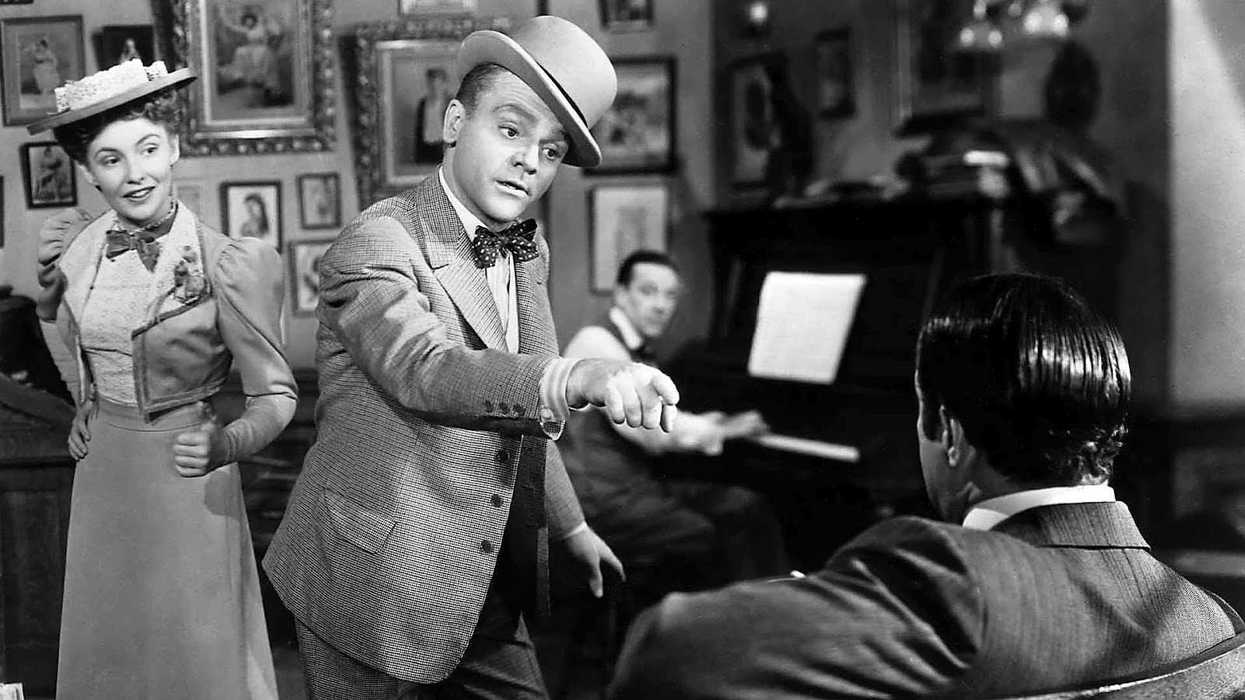
'Yankee Doodle Dandy' (1942)
Few performers could ever move like James Cagney. Watching him, it never felt like he followed any choreographed moves. He simply glided across the screen with swagger, precision, and effortless charm.
In Yankee Doodle Dandy (1942), his awe-inspiring on-screen presence is perfectly crystallized by one unforgettable moment: a spontaneous tap dance down a flight of stairs. Cagney’s movement appears purely instinctive, timed to absolute perfection.
Even though the sequence lasts only for a few seconds, it captures everything audiences loved about classic Hollywood: the grace, the poise, the showmanship, and most importantly, the magic that one can’t quite explain.
What makes this tap dance iconic? What can modern musicals learn from this?
Let’s jump right in and explore.
Why The Moment Feels Effortless
In Yankee Doodle Dandy (1942), directed by Michael Curtiz, James Cagney plays showman George M. Cohan. The film traces his rise from a vaudeville kid to one of America’s most beloved song-and-dance men. It is a showbiz biopic and a love letter to the art of performance.
The staircase tap dance is captivating because it appears entirely spontaneous and weightless. It feels as though the rules of gravity don’t apply to James Cagney. Despite being in formal attire, he descends the steps with a casual, rhythmic dance ritual. Every step is precisely calculated, even though it appears as though Cagney pays no attention to how it happens. While he glides down the stairs with pure joy, his expression remains nonchalant and peaceful.
During an era when post-production could hardly rescue performance mistakes, James Cagney’s tap dance was born out of his pure, unparalleled talent and natural flair. What appears extraordinary to us seems like an instinctive routine for Cagney.
How James Cagney Turned Architecture Into Choreography
In the White House staircase dance sequence, James Cagney turned a simple flight of stairs into an active partner in his performance. It’s a classic example of an artist deploying their immediate environment to depict their skills.
While walking down the stairs would barely take a few seconds of screen time, using that time to create a dance move doesn’t just speak about the character of George M. Cohan, but also James Cagney’s performative genius. The tap dance scene depicts a brilliant fusion of environment and movement, an aspect that musicals have constantly relied on.
What makes this sequence so incredibly captivating is the ease with which James Cagney descends the stairs. He doesn’t appear to be performing, which makes his performance all the more impressive. It seems as though rhythm itself found him, and then he took it along with him down the stairs. But obviously, this is what it looks like on the outside. The reality is that the illusion of appearing spontaneous is the real trick.
None of this works if James Cagney himself hasn’t just learned but mastered the art of tap dance. This may seem obvious, but it is what makes this “effort” appear “effortless.” Cagney turns a basic setting into a stage for a performance. His rhythmic precision shows us his unparalleled expertise.
Every move James Cagney makes shows us what we already know. Few performers could ever move like him.
What Modern Musicals Can Learn From This
Contemporary musicals could greatly benefit from the raw, unpolished audacity of James Cagney’s staircase tap dance from Yankee Doodle Dandy. While spectacle and precision continue to be prioritized in musicals, what we mustn’t miss in Cagney’s impeccable tap dance is his character-driven burst of authentic joy.
To us, the audience, James Cagney’s moves appear unchoreographed and purely instinctive. Even though such a thing would be impossible without mastering the craft, this appearance is what makes the visual breathtaking. It prioritizes personal flair and skill over rehearsed routines.
When we watch a musical, we are very much aware of the exaggerated nature of what we are going to see. However, when this exaggeration seems instinctive rather than part of a larger routine, it becomes a lot more impressive and admirable.
Another lesson modern musicals could take from this is perhaps not from the tap dance itself but from Michael Curtiz’s direction. Curtiz clearly knows the sheer talent of the man in front of his camera. He leverages that by not burdening this scene with excessive cuts. He trusts and relies on James Cagney’s talent to create something special. Imagine the same sequence, cut two or three times. It would entirely kill the brilliant impulsiveness of the moment and drain the instinctive authenticity from it. Curtiz lets the tap dance happen in a single shot (which, of course, relies on the fact that Cagney would be able to pull it off). The reactions of the two men after he descends the stairs only elevate the effortlessness of Cagney’s dance.
The whole moment feels natural, not manufactured or rehearsed countless times. It’s intimate, authentic, charming, and unforgettably blissful to watch. It perfectly sums up the magic of classic Hollywood in a matter of seconds.
Summing It Up
The tap dance sequence in Yankee Doodle Dandy captures the pure, unadulterated star power of a man whose performative genius cannot be doubted. James Cagney turns a simple transitional moment into one of the most memorable dance sequences in film history.
Which is your favorite musical of all time? Tell us in the comments below.