'Jurassic Park': The Surprising Origins of the Raptor Screams
A bizarre sound design choice made the raptors unforgettable on screen.
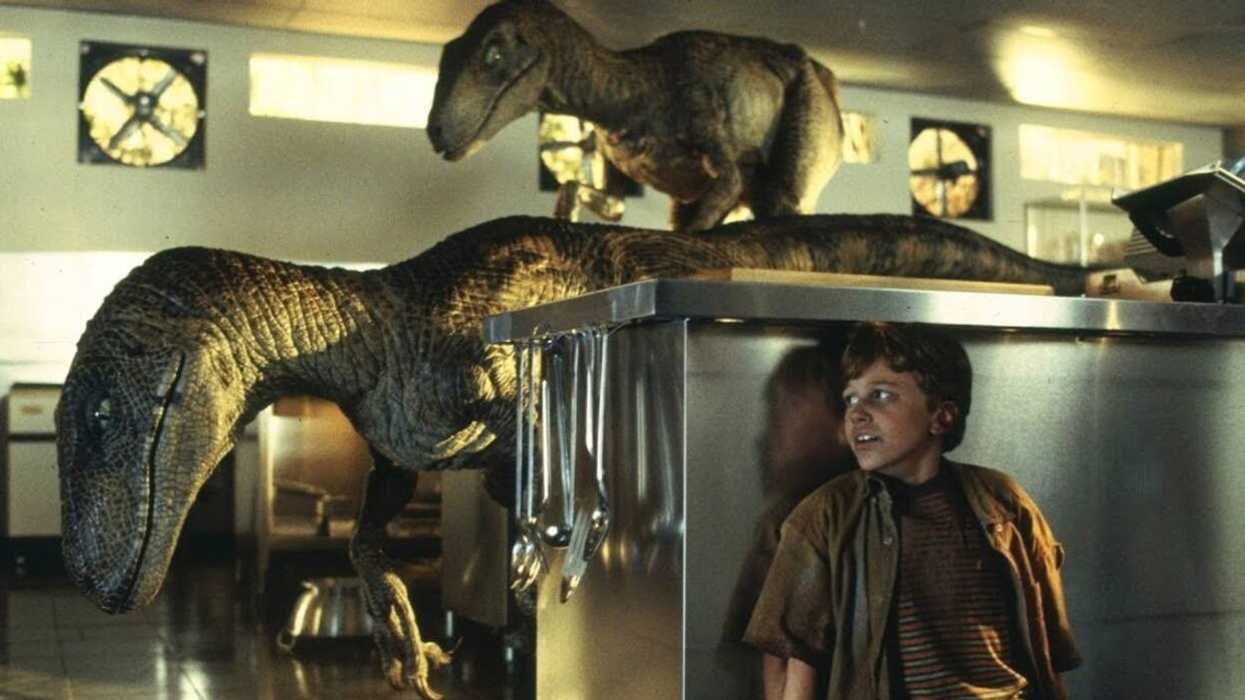
Jurassic Park (1993)
If you’ve ever watched Jurassic Park (1993), chances are the kitchen scene has been permanently etched into your brain. Two kids, hiding in cold steel cabinets, while a pair of velociraptors stalks them with precision.
The sound isn’t a roar—it’s worse. A low, guttural hiss, clicks that sound uncomfortably like language, and a chilling breath that feels too close for comfort. Spielberg’s dinosaurs, instead of screaming, whispered death.
Here’s the twist: those nightmare-inducing noises didn’t come from some Hollywood monster-making machine. They came from tortoises—yes, tortoises—in the middle of mating. It’s one of those bizarre movie facts that feels like a joke until you hear the recordings yourself.
This article dives into how sound designer Gary Rydstrom turned a reptilian love song into one of cinema’s most terrifying predator voices, the happy accident that made it possible, and the enduring legacy of these sounds in film history.
The Mastermind Behind the Sounds: Meet Gary Rydstrom
The man responsible for this audio sorcery is Gary Rydstrom, a seven-time Academy Award-winning sound designer who cut his teeth at Skywalker Sound, George Lucas’s audio playground.
By the time Spielberg tapped him for Jurassic Park, Rydstrom had already worked on Terminator 2: Judgment Day (1991), where he crafted the metallic clangs and futuristic war sounds that gave Skynet its voice.
Spielberg’s directive was clear: no clichés. The dinosaurs weren’t supposed to sound like movie monsters—they had to feel alive, organic, and scientifically plausible. Rydstrom took this seriously. Since no one had ever heard a real dinosaur, he had to invent a language from scratch, borrowing from the animal kingdom and blending sounds in ways no one had before.
The result was not only believable but unnervingly intimate—proof that sound could breathe life into creatures that only existed as CGI and animatronics on screen.
- YouTube www.youtube.com
Deconstructing the Raptor: What Makes a Sound Terrifying?
Before we unmask the tortoises, let’s break down what makes the raptors’ calls so unsettling.
First, the clicking. Clicking is not a random noise. It suggests intelligence, communication, and even strategy. When clicking, it’s not just a random wild beast; it’s a pack leader calling the shots.
Then comes the raspy hiss. It slithers into your ear like a warning from something cold-blooded, aggressive, and merciless. It’s a sound that forces your survival instincts to wake up.
Finally, the heavy breathing. Nothing puts you on edge like realizing whatever’s hunting you is close enough to fog up your skin.
Using all these sound intricacies, Rydstrom created something more than scary sounds. He made sounds that carried intent, personality, and lethal purpose.
The "Eureka!" Moment: From Turtle Love to Dinosaur Danger
Here’s where things get weird. While experimenting with animal recordings at Marine World (now Six Flags Discovery Kingdom), Rydstrom stumbled on an unusual sound. Two tortoises were mating, producing sharp, guttural bursts of air as they retracted their heads into their shells. Odd as it may seem, the noise had rhythm, weight, and an almost predatory undertone.
Since they sounded perfect for a raptor, Rydstrom layered them into the mix, thus making the tortoise sounds the bedrock of the raptors’ hiss and guttural coughs. It was absurd and brilliant at the same time—a reminder that nature often provides the best special effects, even in the most unexpected places.
The Sound Designer’s Toolkit: Layering the Nightmare
Of course, tortoises alone couldn’t carry the entire performance. Rydstrom built the raptor voice like a DJ layering tracks, pulling from a whole menagerie of animals.
The Foundation: Mating Tortoises
The breathy, guttural hiss that defined the raptors’ menace came directly from tortoise mating sounds. These were pitched, cut, and sharpened until they became alien yet oddly familiar.
Adding the Animal Chorus
To give the raptors depth, Rydstrom mixed in horse snorts for agitation, goose cackles for aggression, and dolphin and walrus clicks to suggest intelligence. These touches gave the creatures vocal texture—like they could plan, argue, and attack with precision.
The Human Element
Sometimes, even animals weren’t enough. Rydstrom himself and his team yelped, growled, and screeched into microphones, later warping the recordings until they sounded like pain cries from prehistoric predators. This human layer added emotional weight that pure animal recordings couldn’t provide.
Beyond the Raptors: A Legacy of Creative Sound
The brilliance didn’t stop with the raptors. The Jurassic Park soundscape is a greatest-hits album of wild experimentation. The T. rex’s iconic roar? A mashup of a baby elephant’s squeal, a tiger’s growl, and an alligator’s rumble. The Dilophosaurus hiss was partly a swan and rattlesnake with a hawk garnish. Even the majestic Brachiosaurus call was just a donkey slowed down until it sounded ancient and mournful.
These choices prove one thing: the tortoise revelation wasn’t a fluke. Rydstrom and his team consistently pushed sound design into uncharted territory, treating the animal kingdom like a library of untapped instruments.
What could’ve been cheesy monster noises became a believable sound ecosystem that continues to influence creature design decades later.
Why It Still Haunts Us: The Impact and Legacy
So why do these raptor noises stick with us? For starters, they feel biologically credible. They don’t sound like a synth effect or some sci-fi roar—they sound like something that could’ve evolved. That credibility blurs the line between fiction and reality, making the raptors scarier.
There’s also the uncanny factor. The sounds are familiar—horses, birds, tortoises—but twisted into something alien. Your brain recognizes the base layers but can’t place them, leaving you unsettled. Most importantly, the raptors had voices with personality. Instead of being just mindless killing machines, they were calculating predators, and their sound design made sure you knew it.
Filmmakers ever since have borrowed from this approach, layering real-world noises to create creature voices that feel organic. From Godzilla revamps to alien soundscapes in Arrival (2016), Rydstrom’s influence echoes everywhere.
The Art of Listening
What began as two tortoises doing what tortoises do best ended up shaping one of cinema’s most terrifying soundscapes. While creating dinosaur noises, Gary Rydstrom gave personality and depth to these creatures that no human had ever heard before. The credit for the raptors’ scariness goes not only to the fact that they were loud, but also because they sounded alive.
That’s the genius of sound design: the ability to transform the ordinary into the extraordinary, to turn a bizarre natural phenomenon into a building block of cinematic history.
Next time you watch a film, don’t just look at the spectacle. Listen closely. The greatest movie secrets aren’t always hidden in plain sight; sometimes they are hiding in plain hearing, too.