Creating the Iconic Roar: King Kong’s Sonic History from 1933 to 2026
From early analog tricks to modern sound design, this article explores how filmmakers crafted the legendary King Kong roar across decades of cinema.
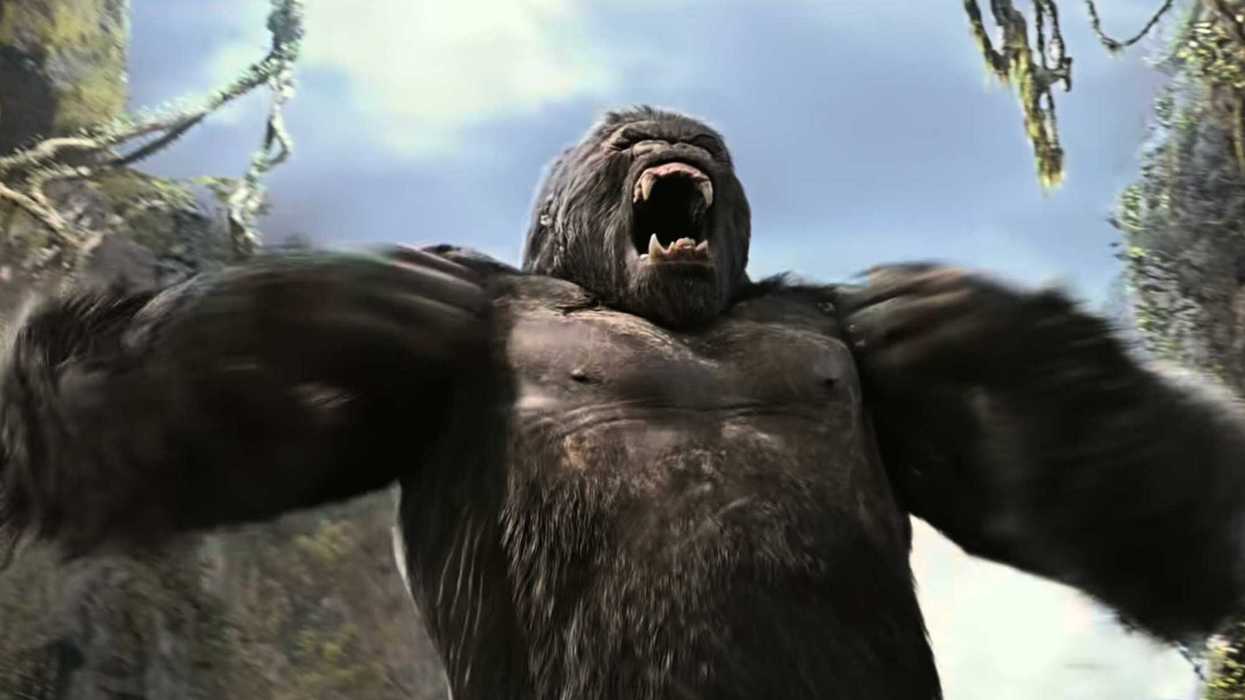
‘King Kong’ (2005)
Imagine it’s 1933. You’re the Depression-era first-generation movie audience of Hollywood’s golden age. You’ve come to watch King Kong, a revolutionary, cutting-edge movie that’s considered a technical marvel. And finally, that moment comes. The eponymous giant ape appears on screen, beats his chest, opens his mouth, and lets out a roar you have never heard before. It shakes your soul.
Cut to 2024. The movie is Godzilla x Kong: The New Empire. Filmmaking has gone through revolution after revolution. So, after years of CGI and motion capture, plus sound design techniques, such as emphatic sounds, hybrid soundscapes, object-based spatial audio (such as Dolby Atmos), and, of course, the latest AI-generative audio, your expectations are no longer easy to satisfy. The big black beast comes on screen, and he roars, and guess what—your soul still shudders.
Why? What’s the magic here? They obviously don’t poke a gorilla with a stick and record it. Kong is not just “a” gorilla. He is not even solely defined by his overwhelming size. He is as much a monstrous beast as he is a creature of heart and mind. And sadly, his is the voice of a creature who doesn’t exist.
That’s why his sonic legacy is quite interesting.
1933: The Birth of Kong’s Roar
Tiger + Lion = Kong
Sound effects artist Murray Spivack tested the actual gorilla sounds, but they sounded too breathy and unusable. So he pivoted to other beasts. He visited the Selig Zoo in Los Angeles and recorded a variety of grumbles, growls, and roars from a tiger and a lion. He then reversed the tiger’s sounds and played them over the lion’s. He created variations by altering the playback speed, lowering the frequency, and reversing playback. These overlapped sounds created a new ambivalent but still terrifying sound that felt massive and heavy-chested. And that’s how the “Eighth Wonder of the World” got his voice.
Giving Kong a Personality Through Voice
Using the actual jungle beasts was good to bring out Kong’s beastly side, but as I said before, Kong is not a regular beast; he has a heart and a mind.
For this, Spivack used some creative and practical studio tricks, including using his own voice to create Kong’s softer vocalizations. The trick was that he grunted into a megaphone and played the recording backward at a slower speed.
Some Foley sounds were also used for Kong’s other physical movements. For example, his footsteps were recorded by stomping on a gravel-filled box with foam-wrapped plungers attached to the performer’s feet.
1976: Practical Effects and Air Compression
By 1976, the first American remake of the original was marked by more nuanced practical effects. The sound designers looked for “organic” textures. They still used human vocalizations (including those from actor Peter Cullen) that were then blended with actual animal recordings. But this time, their approach, the techniques, and the sound design machinery were much more advanced than they were 40 years ago.
For example, this time, they tried to sell the physics of the giant. They realized that high-fidelity recordings of animals often felt “mismatched” when played against a 50-foot ape. When the beast is as massive as Kong, his vocal cords wouldn’t just vibrate. The sheer volume of air moving through his massive chest cavity would create a distinct, heavy gust. So, they focused on the “puff,” or the expulsion of air to simulate massive lungs. They emphasized the breathy, percussive start of a roar, and by doing that, they created a sense of scale, Kong’s physical presence, and his animalistic reality.
2005 & 2024: Modern Monsterverse & the Digital Shift
2005: Precision Layering
For the third American remake, Peter Jackson went back to nature but with high-tech filters. This time, there wasn’t any interspecific sound remixing. No tigers, no lions, and no humans. His team recorded actual Silverback gorillas at an enclosure. A real gorilla’s scream is quite high-pitched; regardless of how realistic it was (in the context of real gorillas), that wasn’t going to look very “flattering” on Kong. To tackle this problem, they used “time-stretching” software. This technique allowed them to deepen the sound without losing the realistic, gravelly details of the primate’s throat. The result: Kong felt like a real animal instead of a movie monster.
2024: The World-Shaking Design
For this latest edition, the makers made sure to push the boundaries and reach peak “Gen-Z” energy. For this, the team went back to all sorts of huge animals. Sound designer Erik Aadahl explained that they used massive animal recordings, but this time, there was an interesting addition: dry ice. Using dry ice on metal created that screechy, prehistoric texture. The goal was to achieve a sound effect that felt like a mix of earthquake and electric current. You cannot notice this in the earlier films.
Conclusion
Kong’s roar was never meant to be just a beastly sound. Kong was created to be more than that, and thus, his sound had to match his personality. That’s what all these filmmakers strived to create. And they were all great and innovative in their ways, considering their respective times and the techniques they had at their disposal. But knowing Kong’s amazing sound design journey makes me realize that it’s a brilliant mix of zoology, physics, and most of all, pure imagination.
- 'Jurassic Park': The Surprising Origins of the Raptor Screams ›
- 21 Iconic Foley Sounds Created With Household Items ›
- 'Godzilla vs. Kong' Finally Gives Humans a Place in the MonsterVerse | No Film School ›
- 'Godzilla vs. Kong' Finally Embraced the Fun of Kicking Some Ass | No Film School ›
- Are King Kong and Godzilla Friends? | No Film School ›
- The Meaning Behind the Most Famous Line From 'King Kong' ›