Those who have found their mentors will tell you that a mentor-mentee relationship feels like it’s written from the great beyond. You find them usually when you’re not looking for them. It is as spiritual as it is with your parents or with a higher power.
A mentor isn’t just someone who imparts knowledge, but someone who always has your best interests at heart and puts your well-being over theirs. It is a connection you form in which your conscience skips doubt.
Reflecting this nature of the relationship, cinema has a long list of mentor-mentee pairings built entirely on faith and trust.
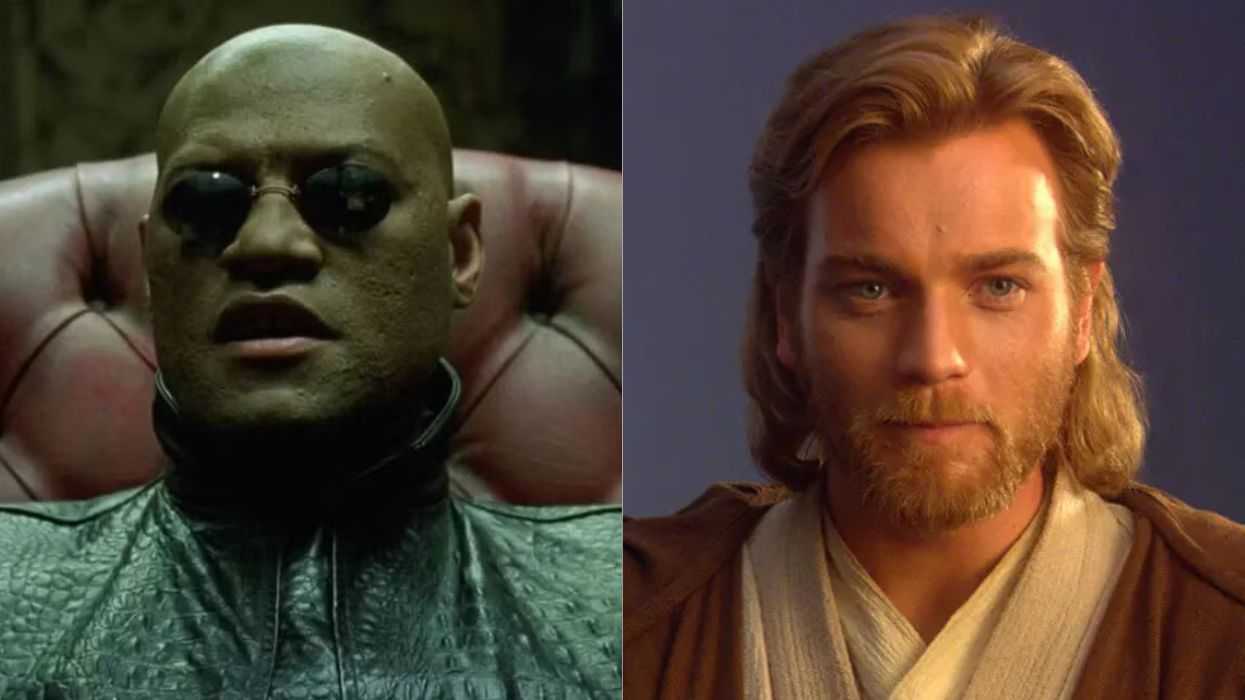
In this article, we’ve chosen the two most iconic mentors, Obi-Wan Kenobi from Star Wars and Morpheus from The Matrix, to analyze their relationship with their respective mentees, Luke Skywalker and Neo, as we explore faith-based mentorship.
What Is Faith-Based Mentorship?
Faith-based mentorship is a mentor-mentee relationship in which the mentee has no tangible proof of the purpose the mentor is guiding them toward; however, the bond between the two is so spiritual and intimate that the mentee follows the mentor with blind faith.
Obi-Wan Kenobi
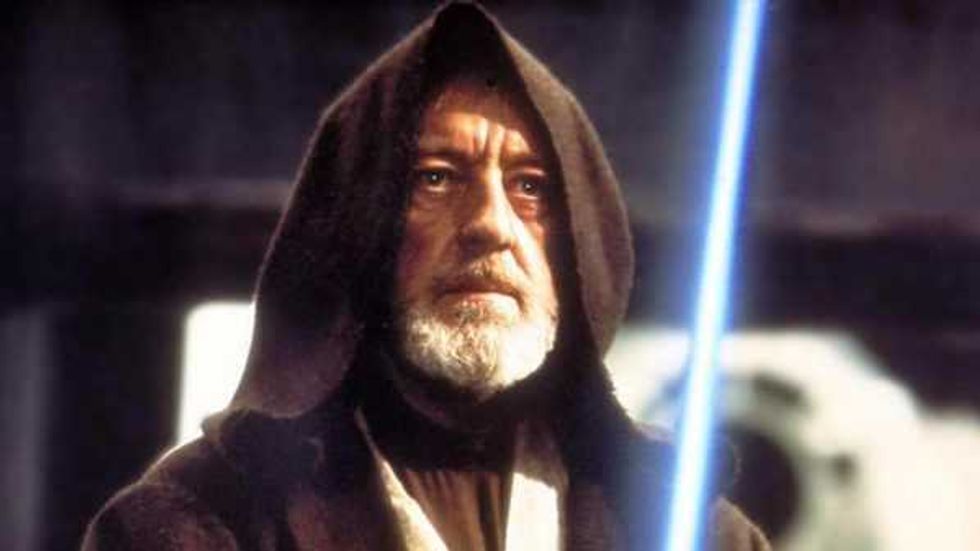 Star Wars Episode IV: A New Hope (1977)Source: 20th Century Studios
In Star Wars, Luke Skywalker is a young Force-sensitive farm boy with potential, but is still in training and inexperienced. He doesn’t know a world beyond the planet he grew up on. He believes whatever Obi-Wan tells him about the Force, the galactic battle against the Empire, and Darth Vader.
Obi-Wan makes Luke believe that he is the only one who can bring change and a better future in the galaxy. It is not until later, when Luke finally comes face-to-face with Darth Vader, that he gets to witness the truth.
Morpheus
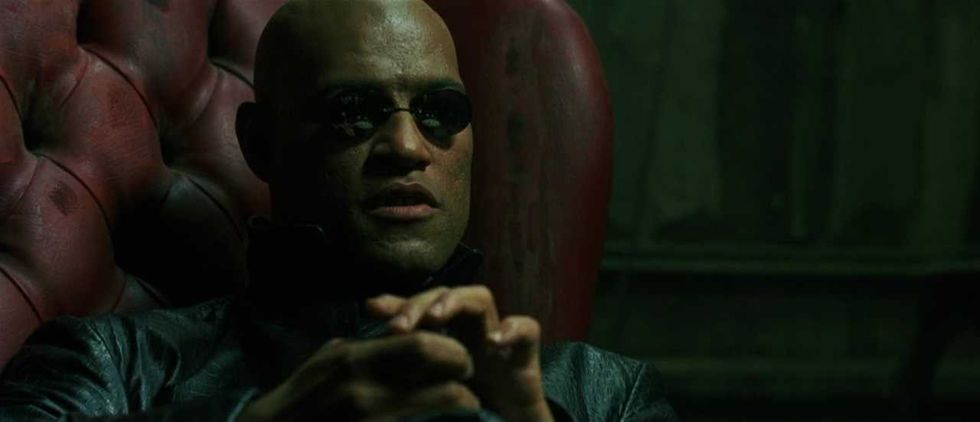 The Matrix (1999)Source: Warner Bros. Pictures
Similarly, in The Matrix, Neo meets Morpheus, who explains the Matrix to him. While he is aware of the prophecy, Morpheus at first deliberately hides it from Neo, allowing him to decide whether to “wake up” on his own.
Despite knowing how important it is for them that Neo join the war against the Sentinels, Morpheus presents him with a choice when he offers him both the blue and red pills. Neo’s choice to take the red pill takes them closer to the prophecy.
From then on, Morpheus takes him under his wing.
Morpheus vs. Obi-Wan Kenobi
Morpheus and Neo
 The Matrix (1999)Source: Warner Bros.
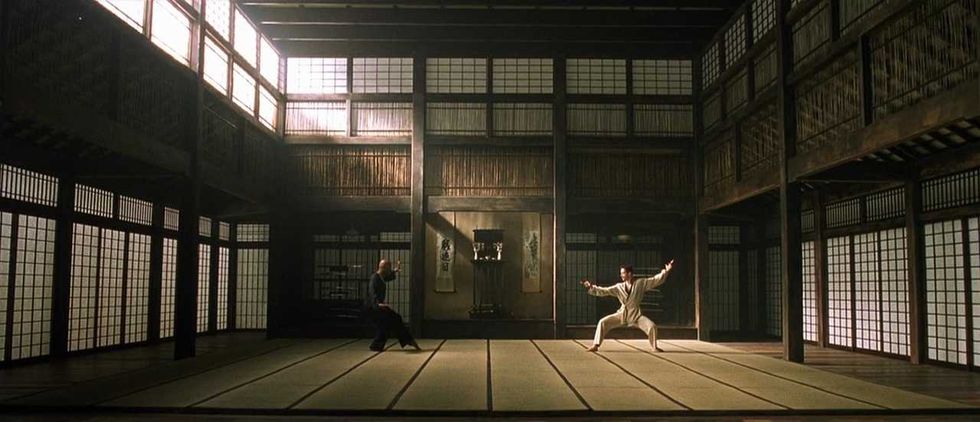
Morpheus is what Joseph Campbell, the writer of The Hero with a Thousand Faces, would call “the threshold guardian” in addition to a mentor. Morpheus isn’t someone who leads the hero to the goal—he’s the one who trains him and also tests his resolve for the quest at hand.
Morpheus teaches Neo to trust his intuition over his powers. He teaches him to be alert to every possibility when dealing with the Sentinels. The experiment with the woman in the red dress is one such small simulated training out of the many designed by Morpheus in The Matrix.
Morpheus is both influenced and dependent on the Oracle’s prophecy; however, he gives Neo a fair chance to choose his destiny. That is something that remains Neo’s greatest power—if given the chance to choose, he would hardly ever make the wrong choice.
And he proves this multiple times: in The Matrix, when he chooses the red pill; in The Matrix Reloaded, when he turns down the Source, choosing not to reload it, at the potential cost of the entire human race, to save Trinity. Basically, the guy is consistent.
When even Morpheus abandons the purpose, Neo embarks on it based on his instincts, only because he wants to.
As a mentor, Morpheus prepares Neo for the battle by teaching him combat techniques and strategies for fighting in the simulations.
Obi-Wan and Luke Skywalker
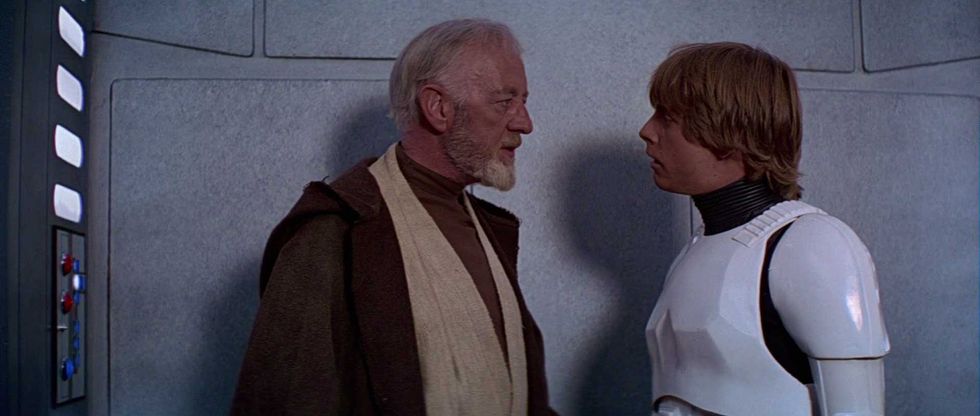 Star Wars Episode IV: A New Hope (1977)Source: 20th Century Studios
Obi-Wan is more like a father figure to Luke Skywalker. He sacrifices his life to save him, an act that becomes Luke’s biggest strength while fighting the Empire. His main role is to protect Luke while serving as a role model.
Obi-Wan mentors Luke through an ancient code of conduct, emphasizing restraint. He is a wounded guardian who has endured bitter experiences in the past and lost people he cared about, which leads him to prioritize his mentee above all. He teaches him to surpass even the greatest, instilling a strong sense of Jedi ethics. Their relationship is not limited to the battle, but extends to their existence.
While both mentors have a faith-based relationship with their mentees, Morpheus and Obi-Wan have quite different approaches to mentorship.
Which is your favorite mentor-mentee duo?