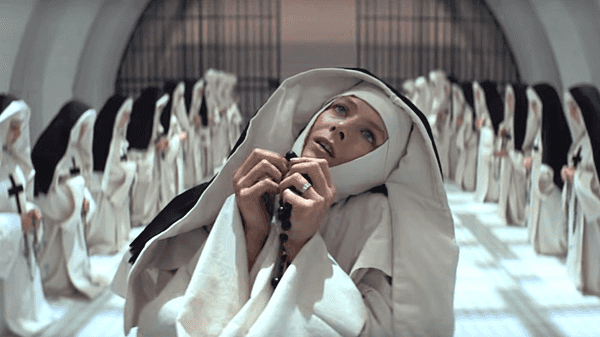
Most cinema viewers have, at the very least, a basic understanding of color psychology. If you ask a cineaste what blue represents, after joking that it’s the warmest color, they’ll probably tell you that it symbolizes sadness.
This is quite true. Blue has symbolized sadness for a long time. There’s a reason why the musical genre is called “the blues,” after all. And why New Order didn’t sing about a “Purple Monday.” Why Eiffel 65 wasn’t “yellow, da-ba-dee-da-ba-di.” However, there are only so many colors in the rainbow, so any given hue has a lot of secondary and tertiary meanings attached to it, as proven by this collection of five movies that use blue in completely different ways.
Sadness: Inside Out (2015)
 ‘Inside Out’ (2015)Credit: Walt Disney Studios Motion Pictures
Of course, blue can be used to symbolize sadness. Pixar’s Inside Out is perhaps the perfect example of this approach, because in personifying the emotions inside young girl Riley’s (Kaitlyn Dias) head, it has the opportunity to use basic color theory to its advantage. The character of Joy (Amy Poehler) is represented by bright colors - primarily yellow - while Anger (Lewis Black) is red, the color of passion and intensity, Disgust (Mindy Kaling) is green, the color of mold and slime, and Fear (Bill Hader) is purple, which represents mystery (the unknown is the scariest thing of all, naturally).
Sadness (Phyllis Smith) is, of course, blue. Because Sadness is one of the most important characters in the movie, blue becomes an important motif. The entire movie is about Riley learning how to regulate her emotions and live with sadness while navigating a stressful move, so the fact that her memories and much of the interior of her head are tinted blue at various points is both an important plot component and powerful symbolism.
Vulnerability: Moonlight (2016)
 ‘Moonlight’ (2016)Credit: A24
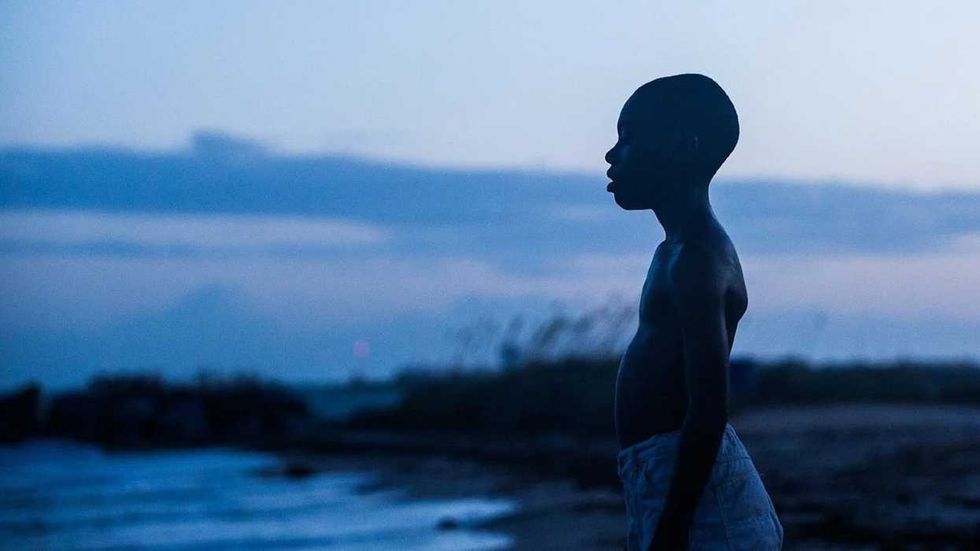
The color blue is incredibly important to Barry Jenkins’ coming-of-age LGBTQ+ classic Moonlight, which won Best Picture in 2017. In fact, the unpublished Tarell Alvin McCraney play that the screenplay is based on is literally called In Moonlight Black Boys Look Blue.
The movie brings that title to life multiple times, presenting the main character Chiron (Alex Hibbert, Ashton Sanders, and Trevante Rhodes) as a moonlit blue figure at various moments throughout his life. Throughout Moonlight, Chiron can be the most himself when he is blue. His blue self, who is surrounded by the darkness of night and can’t be perceived by the public, is more vulnerable than he can ever be during the light of day.
In daytime, the color of his skin evokes expectations of toughness and masculinity from American society at large, which he attempts to live up to. However, when he is blue, Chiron uses his vulnerability to explore his true identity, particularly when it comes to his short-lived teenage tryst on a beach in the middle of the movie.
Coldness: Saw (2004)
 ‘Saw’ (2004)Credit: Lions Gate Films
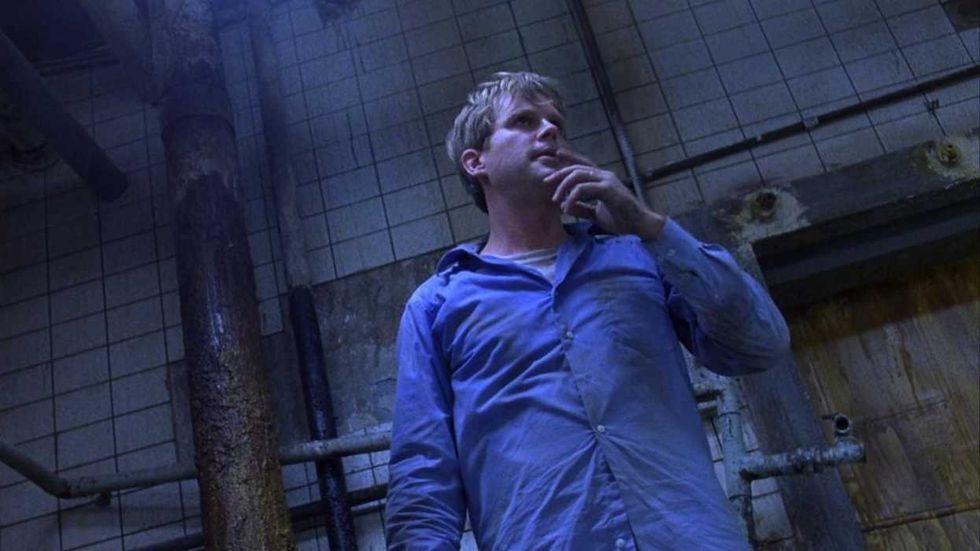
James Wan’s 2004 movie Saw is perhaps as different from Moonlight as it’s possible for a movie to be, and it naturally uses the color blue in a completely different way. As opposed to representing sadness or vulnerability, the movie’s blue color grading (as well as the blue shirt worn by Cary Elwes’ character, Dr. Lawrence Gordon) harnesses the fact that blue is a cool tone.
The movie follows Dr. Gordon and the photographer, Adam (Leigh Whannell), finding themselves chained up in a bathroom and trying to figure out both who put them there and how to escape. There is also a ticking clock, as the mysterious Jigsaw killer has left a tape warning Gordon that his wife and child will be killed if he doesn’t murder Adam by 6:00. The emotional distress of their situation is heightened by their physical discomfort, which is itself heightened by the fact that the blue tinge to the proceedings makes their predicament feel that much colder and more unpleasant.
Maleness: But I’m a Cheerleader (1999)
 ‘But I’m a Cheerleader’ (1999)Credit: Lions Gate Films
Jamie Babbit’s beautifully stylized LGBTQ+ romantic comedy But I’m a Cheerleader harnesses another key symbolic meaning of the color blue: maleness. As any gender reveal party video will reinforce, in the Western world, blue is associated with boys and pink is associated with girls. This has been the case since the mid-20th century, though there is not a particularly clear reason why this should be the case, nor is there a strong historical foundation for these gendered associations.
Regardless, the fact remains that these particular meanings for those two colors are locked into the Western consciousness. This association is harnessed by But I’m a Cheerleader, which takes place at a conversion camp where the girls are forced to wear pink, and the boys are forced to wear blue. The colors also frequently bleed into the production design, representing the rigid societal expectations that surround the characters, who are coming of age and discovering more about their queer identities in spite of all the external forces trying to make them conform to the gender binary.
Everything and Nothing: Blue (1993)
 ‘Blue’ (1993)Credit: Channel 4
Derek Jarman’s abstract experimental film Blue doesn’t so much include the titular color onscreen as weaponize it. Although he had previously considered producing various alternate versions of the movie, with different meanings and cultural associations, the final project explores the filmmaker’s experience with AIDS, which left him severely visually impaired and led to his death the year after Blue premiered.
The only image depicted onscreen throughout the entire run time is the color blue. The audio track features two stories: one, the fictional tale of a character named Blue, and the other a largely autobiographical exploration of Jarman’s life with AIDS. While the color on-screen forces the audience into experiencing a movie without additional visual stimuli, representing in part the director’s own compromised vision, blue also takes on various symbolic meanings throughout the movie, including the unreachable vastness of the sky as well as transcendence (blue historically represents divinity in multiple cultures).
It is important to remember that these five movies are just barely scratching the surface of the endless possibilities for symbolism that a single color can possess. This can be proven by a quick exploration of the No Film School back catalogue, which includes articles on how the color blue is used in Eternal Sunshine of the Spotless Mind, The Departed, Widows, and David Fincher’s filmography.