The Legendary Rant in 'Network', Explained
A rant on national television that brought the whole country together.
Network (1976)
If I could, I would make a song out of Howard Beale’s rant on national TV from Sidney Lumet’s Network (1976) and make it the national anthem of every country. Maybe that way, we would have nagged our political leaders and the media enough to actually care about us (or at least, grown some spine ourselves to not just sit and watch).
Since I can’t do that (at the risk of being accused of national treachery and blasphemy and getting arrested), this seems like the perfect opportunity to talk about how politically attached I am to this monologue from Network.
In this article, we analyze the legendary broadcast rant, “I’m mad as hell, and I’m not gonna take this anymore,” from Network—a quote that only seems to become more and more relevant with each passing day, as society and the economy degenerate in the name of progress.
Context Is Everything
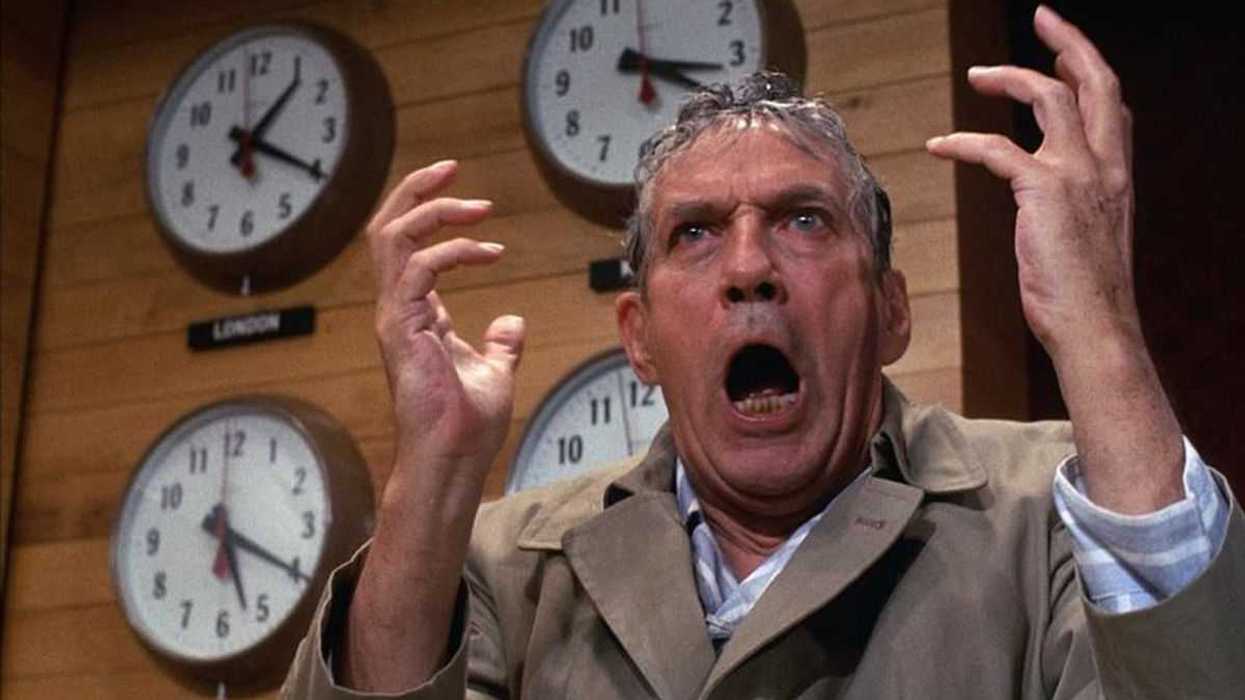
Lumet’s Network follows Howard Beale, a former hit TV anchor, who’s facing serious career downsizing after the ratings of his shows drop drastically. But when the network fires him with two weeks' notice, Beale does the unthinkable—he declares on national television that he will blow his brains out live on national television within one week. His stunt is hardly received in good spirits, and the management fires him effectively when he pleads for one last telecast in the spirit of a dignified exit. Looking at his years of service, the network grants his wish. But even there, he pulls another stunt, ranting about how life’s bullshit.
The network becomes desperate to stop the telecast, but Diana Christensen, the relatively new and ambitious vice-president in charge of programming, sees a golden opportunity for the network to increase its TRP through Beale’s on-air lunatics. Realizing that Beale’s rants are basically like truthbombs–words that are hardly ever spoken out, even though every other mind is thinking about them in a never-ending loop, Diana is quick to understand that the viewers would eat this up.
Therefore, she convinces the network to continue the show, instead of shutting it down. So while Max Schummar, Beale’s old friend at work, is supporting Beale in the spirit of friendship, to his utter dismay, Diana and the network begin leveraging the situation to maximize profits and ratings. Yet, Schummar and Diana continue to work together to develop Beale’s show.
The Scene
In one of the telecasts (this is right before he gets his own show, The Howard Beale Show), Beale pulls off an impassioned diatribe that stirs the entire nation to bring them together as one, probably for the first time in a long, long time. On AIR, Beale begins ranting about the falling economy, the degenerating society, the false political promises, and most importantly, the layman’s ignorance towards taking any action towards the grave injustice that they’re being subjected to, every single day, in the name of democracy and community.
Looking straight into the camera into the eyes of the viewers, most of whom are sitting all cozied up in their living rooms, Beale roars, “I’m mad as hell, and I’m not going to take this anymore,” expressing his frustration over the systematic oppression of the common man. He persuades the viewers to join him in openly expressing their anger and dissatisfaction: over the everyday troubles, bad service, governmental corruption, rising crimes, life-gnawing inflation, discrimination, and more.
Inspired and triggered by his rant, people all over the city stand at their windows crying out in unison, “I’m angry as hell, and I’m not gonna take it anymore.”
Why The Catchphrase and Beale’s Rant Is Powerful Enough To Unite An Entire Nation
Beale’s words are bitter but true. He is talking from his heart, without a care in the world. He is speaking for the common people, as if trying to save them from their tendency not to take the initiative.
Throughout his rant, he emphasizes multiple times how accepting that you’re angry is the beginning of real change, and he really doubles down on the idea as he ends his rant.
Here’s why it works:
1. Emotional Resonance
The power of Beale’s rant lies in its emotional resonance. His talk is about the everyday struggles, fears, insecurities, lack of safety, inflation, and the systematic injustice, oppression, and discrimination that we are forced to ignore (or do so by choice), seemingly due to lack of power.
2. A Public Service Announcement In Its Truest Essence
Beale’s rant is a reminder that the real power lies in the hands of the people in a democracy. He tells his viewers not to ignore their bottled-up feelings about the steadily deteriorating society; instead, openly address their struggles that they’re made to face through no fault of their own. He reminds them that change happens only when they start accepting that a change is indeed the necessity of the hour.
3. A Power-Packed Performance
Peter Finch has delivered a magnificent performance in portraying Beale. Especially in this particular scene, Finch is an embodiment of a Beale who’s lost it, having to navigate a system and society that’s seemingly structured to hinder your endeavours, instead of supporting them.
Finch personifies Beale’s anger through his portrayal of him, uniting everything that is bothering the man, starting from his personal problems and insecurities as a failing TV anchor to his woes with the system and society that he lives within.
Network is a biting satire that masterfully juggles between exploring important social issues, nothing less to be expected from a filmmaker like Lumet, who’s given the world films like 12 Angry Men, Dog Day Afternoon, and Find Me Guilty.
Have you watched Network? Let us know your favorite moment or scene from this masterpiece.