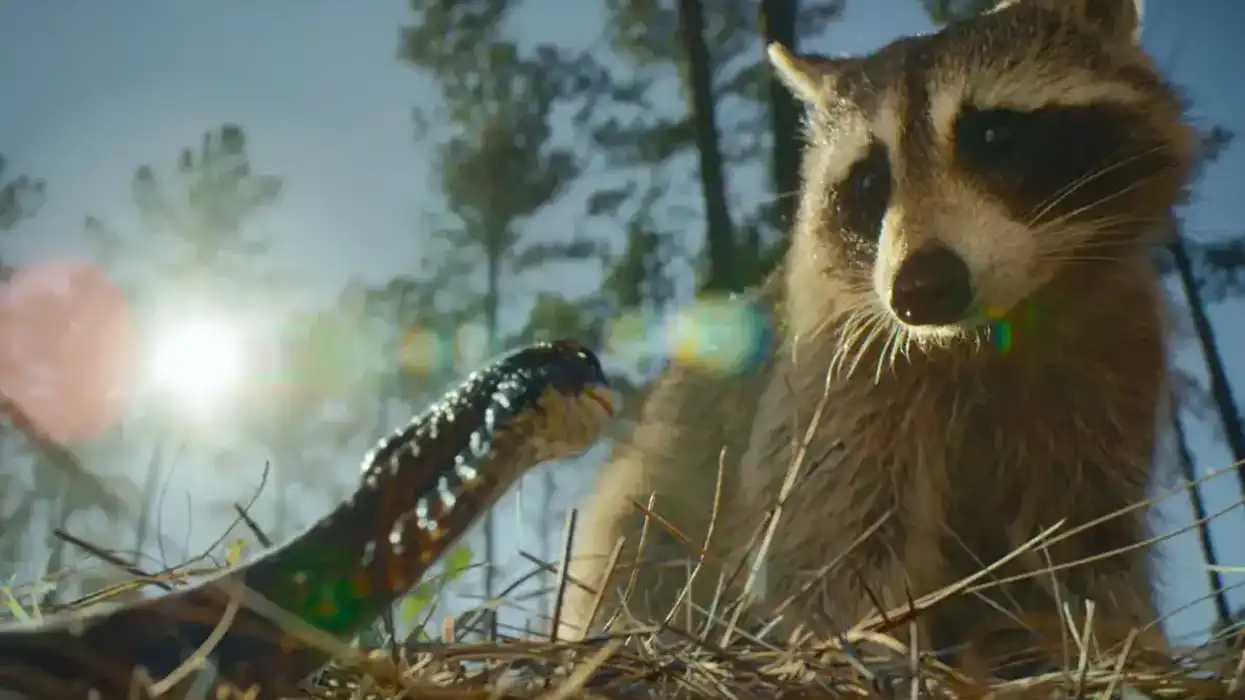
Netflix's Nightmares of Nature flips the script on the traditional nature documentary and gives us some stunning wildlife footage that winds up being kind of unnerving.
To achieve this fascinating genre mashup, the producers turned to composers Stuart Roslyn and Chris Elmslie of the music production company minus5db.
In this interview, Roslyn and Elmslie discuss how they abandoned conventional orchestral scoring for a sound-design-driven approach, the "sound mining" process that built the show's unique sonic template, and how their partnership creates a cohesive, high-level score, even under pressure.
Let's dive in.
- YouTubewww.youtube.com
No Film School: Nightmares of Nature offers a fascinating blend of horror and nature documentary. How did the two of you approach that genre mashup from a scoring perspective?
Stuart Roslyn: Blending horror with a nature documentary meant balancing two very different musical languages. On one hand, nature scoring is a bit like writing for animation — the music carries much of the narrative for the creatures onscreen. On the other hand, horror relies heavily on sound design and moments of silence to build suspense and tension. Early on we knew we wanted this score to be driven more by sound-design than conventional melody.
Chris Elmslie: At the start of the project, we spent several days “sound mining,” gathering and crafting an extensive palette of custom elements — found sounds, synthesized textures, manipulated orchestral recordings — and sculpting them to create the sonic template of the series.
Our challenge was weaving a documentary-style score together with enough space and tension for the impact that horror requires. We approached this by identifying the moments that needed punctuation and built everything else around them.
NFS: How did working on this series compare to your previous experiences composing for nature documentaries or horror projects individually?
SR: This project felt different from anything we’d tackled before — especially because it’s a production from a studio well known for horror. So our aim was to create something much more cinematic than a traditional television nature documentary series.
CE: While many of our prior documentary scores have leaned heavily on traditional orchestral writing, here we couldn’t count on those familiar techniques. Instead, we had to be clever about where we used conventional scoring and where we intentionally pulled back, leaving room for subtle textures and sound design moments.
NFS: Did you tailor your musical cues to the specific animals or settings in each episode? Do you have a favourite scene from the series?
CE: We blended traditional motifs and sound-design “idents” to give each significant creature or environment its own identity. For example, for the raccoon, we wrote a light, playful, mischievous musical motif while predators were represented with darker, sound-design-driven motifs that leaned toward the ominous and unsettling.
SR: It’s hard to pick just one favorite, but we really enjoyed the moments where we could create music that was sonically inspired by the sounds of the environment in the show and enhance the sense of creepiness wherever possible. For example, the booming sounds of the dog in the cabin, or the small, frantic, and crawling sounds of the roaches.
NFS: Did you take inspiration from any particular horror films in heightening the show's sense of tension and fear?
SR: Yes — the filmmakers were big fans of the scores from The Alienist and Predator, and that definitely shaped our initial sound-mining approach. But we also wanted to create something that felt original and served the unique tone of this project.
CE: We rooted our work in low, brooding string textures and distorted orchestral timbres. These dark and unsettling elements became the foundation for the rest of the score.
NFS: Can you tell us more about your collaborative process — how do you merge your individual styles and ideas into a cohesive score?
CE: Having collaborated on so many projects, we’ve developed a good sense of each other’s musical language. We often tag-team cues, passing ideas back and forth, and each building on motifs or textures the other introduced. When time pressures are tight, it’s easy to lose perspective. That’s when working together is really useful. It’s a very open, collaborative process that allows our ideas to grow organically.
 Stuart Roslyn and Chris ElmslieCredit: Minus 5db
NFS: Stuart, you are the founder of Minus 5db. How does this collective influence the way you work on projects like Nightmares of Nature, and what motivated its creation?
SR: I’ve had my production company in the UK for 25 years, and establishing Minus 5db in the U.S. was a natural expansion — especially with a talent like Chris, who has overseen creative direction for seven years now.
I lean on the talent and diversity of our composers and team members to bring the best quality we can to projects. Having multiple composers on the team who are so talented means we can take on any project and deliver at the highest level. We are very growth-conscious as a team and learn from, inspire, and constantly push each other.
NFS: Looking back, what aspects of Nightmares of Nature’s score are you most proud of?
SR: We’re proud of how we answered the brief and really enjoyed tackling a concept as unique as Nightmares of Nature. When we start these projects, we have no idea how it will all come together, but somehow we go from a blank cubase project to four hours of horror score!