The System Built on 'Profit, Not Care': One Filmmaker Exposes the Crisis Inside America's Nursing Homes
Susie Singer Carter ensured the film provided truth by showing, not preaching.
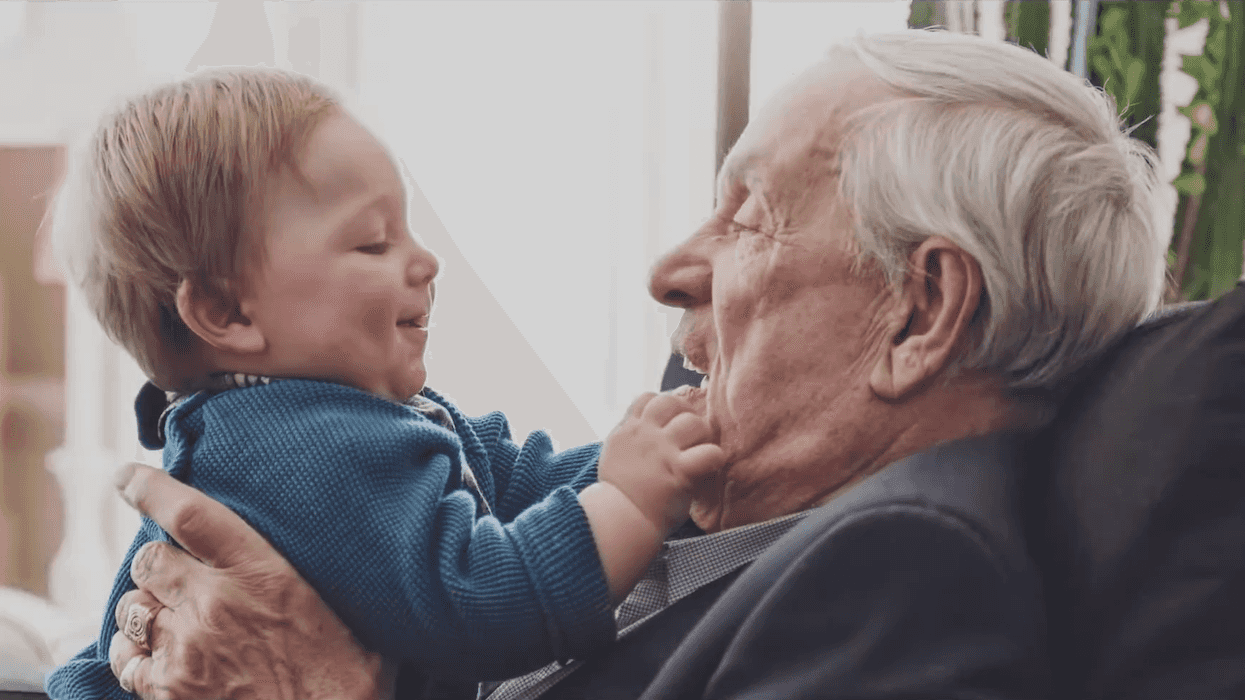
'No Country for Old People'
This feels like such a US problem, but placing an aging loved one into long-term care is one of the most difficult and consequential decisions a family can make. So, what happens when that system—meant to provide care and dignity—is fundamentally broken?
Documentarian Susie Singer Carter faced this question head-on after navigating the painful and frustrating experience of caring for her own mother within a system she describes as "built on profit instead of care."
Her new film, No Country for Old People: A Nursing Home Exposé, is not just a collection of stories; it is a meticulously crafted "call to action" aimed at transforming how America treats its most vulnerable population.
We talked to Singer Carter about the delicate dance between personal trauma and public advocacy, the challenges of getting whistleblowers to speak, and how she used the discipline of screenwriting and the power of music to build an emotional architecture that compels audiences to move "from empathy to action."
Let's dive in.
- YouTubewww.youtube.com
NFS: Hi Susie! You’ve described No Country for Old People as not just a documentary, but a call to action. How do you envision this film catalyzing change? What kind of impact are you hoping to see on a societal or policy level?
Susie Singer Carter: Storytelling can reach places that policy papers can’t …the human heart. And that’s where real change begins. My hope is that the personal stories we share in No Country for Old People not only inform audiences but ignite them. The documentary isn’t just about what happened to my mother or the other stories that we share; it’s about what’s happening to families across America every single day. By exposing the human cost of a system built on profit instead of care, I want audiences to move from empathy to action…to ask, “What can I do?” That might mean demanding accountability, or supporting stronger oversight by joining the R.O.A.R. Movement, which stands for Respect, Oversight, Advocacy, and Reform.
NFS: Considering your personal connection to this cause, how do you balance storytelling with activism, and how do you ensure that your film sparks meaningful conversations while still avoiding didacticism?
SSC: That’s always a delicate dance. I never wanted this to feel like homework or a public service announcement. My guiding principle was to provide the truth by showing, not preaching. Because my story is deeply personal, it gave me permission to be vulnerable instead of prescriptive. I just needed to reveal the truth as I lived it. I think activism is born out of authenticity. When audiences feel something real, they start asking their own questions and connecting their own dots. That’s when advocacy becomes organic — when it comes from the viewer’s heart, not from a filmmaker’s agenda.
NFS: How did you go about ensuring that the voices of older adults were authentically represented in the film? What steps did you take to build trust and get real, unscripted reactions from your subjects?
SSC: Because most long-term-care residents are medically fragile, I didn’t interview older residents directly. Instead, I focused on the people who know their stories best: their families, appointed caregivers, and advocates who have been fighting for them. Their voices carry both the heartbreak and the determination that come with loving someone trapped in a system that doesn’t work. That said, I also interviewed younger long-term residents whose cognitive and physical conditions allowed them to speak openly about their experiences. Those conversations were incredibly powerful - raw, articulate, and often heartbreaking. Their perspectives gave audiences a window into daily life inside facilities, while the families’ stories revealed the emotional toll on the outside. Together, those threads form a more complete and truthful picture of what long-term care really looks like in this country.
NFS: Can you share some of the challenges you faced in making a film that addresses such a sensitive topic, and how you overcame them?
SSC: Honestly, almost everything about it was hard. On an emotional level, reliving my mom’s experience, hearing her voice, and watching her footage was incredibly painful. I was also very mindful of balancing composure, professionalism, and empathy when interviewing other families who were still grieving and incredibly raw. On a practical level, there were legal fears, bureaucratic walls, and access issues. Some of the established, high-profile advocacy organizations refused to participate. (Follow the money.) Many experts were hesitant to speak publicly. But every time I hit a wall, I remembered why I started. This wasn’t just my mother’s story… it’s really all of ours. And every “no” I got only underscored how desperately this story needed to be told.
NFS: Were there any moments during filming that were particularly moving or surprising for you?
SSC: There were so many. But one moment I’ll never forget was interviewing a nurse turned whistleblower. I asked her, “Can you talk about the impact that your coming forward as a whistleblower has had on your life?” Her reply was, “That's a big question. I was naive. Really, really naive. But um, you know, I thought I was doing the right thing, and that some people would change or get better from it. So the hardest thing recently, my daughter is 16. And I've told her, ‘if you see something, Emily, if you see something wrong, just don't say anything… because {she's} going to ruin her own life. (Breaking down.) You know, it's like, how can you tell your kid? But that's how I feel. You know, you just keep your head down and just do what you do. Because no one will listen anyway. I mean, it doesn't pay to do the right thing.”
That broke my heart. It captured the tragedy of the entire system. Good people trapped in bad circumstances.
NFS: Can you speak to the role of music and sound design in the docuseries? How did you use those elements to underscore the film’s themes without overshadowing the content itself?
SSC: Music and sound were absolutely vital. My composer, David Bertok, and I approached it like emotional architecture. It needed to support, not steer. We wanted the score to breathe with the story, not manipulate the viewer. Sometimes silence says more than any note ever could. We used music sparingly, to mirror the emotional rhythm of the film: love, loss, rage, resilience. When done right, the sound doesn’t tell you what to feel. It gives you room to feel. We also used tracks performed by my mother when she was signed at Capitol Records, which helped humanize her. Additionally, we included two songs that really defined the soul of the project: one in the opening credits, which was a dissonant, quite haunting version of The Star Spangled Banner. The other was a powerful original track that goes through the end credits called “Til This Pain Goes Away” from indie writer/performer, Jackie Venson.
NFS: You have a background in both acting and directing. How do you think this influences your approach to documentary filmmaking, especially when it comes to working with real people in real situations?
SSC: Acting teaches you to listen, to connect, to be fully present in another person’s truth. That’s invaluable in documentary work. When you’re interviewing someone about trauma or injustice, it’s not about your next question; it’s about their next breath.
I think my directing as well as my editing background helps me see structure and to build emotional arcs in real time without scripting them. In both narrative and documentary filmmaking, my job is to create a space where truth feels safe enough to show up.
NFS: Social impact documentaries sometimes face pushback from certain groups or institutions. Did you encounter any resistance during the making of No Country for Old People? If so, how did you handle it?
SSC: Absolutely!! Sometimes it was subtle. Many times it was rude and in our face. There were many organizations that didn't want to go on record. Some publicly tried to defame and discredit us. We applied for so many grants that initially showed interest but ultimately rejected us because of some conflict of interest. (Again, follow the money.) There were experts who backed out at the last minute. I was even warned to “be careful” because the industry has deep pockets and powerful lobbyists.
But once the film started gaining visibility - screenings, awards, press - those same people began to realize this wasn’t going away. The beauty of sunlight is that it makes denial impossible. Once you tell the truth publicly, it’s no longer yours to bury.
NFS: How much of the final narrative was shaped in the editing room? Were there any significant changes to the storyline or structure during post-production that you didn’t anticipate during filming?
SSC: Ironically, not as much as usual. When my mom passed, I felt an urgency to make sense of everything we had just lived through and to make sure it wasn’t for nothing. I gathered all the video I’d taken during her time in the nursing home – some captured organically for posterity, and some intentionally, just in case I ever decided to make a documentary – and I used that as the foundation for the writing process.
Before I ever began filming interviews, I wrote the project the way I would any other three-act screenplay. I knew I wanted to include other stories from the start, to show that what happened to my mom wasn’t an isolated tragedy but part of a much larger, systemic pattern. Having that narrative architecture – emotional arcs, thematic beats, and a clear through-line – gave the film a cinematic backbone from day one.
So in the edit, it wasn’t about “finding” the story as much as refining the rhythm, tone, and balance between heartbreak and hope. Real life will always surprise you, but because the structure was strong, those surprises deepened the story instead of derailing it.
NFS: What advice would you give to other filmmakers looking to create a film with a social impact focus?
SSC: Lead with truth, not agenda. People can feel when they’re being lectured. Make it human and relatable. If you can achieve that, the advocacy will follow naturally. Also, protect your heart. These stories are heavy, and change doesn’t happen overnight. You have to pace yourself, emotionally and practically. Surround yourself with like-minded people who will remind you why you started. And finally, provide your audience with a practical Call-To-Action, because if you do it right, your film won’t just change minds; it will change systems.