How ‘Ong-Bak: The Thai Warrior’ Turned Martial Arts Action Movies into a Global Uniter
Ironic as it may seem, action movies—and in particular martial arts action movies—might be the single greatest uniting force in the world. And it’s all thanks to Ong-Bak.
'Ong-Bak: The Muay Thai Warrior'
Okay, I’ll admit that title might be a bit overstated and overdramatic; you could argue that many different genres, or film itself, or internet culture are the great uniting forces of our time. And you could argue that other films, projects, or influencers are the single greatest players in this quest.
But if you didn’t watch Ong-Bak (also called Ong-Bak: The Thai Warrior at times) close to when it was originally released in the early 2000s, you weren’t there for a cultural moment that fundamentally shifted not just the action and martial arts groundscapes, but it gave the world a new hero to root for who was up to the task of bring us all together in a shared love of ultimate Muay Thai action awesomeness.
The Legacy of 'Ong-Bak'
Released in 2003, Ong-Bak was directed by Prachya Pinkaew, and, in true action movie aficionado fashion, we also have to shout out the action choreography by Panna Rittikrai as equally important as the film's direction and as the launching vehicle for the budding international sensation Tony Jaa.
While still not a household name for Western audiences, perhaps, Jaa is about as big an action movie superstar as they come, with a legacy that rivals that of Hollywood stars from the 80s and 90s like Arnold Schwarzenegger, Sylvester Stallone, and Jean-Claude Van Damme.
Jaa began training Muay Thai at the age of eight and worked as a stuntman in his teenage years before being discovered by Pinkaew and given his breakout opportunity in Ong-Bak. And calling Ong-Bak a breakout might be an understatement, as the film found success with alternative cuts for international audiences before really launching, with its two prequels finding even greater international success.
The Rise of Muay Thai
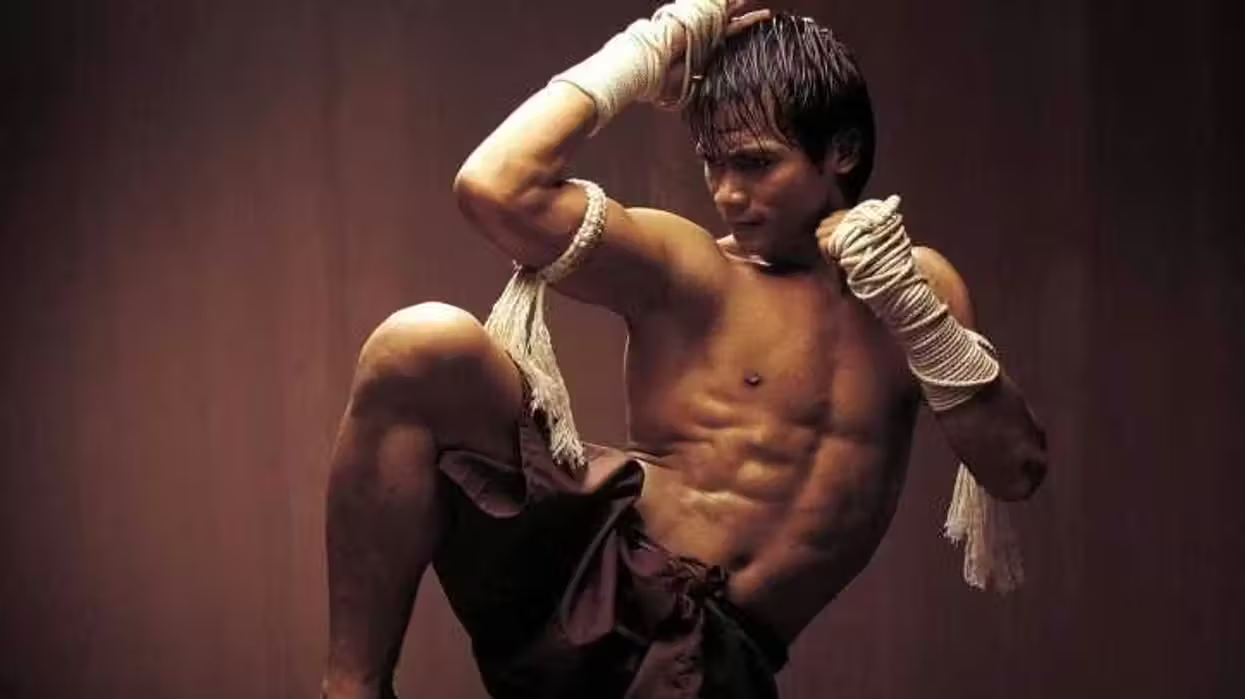
However, while you could make the case that Tony Jaa is the star of Ong-Bak and the franchise, a better case can be made that the star was actually the martial arts itself as Jaa’s impressive feats of Muay Thai fights and spectacular stunts really stole the show.
Similar to Bruce Lee’s introduction of Wing Chun (and eventually Jeet Kune Do) and martial arts in general to Western audiences in the 1970s, Ong-Bak and Jaa introduced Muay Thai and its powerful combos of devastating elbows, knees, and shin attacks to audiences looking for fight sequences that could look more real, more painful, and more ultimately awesome.
The rise of Ong-Bak, Jaa, and Muay Thai altogether also timed out nicely with the rise of the Ultimate Fighting Championship and mixed-martial arts culture, which began to find its footing in America and the rest of the world in this same period.
The Uniting Force of Ultimate Action
Still, at the heart of it all was the original Ong-Bak film, which features a simple story about a Buddhist monk trainee (and Muay Thai fighter) from a small village who must travel to Bangkok to recover the head of a Buddha statue stolen from his town.
The film, and the subsequent prequels, showcased what Jaa and Muay Thai in general do best with fast-action fight sequences, feats of agility and strength, and eventually some set pieces with near-endless streams of extras and stunts that wowed audiences all over the world.
The goal of the film was always meant to launch Muay Thai and Thai action filmmaking on a global scale, as director Pinkaew reportedly even sprinkled messages written on walls in the film directly for his favorite filmmakers, like Steven Spielberg and Luc Besson, to read, imploring their attention and support.
And, to be honest, the film did just that as it would go on to be not only a breakout hit, but it did launch these careers, and it brought audiences together from across the world to enjoy something which is so simple and fun—which one could argue is the greatest success an action movie, or film in general, could hope to achieve.