“Noirvember" was a social media challenge coined by film writer Marya E. Gates to get cinephiles to watch noir movies throughout the month of, you guessed it, November. Over the past few years, I have seen the popularity of this themed month grow, with even the streaming service Kanopy offering a special curation. Finally, I gave myself the time to enjoy it this Noirvember, and I didn’t regret it.
The movies were full of secrets, passion, and moody style. What else caught my eye was how queer representation evolved, from gay subtext in the film noir classic Strangers on a Train (1951) to the neo-noir Bound (1996) that took queer themes out of the shadows.
Let’s get into it.
Gay-Coded Villains
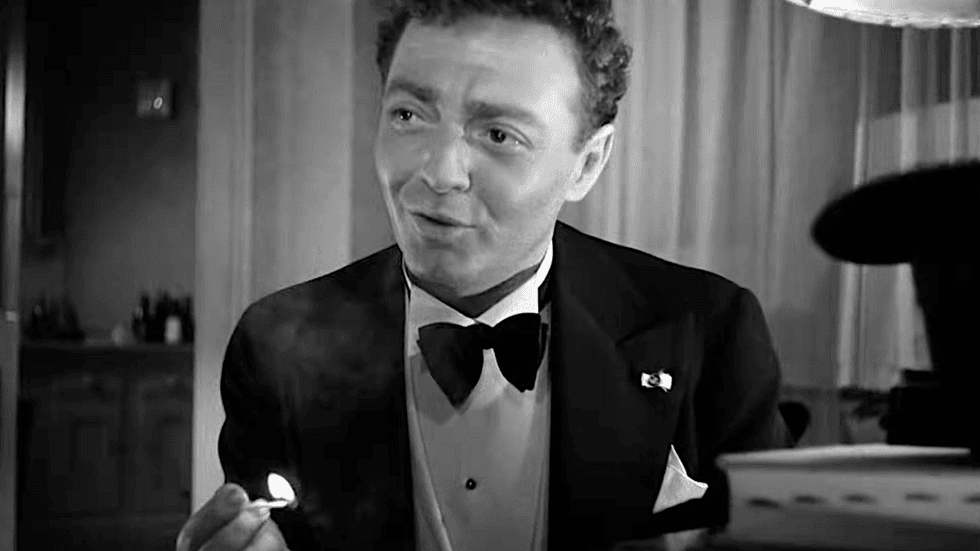 'The Maltese Falcon' Credit: Warner Bros. Pictures
One of the earliest film noir movies, 1941’s The Maltese Falcon, stars Humphrey Bogart as the macho private investigator Sam Spade, who is surrounded by shifty characters who want to get their hands on the titular, priceless statuette. One such person is the flamboyant henchman, Joel Cairo (Peter Lorre).
When he holds Spade at gunpoint, Cairo checks to see if the PI is carrying a weapon, but the smirk you can see on Lorre’s face can easily be interpreted as Cairo checking Spade out. That’s not to mention how seductively Cairo handles his cane when he sits near Spade. The Hays Code in Hollywood censored what movies could include, leaving filmmakers to imply character details rather than explicitly reveal them. Having them be villains did ease some of the censorship as well.
The usual suspects where this is done are in Laura (1944) and Desert Fury (1947), but one of the more devilishly charming gay-coded villains is in Strangers on a Train, directed by Alfred Hitchcock.
Bruno Anthony (Robert Walker) is a psychopath who wants to do criss-cross murders with tennis star Guy Haines (Farley Granger), for what could be the perfect crime that neither would be suspected of. When Bruno kills Guy’s wife, he expects Guy to do his part, and when that doesn’t happen, Bruno invades every part of Guy’s life.
Dangerous Obsession
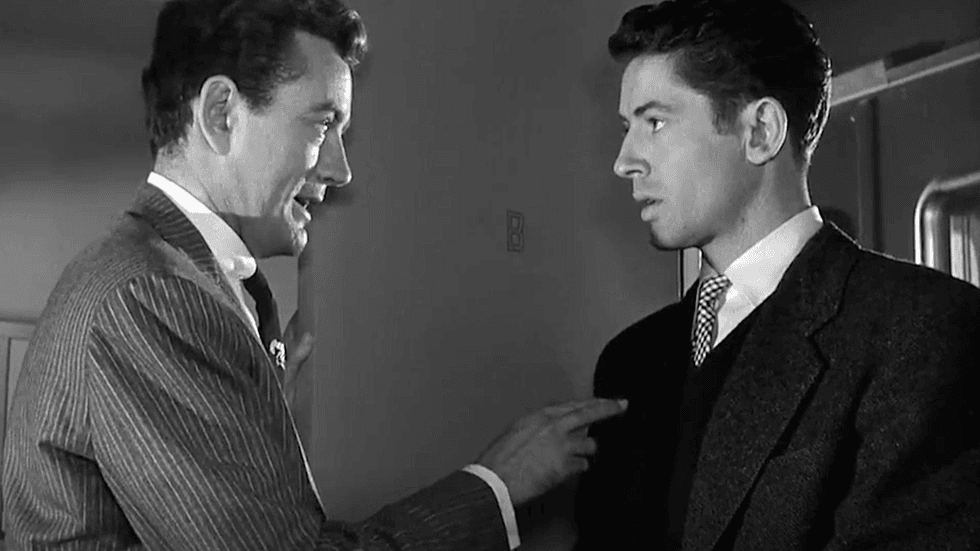 'Strangers on a Train' Credit: Warner Bros.
Bruno is meticulously well-dressed, a common detail to signify his sexuality, as it was done with Cairo in The Maltese Falcon. There is also the unusual relationship between Bruno and his mother, but how obsessive he becomes over Guy is what can raise your eyebrows.
Strangers on a Train is based on the novel by Patricia Highsmith, a lesbian author who put gay subtext into her crime writing. This made for great source material for Hitchcock, who frequently covered sexuality and repression in his films.
Giving Strangers more relevance for when it was released was the Lavender Scare. As the Red Scare made United States citizens fearful of Communism, the Lavender Scare was a moral panic that targeted closeted government workers. The use of Washington, D.C. as one of the main locations in Strangers, along with Guy's political aspirations, is almost blatantly pointing out the gay subtext for the audience.
One of the creepiest scenes for me is when Guy spots Bruno standing on the steps of the Jefferson Memorial. He’s being stalked, and he can’t do anything about it without “outing” himself to friends or police by explaining how he knows Bruno. There is a horror tone to the scene that reminds me of a monster-in-the-distance shot — think Michael Myers standing near the hedge in 1978’s Halloween.
The 1940s and 1950s are known as the golden age of film noir, and the next stage of these movies changed them into the "neo-noir" by the 1960s, where one confronted bigotry on-screen and in the real world.
Blackmail and British Cinema
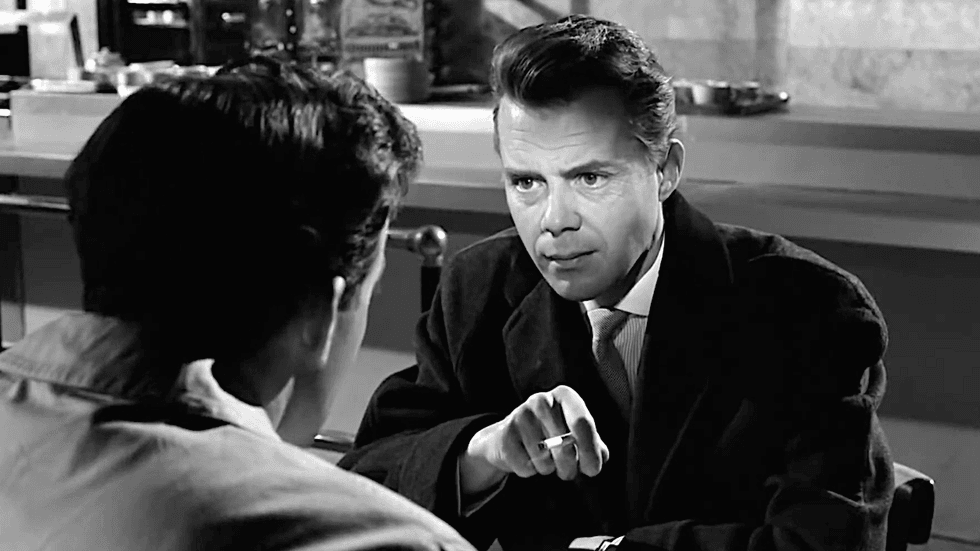 'Victim' Credit: Rank Film Distributors
Victim (1961) was the first English-language movie to use the word “homosexual,” and was given an “X” rating by the British censors for this, along with its queer-centric story. (An “X” being a rating typically given to movies with graphic violence or sexual content, which Victim had none of.)
The movie follows Melville Farr (Dirk Bogarde), whose life, which he has carefully built, falls apart as closeted gay men are blackmailed, resulting in the suicide of someone close to Farr. A married man and a rising lawyer in London, Farr has never physically acted on his sexuality, yet he has been emotionally attached to men. To have this exposed would be ruinous, as audiences at the time would know that being openly gay was criminalized in the United Kingdom.
The taboo-breaking story is based on real-life anxieties and discrimination, making for a distressing watch that I would highly recommend to those who haven’t seen it, even as it had me infuriated by the end.
As Victim humanized its gay characters, surrounding them with straight people who reacted to them with pity or disgust, it’s also a very good neo-noir. There is the moody black-and-white imagery and the feeling of doom that there will be a dark ending. The cost of bringing the blackmailers to justice will mean the end of Farr’s legal career.
If Victim broke away from the gay subtext of the past, another neo-noir went further with a tale of sapphic romance and mafia danger that subverted a famous character trope.
The Femme Fatale of the ‘90s
 "Bound' Credit: Gramercy Pictures
There was a male gaze in film noir of the 1940s and 1950s in how it centered on the male hardboiled detectives or the men who couldn’t control their lustful impulses. The result? They were caught in a trap set by the femme fatale, a devious woman with ulterior motives. This character trope in noir stories doesn’t always need to stay the same. The filmmaking duo and siblings, the Wachowskis, subverted it in their directorial debut, Bound (1996).
In the same apartment building, the vampy Violet (Jennifer Tilly) is dating Caesar (Joe Pantoliano), a money launderer for the Mafia; the butch Corky (Gina Gershon) is hired by the Mafia as a handyman in the apartment next door. When the women cross paths, they start an affair and find a possible escape from their old lives by stealing money from the mob.
As Violet and Corky get the men to blame each other for the missing money, Bound leaves you unsure if the women will betray each other. That would stay true to the doomed lovers trope of classic noir, but the Wachowskis give Violet and Corky a happy ending.
Bound went on to win an award at the 8th Annual GLAAD Media Awards for its inclusive representation; however, not every ‘90s neo-noir was considered progressive. Gay rights activists protested 1992’s Basic Instinct, where the queer sexuality of the main women was interpreted as leading them into hedonism or violent jealousy. This felt like a return to the queer monster of the likes of Bruno in Strangers on a Train.
Letting queer characters be flawed makes sense in noir stories, but their sexuality shouldn’t be the defining character trait to represent their darkness. Two movies from the 2020s flip expectations like this, showing how far queer representation has come.
Modern Neo-Noir
- YouTube www.youtube.com
Decades after Victim, the London-set Femme (2023) deals with internalized homophobia. Jules (Nathan Stewart-Jarrett) is a drag queen who is attacked by a street thug and unable to move past it. Jules then finds Preston (George MacKay), the man responsible for the attack, at a gay sauna, and a plan to seek revenge takes shape as the two meet up for sex, Preston unaware of who Jules really is.
Getting into the thorny issue of outing someone as revenge, Femme doesn’t go for easy answers as Jules and Preston’s hookups turn more intimate. An almost unbearable amount of tension builds in each of their encounters as the chance of the truth being discovered escalates.
In Love Lies Bleeding (2024), a grimy desert town is the setting where Lou (Kristen Stewart) hooks up with aspiring bodybuilder Jackie (Katy O'Brian), a decision that eventually leads them into trying to escape from the control of Lou’s criminal father. Murder, a cover-up, and gory consequences ensue, with Lou and Jackie’s violent behavior and past secrets complicating whether they can trust one another. When things get very horny between the two, it feels more liberating than how the sexuality of the deadly women was handled in Basic Instinct.
Across their neo-noir stories, Lou, Jackie, and Jules get to fulfill the moral ambiguity that was reserved for straight, traditional leads of noir’s past, without the three being confined to villain roles.
There was no better way for me to spend my Noirvember than by sinking into the darkness and desire of the golden age of film noir and neo-noir. Subtext was never going to be enough in how queerness was put into these stories, and it has led to exciting subversions.
How many of these movies have you seen?