Paul Gandersman on Co-Directing, Writing, and Editing His Feature Film Debut 'Man Finds Tape'
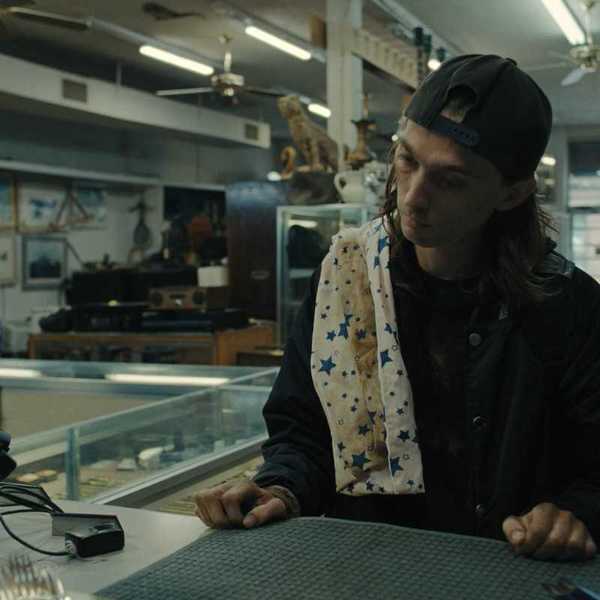
Premiering at Tribeca, Man Finds Tape is a faux-doc style horror film from co-directors and co-writers Paul Gandersman and Peter Hall.

The story follows Lucas Page, a viral YouTuber known for his creepy video series, and his sister, Lynn, as they investigate a murder in the center of their hometown of Larkin, Texas. But their investigation quickly goes haywire when the two are swept up in a decades-old supernatural phenomenon that involves Larkin’s residents and charismatic reverend.
Paul Gandersman, who also co-edited the film, walked us through how he used Premiere Pro to bring this mixed media narrative to life and manage a combination of photos, graphics, voiceovers, glitch tracks, VFX, and more: “Premiere Pro was the workhorse for this film, and the vast majority of what you see on screen was done within the platform.”
Read on for our full conversation with Gandersman, and don’t forget to check out Man Finds Tape.
How and where did you get into directing and editing?
Paul Gandersman: I had a love for filmmaking from a very young age and did everything I could to gain access to gear as a teenager. My parents gifted me a Hi8 Camcorder, and I worked all summer at Kings Island (a Cincinnati-based, previously owned by Paramount, amusement park) as a 15-year-old to save money to buy an iMac DV, which had a FireWire port and iMovie.
Once I started to learn the process, I never stopped. Editing was something that I always had love for, as it’s the last step in the creative process that brings the movie together. I’m a writer, director, and editor, and I view all three as different steps in the same process of telling a story. It’s imperative to me to be heavily involved in each step.
Tell us about a favorite scene or moment from this project and why it stands out to you.
PG: My favorite editing moment in this process came very late in the game. There is a heavily emotional moment that had always existed in the last five minutes of the film since it was originally written. We see the first half of the scene about 30 minutes into the film, and the second half at the end.
Shortly before picture locking, Peter suggested we have the entire scene play out 30 minutes into the movie instead of ending with that beat, an idea I was against. But Peter and I have such a great working relationship and respect for each other, so I sat down and tried the change out, giving it my best effort. I played it back and instantly loved it. He was absolutely right, and it made the movie much, much stronger, with some pretty heavy domino effects throughout.
I love this moment in the process so much because it goes to show that you should always challenge your own ideas, even if they’ve been part of the script since the beginning.
What were some specific post-production challenges you faced that were unique to your project? How did you go about solving them?
PG: Man Finds Tape is a mixed media film, full of intentional “glitches,” lo-fi security cameras, and noise effects. In fact, every single clip in the film has at least one effect on it. On top of this sucking up a lot of RAM, it also necessitated the need for a very clean sequence in order to find what we were looking for.
We had close to 20 video tracks in Premiere Pro for things like: regular video tracks, “glitch” tracks, security camera tracks, interfaces, photography, VFX, on-screen-text, subtitles, etc. Thankfully, Premiere Pro’s easy-to-use track layout allowed us to manage these smoothly.
What Adobe tools did you use on this project and why did you originally choose them?
PG: We decided from the beginning on Man Finds Tape that we wanted to go with Premiere Pro. We would be working with other teams on this one (VFX, Sound Design/Mixing, Color, etc.) and had to use software that met industry standards and didn’t require a bunch of workarounds. It was also necessary for the track layout we knew we’d need, as well as easy effect integration for use with effects we found elsewhere.
Premiere Pro was the workhorse for this film, and the vast majority of what you see on screen was done within the platform. Many of the effects, all of the on-screen text (including credits), and even some of the sound effects/manipulation/intentional degradation were done within Premiere Pro, and our entire security camera look was built using effects in Premiere. Our VFX work was also done by an artist, making magic happen using After Effects.
If you could share one tip about Premiere Pro, what would it be?
PG: Organization is critical. And not only organizing your bins, but making sure your sequence has logical, easy-to-understand organization by using the brilliant track system and labels.
What’s the toughest thing you’ve had to face in your career and how did you overcome it?
PG: I’m not sure I’m able to boil it down into one specific “thing,” but I can say that the journey to get to this point – Peter and I finally releasing our first feature – was far longer than I ever would have expected. I’m forty years old and have been wanting this since I was a kid. But I wouldn’t have done it any other way. Those years spent grinding away, producing, editing, etc., were all about learning. Growing as a creative, developing an outlook, and having something to say. I shudder to think about what our films would have looked like if we had made them in our twenties, with such a limited worldview. While the journey has been long, I’m happy and thankful for the place it’s brought us to.