Editors Erin DeWitt and Nate DeYoung on Bringing Together Two Distinct Perspectives in 'Our Hero, Balthazar'
In the Tribeca film Our Hero, Balthazar, a privileged New York teen’s activism collides with a real online threat, leading to a cross-country crusade against a potential mass shooter.
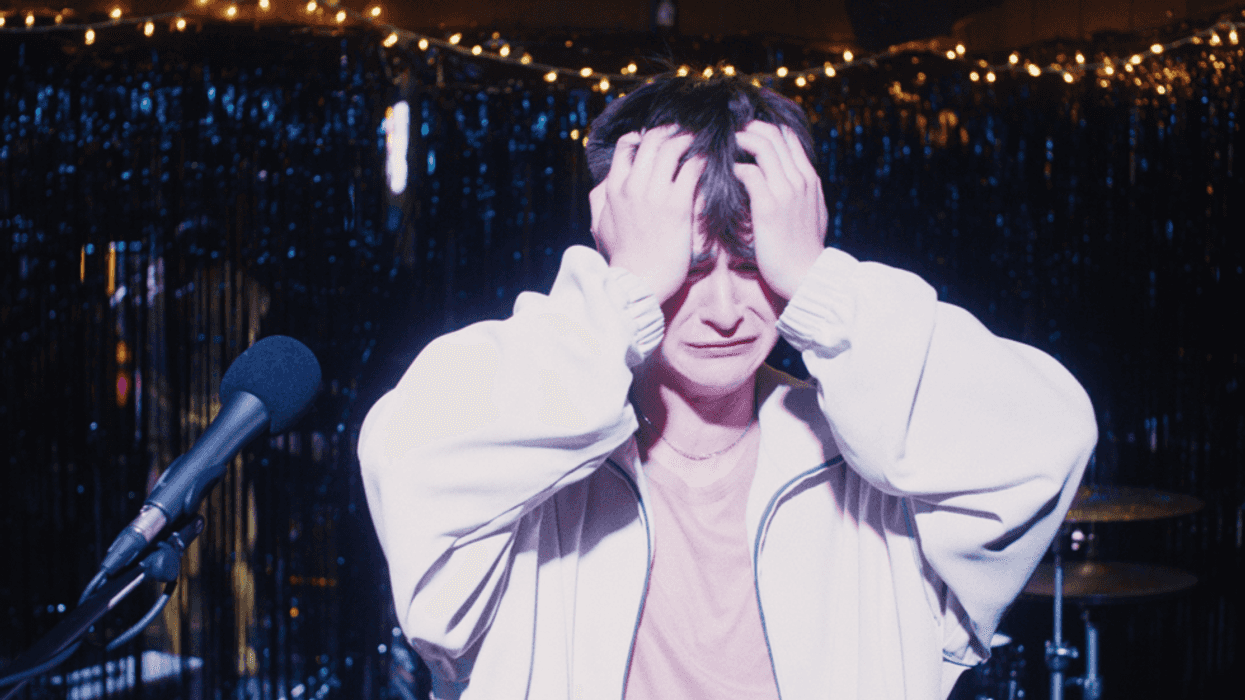
'Our Hero, Balthazar'
Directed by Oscar Boyson, the film balances dark comedy with emotional depth to paint a nuanced picture of two individuals from a vastly divided America.
Editors Nate DeYoung and Erin DeWitt collaborated closely on this thought-provoking narrative, leveraging Productions in Premiere Pro, After Effects, and Frame.io to ensure their joint workflow was seamless. Because the film takes place across New York and Texas and toggles between the POV of two very different main characters, having two editorial perspectives on the project was key to crafting a cohesive, impactful storyline, while also making room for experimentation with structure along the way.
Read on to learn more about DeWitt and DeYoung’s creative process on this film below.
Tell me a little bit about yourself and the various projects you work on.
Nate DeYoung: I’ve been a freelance commercial editor and animator for about 20 years. “Our Hero, Balthazar’s” director, Oscar Boyson, and I have worked together for more than a decade, mostly on short docs and commercials. Along the way, we stumbled into the very talented Erin and have made some of my favorite projects together.
Erin DeWitt: I’m so grateful to have been stumbled into by Nate and Oscar! Some of my early experiences were working on projects with them and I’ve been lucky enough to work on seven features to date, mostly fiction but a few hybrid projects too as well as several shorts.
How and where did you first learn to edit?
DeWitt: I was able to join a film the Safdie brothers were making about two brothers called “Good Time” as an assistant editor, which Oscar was producing at the time. I remember coming by his office with a drive of footage one day, not realizing that I would spend the next couple of years working with Oscar and Nate on projects that helped to develop my skills as an editor. Nate kindly took me under his wing and became my biggest mentor and I’m forever grateful to both of them for doing so.
DeYoung: I took a video production course in high school, and my computer teacher, Mr. Corliss, began by explaining how we should listen to him, because he’d already helped shape talented students who eventually went on to create “The Simpsons”. Mr. Corliss didn’t realize that his talented former student, Brad Bird, had just released his first movie, “The Iron Giant”, that year (1998). I already loved that movie, and that face inspired me to spend hours getting little edits just right.
How do you typically begin a project/set up your workspace?
DeYoung: Getting into a morning meeting routine with Erin to talk through the day was really helpful, keeping both of us focused, and it was a reminder of how much of a luxury it was to have two editors on the project. We’d be able to talk through ideas for scenes, and I think both of us would agree the movie is better for having two perspectives.
DeWitt: Yes! It was so grounding for me to be able to share our knee-jerk responses to the incoming footage together.
Tell us about a favorite scene or moment from this film and why it stands out to you.
DeYoung: Erin had the great idea to repurpose the cut part of a scene into a dream sequence, and it immediately became my favorite moment of the film. More importantly, the sequence spoke incredibly well to one of our characters’ burbling subconscious without being hamfisted or too literal. There’s one line in the script that I couldn’t forget: “With the Glock in one hand, Solomon scratches his head and looks at the ceiling. This is a lonely guy.” And I think this dream sequence really brought that feeling home in a way that just seeing a sad boy in his boxers ever did.
DeWitt: There’s a moment in the film where we leave our main character’s POV and enter our secondary main character’s perspective a little ways into the film, and, without giving too much away, we were struggling with how to transition from New York to Texas. It was a real question for a while whether or not it would work, but eventually, after many feedback screenings, we settled into the idea that an audience could accept it.
What Adobe tools do you use as a part of your workflow, and why did you originally choose them?
DeYoung: We used Productions in Premiere Pro on this film. It’s a nice way to keep everything as light as possible to work both quickly and collaboratively. We also used a lot of After Effects to swap the many screens that appear throughout.
DeWitt: Frame.io was great for getting eyes on the dailies during production in Texas and New York. It was thrilling to get to see the footage slowly growing into a real movie over the course of the shooting days.
If you could share one tip about Premiere Pro, what would it be?
DeYoung: I love adjustment layers, especially using them with the transform effect. I’ve also loved using audio track effects in the Audio Track Mixer to have dedicated reverb tracks. In other words, never nest!
DeWitt: Difference mode! There are so many applications for this tool in Opacity that I'm sure I haven’t fully grasped, but am always grateful for.
Who is your creative inspiration?
DeYoung: Our director, Oscar Boyson, had a very specific idea about the editing of the film. He wanted to make sure the movie was unique from the studio/indie world currently. So Erin and I had a crash course rewatching early 2000s European jump cut cinema. I loved going back to see “The Celebration,” the Pusher trilogy and even some late-period Lars Von Trier. But when I re-watched “The Phantom Thread,” I realized that that was the movie that most inspired me.
DeWitt: It was very freeing and also incredibly nerve-wracking to embrace the jumpy, jittery cuts that this film needed to express its soul. I’ve always admired the razor-sharp energy from the edit of “The Celebration” that balances between the lighter and darker beats of the story, so I relied heavily on that and “Breaking the Waves” during the edit process.
What’s the toughest thing you’ve had to face in your career and how did you overcome it?
DeWitt: I think one of the biggest hurdles for me was getting started. My mother is a retired teacher and began her career at the age of 24 in 1979. I assumed I would be getting started around that age as well, but for reasons out of my control, that path was out of reach for a while. I’m able to look back now and appreciate the fact that things turned out the way they did.
DeYoung: One big surprise when working on my first feature was realizing how little talking was necessary to communicate what you want in a feature. Coming from a commercial/short doc background where every second must be packed with explanation, it was pretty liberating to let the visuals and the actors' performances communicate without relying on characters conveniently explaining what was happening.