Behind the Scenes with the Directors and Editors of 'The Last Guest Of The Holloway Motel'
The Last Guest Of The Holloway Motel tells the story of Tony Powell, a former star football player in Britain, who disappeared decades ago to live alone at the Holloway Motel in West Hollywood.
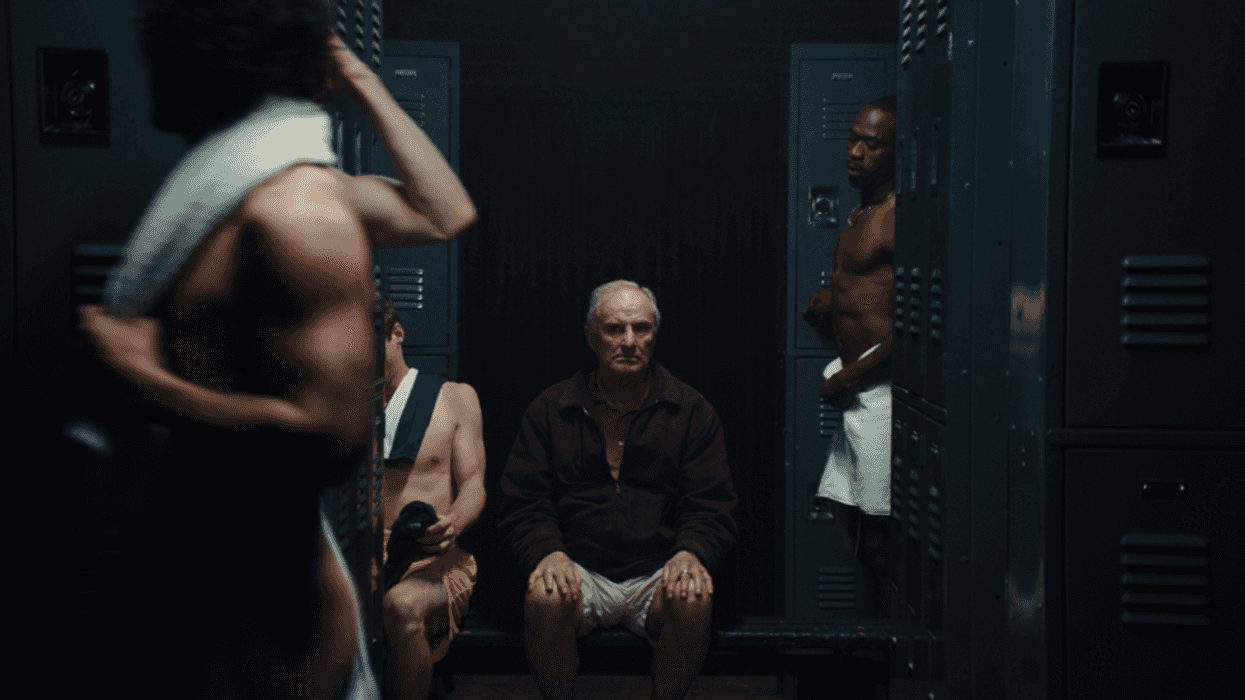
'The Last Guest Of The Holloway Motel'
Powell learns he’ll soon be evicted from the motel and realizes he needs to reconcile his past and potentially return home to survive.
Directed by Ramiel Petros and Nick Freeman, the documentary was shot over 130+ days. Editors Petros, Freeman, Alex Jablonski, and Davis Coombe relied on Premiere Pro for everything in the edit (temp color, sound mixing, and light VFX), and Productions was essential for the editing team to work on the project simultaneously and share sequences.
Check out our full conversation with Petros, Freeman, Jablonski, and Coombe below for an inside look at the making of the film.
How and where did you get into directing?
Petros: Growing up, I was a voracious reader and loved to watch adaptations of the books I read. Repeatedly, I would find myself upset that the adapted films were not the films I had imagined in my head, so in the 7th grade, I decided I would become a director. From there, I would make the odd video project here and there with friends, but I wouldn’t get the chance to really direct until I went to film school.
Freeman: I’ve been making movies since grade school and always tried to convince teachers to let me do video projects instead of tri-fold poster presentations. Also, my brother, who is a musician, bought me a camera and asked me to make his music videos. I really got the directing (and editing) bug from there. I got my career start after film school, directing and editing music videos and short branded stuff, but I always had the goal of doing a feature.
How and where did you first learn to edit?
Jablonski: I came up under Barry Brown, long-time editor for Spike Lee, when I worked at 40 Acres and a Mule Filmworks as an assistant editor. Once I’d gotten my work done, they were fine with me staying late and cutting scenes to learn. It was a great way to just start to learn the tools and the rhythms of editing. I’d get so into it that the hours would just melt by, and I loved all the intricacies of it.
Coombe: In film school, I had only edited Steenbecks and Moviolas with Super 8 film. After graduating, my first job was as an overnight assistant editor, digitizing dailies. I edited documentary content for another 8 years before switching to Premiere Pro, and lately I work in Premiere Pro Productions.
What Adobe tools did you use on this project, and why did you originally choose them?
Petros/Freeman: Having worked exclusively in Premiere Pro since film school, it was our only thought to use it for this edit. We knew we'd be the only ones touching the footage for nearly a year before a formal edit began, and needed to work in a program we were fluent in.
Within Premiere Pro, we relied heavily on timecode-based auto-syncing and organized each shoot day into multi-camera sequences. We preferred working in multi-cam mode because it allowed us to keep everything packaged in one merged clip for timeline organization.
As post-production scaled and we built the post team, we converted the project into Premiere Pro Productions. This enabled multiple editors to work simultaneously and share sequences without needing to pass entire project files back and forth.
We used Speech to Text to transcribe all 130+ shoot days. We assigned speaker names and copied transcripts into a searchable master document, which saved us countless hours when trying to locate key moments or quotes. Later, we discovered Text-Based Editing, which became our primary method for pulling interview sound bites directly from transcripts – a huge time-saver.
Thanks to the versatility of the Adobe Creative Cloud, from edit through picture lock, we could do everything (temp color, sound mixing, light VFX) entirely within the software
Tell us about a favorite scene or moment from this project and why it stands out to you.
Petros: I really gravitate towards the surrealist scenes in the film. There is a moment early in the film where Tony watches security cameras at the motel, then archival video flickers overtake the images representing the memories he has buried and repressed. These moments stand out to me because they encapsulate the emotions Tony is discussing in a visceral, emotional way that is rarer to see in a documentary.
Freeman: My favorite scene is something that I don’t want to spoil. We shot it towards the end of production, and it is in the final act of the film. It’s a moment of true catharsis that we were fortunate enough to capture. What was meant to be lower-stakes b-roll became incredibly emotional, but we were ready. The audio was usable, we had two cameras rolling, no one bumped the tripod, and we captured something real. It’s rare to strike this perfect balance of preparedness and luck, and it’s given me a tremendous amount of respect for great documentarians.
Coombe: My favorite scene is about 30 minutes into the film, when we get to meet characters who had known Tony during his life in England. In those introduction scenes, you start to realize how complex everything is about to become, and it really magnifies the story.
If you could share one tip about Premiere Pro, what would it be?
Jablonski: I love the slip tool and use it all the time, sometimes if the rhythm of an edit is right - as in it’s coming at the right moment – but the cut itself feels funky, slip it 6 frames to the right or left and see how it feels.