Somehow, 30 years in, the Toy Story franchise is still in the business of making you feel things you weren't prepared for.
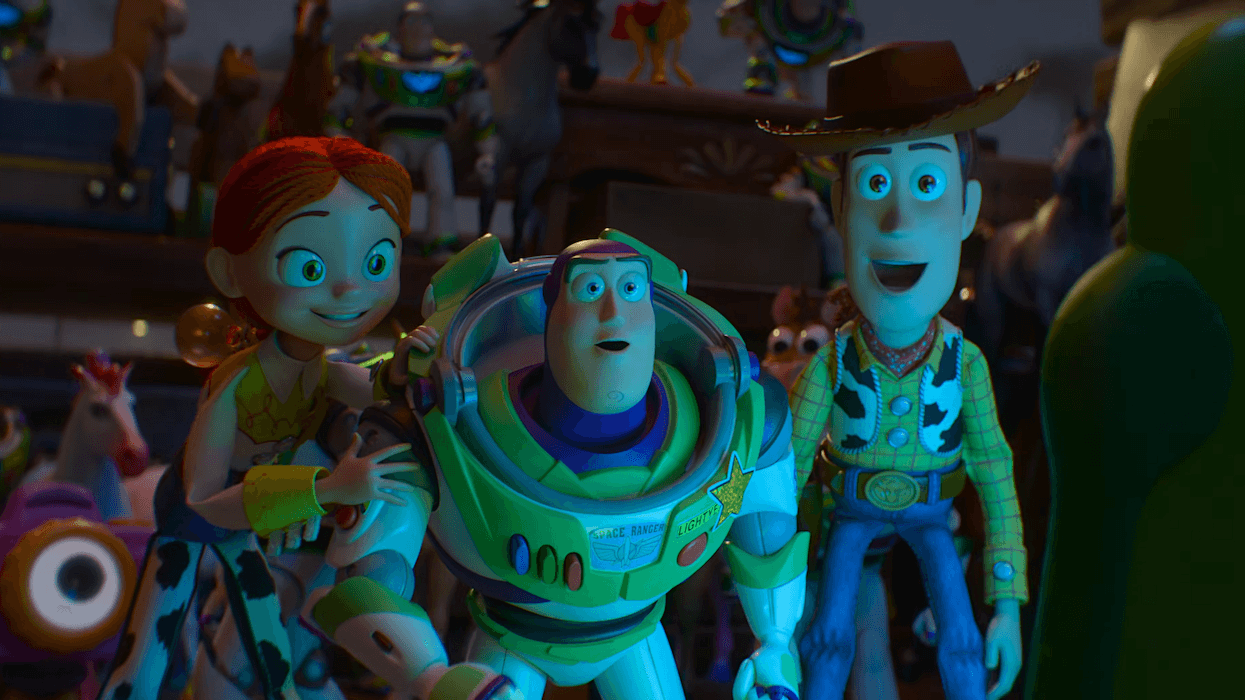
Toy Story 5, in theaters now, introduces a new rival for Woody (Tom Hanks), Buzz Lightyear (Tim Allen), and Jessie (Joan Cusack). The fresh arrival is a tablet named Lilypad, voiced by Greta Lee, who arrives in Bonnie's life with her own ideas about what's best for the kid. The toys' sense of purpose is on the line.
Writer/director Andrew Stanton and co-director/writer Kenna Harris recently joined host Paola Mardo on the In Proximity podcast to discuss the film, their writing process, and the storytelling principles behind Pixar's decades-long run of emotional gut-punches.
Stanton has been at Pixar since 1990 as the studio's second animator and ninth employee, with credits spanning Finding Nemo, WALL·E, and every Toy Story film in some capacity.
Harris joined in 2018 as a story artist, directed the short Ciao Alberto, and served as story supervisor on Inside Out 2. They bring different generations and vantage points to the same franchise.
Check out the full conversation here.
- YouTube www.youtube.com
"Make Me Care"
The phrase Stanton returns to in any development conversation, the one Harris said he practically demands, is three words.
"Make me care."
Stanton has been talking about this idea since at least his 2012 TED Talk, and on In Proximity, he's careful to clarify what he actually means by it.
"'Make me care' gets misconstrued with answering a philosophy question, like explain it on a test," he said. "What I'm really saying is it should be in the bones of the structural engineering of the story. I should be able to stand on a stage and say it, like a children's Golden Book, and tell you the basic things, even without specifics. Without the name of a character. Like, 'The man stands there, and the boy suddenly looks, and the man's suddenly gone in the grocery store, and he can't find him.' And you're tugged. It's like these basic physics."
What he's describing is a structural stress test. Strip away the character names, the world, the specifics. Reduce the story to basic emotional physics and see if it still holds. A man and a boy are in a grocery store, the boy looks away for a second, and the man is gone. You feel it before you've been told even who these people are.
If that pull isn't there at the structural level, you've got to find it.
Show the Theme, Never Say It
The most instructive example Stanton offers comes from the original Toy Story. The whole film is about jealousy. It's about Woody's displacement by Buzz, his sense of self under threat, but the word never appears in the script.
"What I'm proud of with that film is that we never say that word through the entire movie," Stanton said. The closest the script comes is Woody's line about being the one who should be strapped to the rocket.
His argument is that keeping the theme implicit makes it more powerful, not less. When you name it explicitly, you close down interpretation.
When it lives in the bones of the story, felt but never spoken, every viewer arrives at it in their own terms.
"Everybody walks away getting it," Stanton said, "but everybody walks away with their own theme of how they would express it."
That's the stronger outcome we should aim for. We've written before about how Pixar builds characters around internal needs versus external wants, and the original Toy Story is the canonical example of why that separation works.
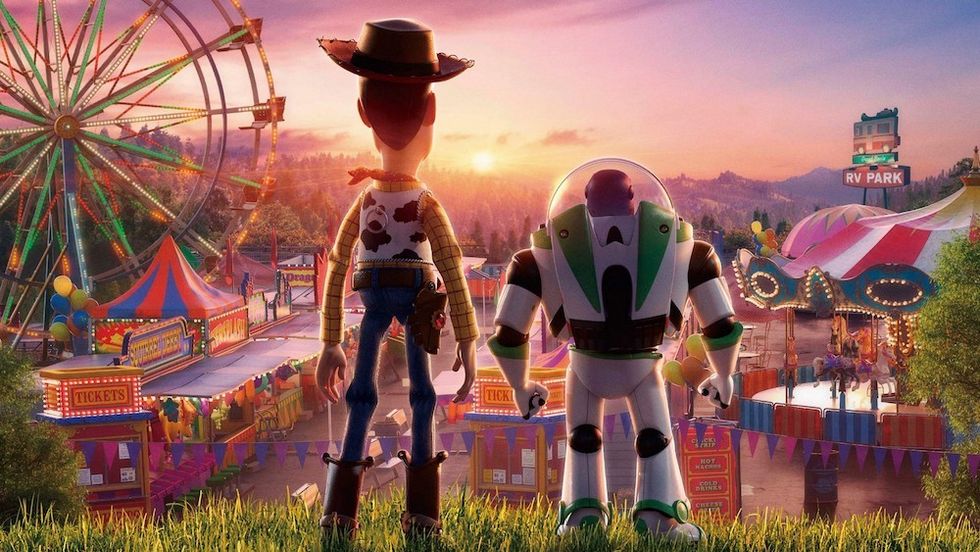 'Toy Story 4' Credit: Pixar
Why'd They Pick Technology This Time?
Stanton had been watching younger and younger kids hold devices in public since around 2017 or 2018. The pandemic accelerated that shift. He drew a parallel to how his parents' generation experienced the arrival of television, which was initially alarming, then normalized.
"I don't think it's going away," he said.
For the toys, the existential stakes are clear. Their shelf life is threatened in a new and specific way. But the film refuses a simple technology-as-villain setup.
"We quickly just decided that it wasn't binary," Stanton said. Parents aren't handing over screens thoughtlessly. They're just trying to figure all this out.
So, in the film's logic, is Lilypad.
The movie isn't preaching at you, which keeps Toy Story 5 from becoming a lecture and puts it in the tradition of Pixar stories that find universally human emotion in non-human characters and trust the audience to sit with the mess.
But it's also worth noting that this is likely to resonate with viewers of all ages. Adults, because it's timely, and kids, because it's familiar.
How the Heck Does Pixar's Writing Always Make Us Cry?
So what's the secret sauce? The "make me care" baseline is doing a lot of the heavy lifting. There's also a sense of safety in animation, they both said.
Harris said Pixar characters are, in their words, "a much more honest reflection of who we are as humans in a very, very flawed way."
Toy Story gave them characters to see themselves in.
"It just feels so much better to see myself on screen in Jesse," Harris said, "as she's having this, you know, expressing her anxieties or expressing her loneliness."
So build those relatable characters, even if you're writing for children, and even if the characters aren't human.
"I think there's something safer and more immediate for an audience member to project their issues onto an anthropomorphized something that isn't human or isn't them," Stanton agreed.
But if that connection weren't built already, the emotional endings wouldn't matter. It's all about the preceding 90 minutes of structural investment. Harris said the ends of Pixar films are "being carried on the shoulders of a movie where these people are working so hard to make you care."
When those characters get their climactic moment, you feel it twice. Once for them, and once for yourself, because you actually relate to them.