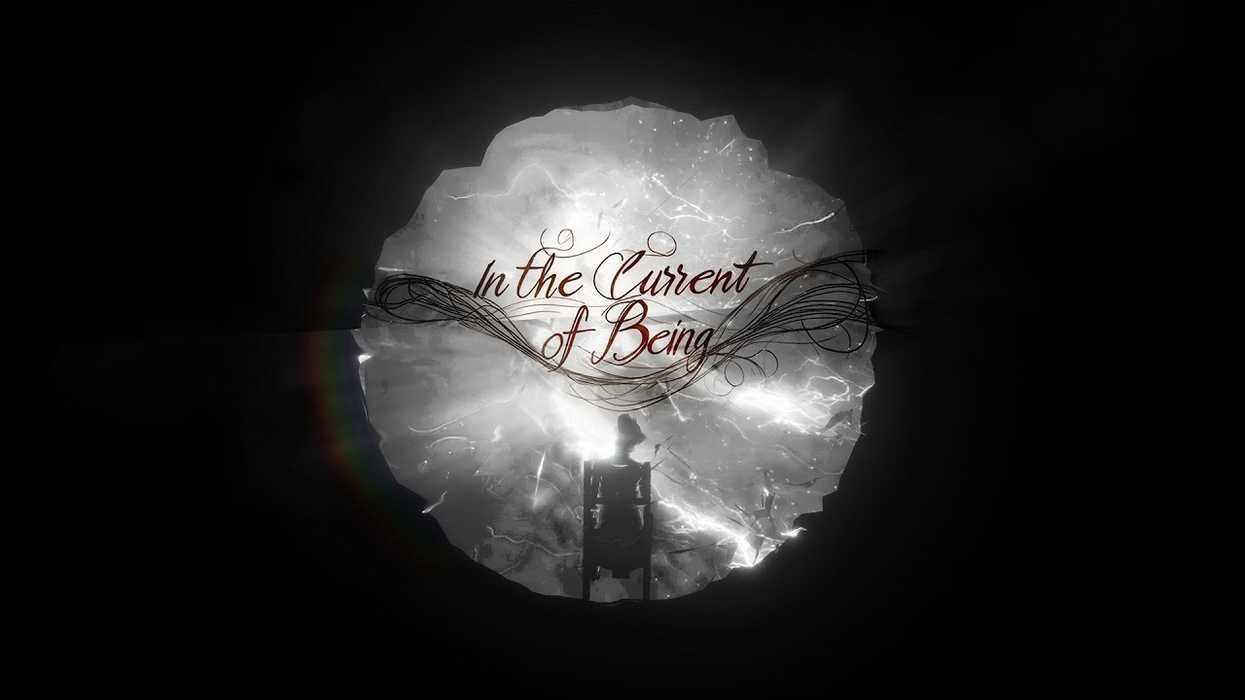
How do you compose a score for an experience that defies language? This was the central challenge for composer Prateek Rajagopal on the Tribeca-premiering VR installation, In The Current of Being.
The project immerses viewers in the true story of a woman’s harrowing journey surviving electro-convulsive therapy (ECT), requiring a sonic landscape that could convey memory, trauma, and resilience all at once.
I sat down with composer Prateek Rajagopal to discuss how he built a musical language for VR and the responsibility of translating profound human trauma into sound.
Let's dive in.
- YouTubewww.youtube.com
NFS: Hi Prateek! How did you use spatialization to shape the audience’s sense of Carolyn’s body and environment with In The Current of Being?
Prateek Rajagopal: Spatialization is the heart of this project. The moment you put on the headset, you’re transported into another world, and the haptic suit deepens that by translating sound into physical sensation. To match that, I approached the music as a living being. I used combined panning, hardware reverbs, and spatial imaging to create the illusion of movement, so the sound doesn’t just surround you – it moves with your experience.
NFS: I understand you often record and manipulate your own instrumental playing. Did your own body, as a performer, become part of the haptic design process in any way?
PR: My body wasn’t directly part of the process, but my background in extreme metal shaped the way I approached the music. Playing live in that genre is all about intensity – the riffs are punishing, and you find yourself pushing against the guitar, almost wanting to break the strings. I wanted to channel that energy into this project. Carolyn’s experience was brutal, and the music needed to embody that – visceral and unyielding.
NFS: Growing up in Oman and India, and now working in LA, do you feel your cross-cultural experiences have informed your work on this project or any others?
PR: I first grew up in Muscat, Oman, which is the most beautiful and serene city. Moving to Mumbai after that was the opposite – chaotic and almost lawless. Yet beneath the madness, there’s a harmony – an order within the chaos. Then came Los Angeles, a city wrapped in “a dream” but brimming with struggle and strangeness. Living through these different cultures has felt like living many lives. My personal journey has deeply informed how I see art, view the world, and how I create music.
NFS: Conversion therapy is a deeply political subject. How did you evoke this sense of controversy via the project's soundscape?
PR: I used white noise, distortion, sub-frequency drones, and really pushed the limiter to the edge of being unlistenable as a way to evoke that sense of confrontation. Given my background in underground subcultures where breaking boundaries is part of the language, these subjects have always been natural to me.
NFS: The haptic element seems to push audiences into a vulnerable, almost exposed state. How did that element of In The Current of Being shape your approach to its music as well?
PR: The first time I tried the haptic suit, it was unlike anything I’d ever experienced, especially in the context of this project. The suit was designed to simulate the sensation of being electrocuted, and I wanted the music to capture that same jolt. I recorded raw electric current sounds and wove them into the score, letting electricity become the connective tissue of the project.
NFS: Noise and distortion play a big role in your work. How do you balance such chaos and rawness with the need to generate empathy by the end of Carolyn’s story?
PR: Going back to my cultural background in Mumbai, where chaos is everywhere yet balanced by an underlying harmony – I carried that idea into the music. Once I channeled the chaos and rawness, the next step was to bring out the empathy. I used guitars to ground the piece in reality, and that clearly comes through in the final two cues of the OST: “Anhedonia” and “I Will Defy You.”
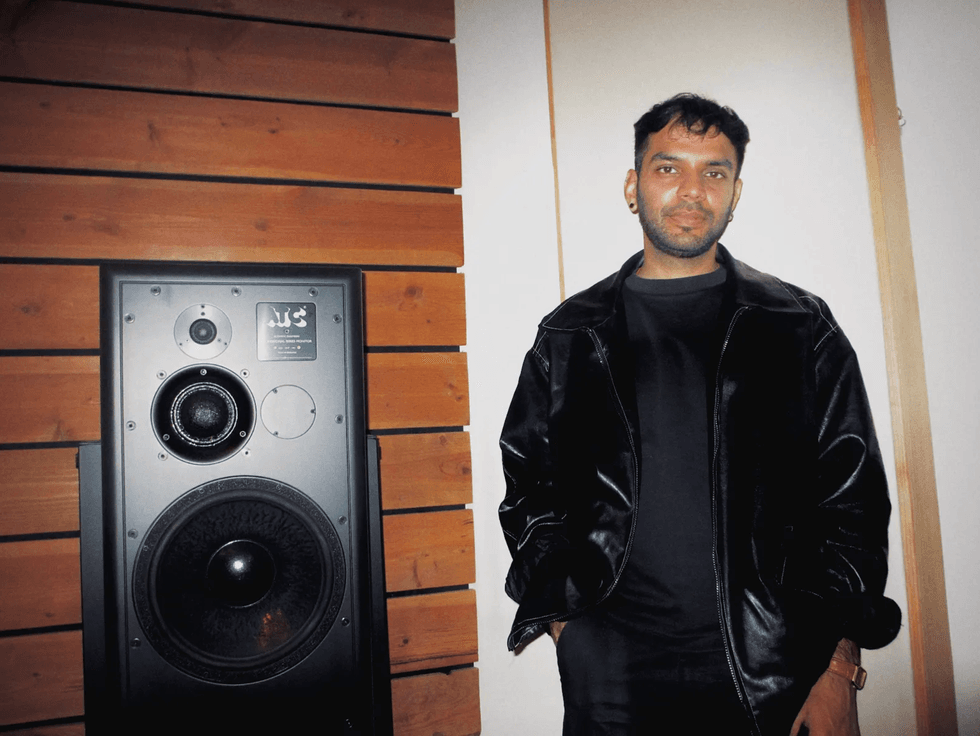 Prateek Rajagopal Credit: Impact24
NFS: Are there any other areas where you see the most exciting potential for haptic-driven and immersive experiences like In The Current of Being?
PR: We’re moving rapidly into the era of immersive storytelling, and honestly, even beyond it. Technology is opening up possibilities we’ve only begun to explore. It feels like we’re in the middle of something transformative.
NFS: Having lived so closely with Carolyn’s story, did working on this project alter your own relationship with sound, identity, or resilience?
PR: Absolutely. Projects like these always hold a mirror to your own perception of reality. They push you to look inward, to question your beliefs – and for me, that’s always a win.
- Watch: The World's First VR Feature Film Lets You Become a Robot Designed By Jeff Goldblum ›
- Steven Spielberg Shows Us The Power of VR in Pre-Production ›
- Enter the New World of Narrative VR Production, from Script to Post ›
- When Will VR Have its 'Jurassic Park' Moment? ›
- How a Composer Turned iPhone Voice Recordings Into the Creepiest Horror Score of the Year | No Film School ›