Editor’s Note: The following contains spoilers for ‘Disclosure Day’.
There’s been a growing trend in recent years with filmmakers in their twilight years releasing rather epic-scale films that tackle nearly all of their thematic history in one swing. Martin Scorsese did it with Killers of the Flower Moon, James Cameron did it with Avatar: Fire and Ash, and now Steven Spielberg is doing it this weekend with Disclosure Day. A film that seems to introduce a new conversation that is relevant to our times every five minutes. What’s most stunning about this is that through Spielberg’s signature otherworldly use of character blocking and David Koepp’s tight-as-a-travel suitcase script, all of them come together.
Are Humans the Center of the Religious Universe?
 ‘Disclosure Day’Credit: Universal Pictures/Amblin Entertainment
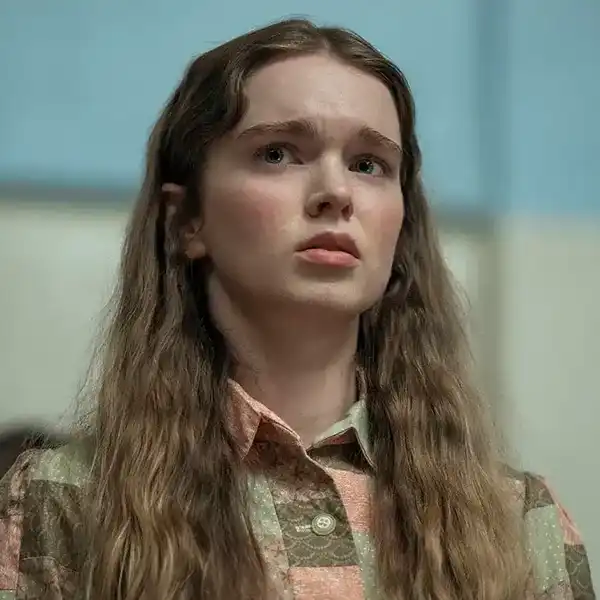
Eve Hewson’s character, Jane, is a woman who has left her Postulant candidacy on loving terms with the nuns in her parish. She often cites throughout the film her somewhat lacking faith in God as her reason for doing so, although other characters seem to have their own suspicions.
She serves a very important role throughout the film as a supporting protagonist who doesn’t necessarily believe that humans have the ability to handle being told all that Daniel Kellner (Josh O’Connor) has ready to go. She argues that religion and society, as we know them, will collapse, and with such deeply-rooted societal infrastructure being uprooted, the human race may never be able to reform itself. Especially considering the human race as they know it is already on the brink of war and collapse.
Her character is consistently one of the most fascinating throughout the film, as she shares a not dissimilar sentiment to Colin Firth’s antagonist, Noah Scanlon, yet still resents their methodologies put into practice. There are several scenes where Scanlon projects his consciousness either near or fully into Jane’s, where the camera will simply move from one side of her body to the next to indicate a switch. It certainly helps with communication that the characters have massively opposing eye colors, but it's the subtle movements that remind us that Spielberg is still the best to ever do it.
As the film progresses, it becomes clear that Jane’s arc revolves around one of the film’s many theses that humans are certainly not the center of the universe. In a remarkably written conversation between Jane and one of the nuns in her parish, the nun convinces Jane of this case by reciting the now-famous line from the first trailer, “Why would he make such a vast universe, yet save it only for us?”
Can Empathy Stop World War III?
 ‘Disclosure Day’Credit: Universal Studios/Amblin Entertainment
The first act of ‘Disclosure Day’ reveals that the United States has entered Defcon 2 in conflicts with overseas adversaries, and that tensions have not been this catastrophically high since the Cuban Missile Crisis. What has exactly caused this level of conflict is not immediately apparent, but what is clear is that the various territories involved seem to be allergic to communicating with one another in a productive manner.
Another argument that is posed from the anti-disclosure crowd in the film is that the response to extraterrestrial life will be inherently hostile, and that people will be predisposed to hatred for the presently unseen visitors. This is proven to be some form of projection, as it's clear that while the aliens came entirely in peace, they suffered abuse at the hands of governments and private enterprises at every turn. In fact, the explicit goal of the aliens was to help human beings communicate with each other better. Hence, the probing of Emily Blunt and Josh O’Connor.
While the long-term results of the literal Disclosure Day in the film are left relatively ambiguous by the film’s conclusion, the revelation sequence across various news stations depicts human beings crossing metaphorical picket fences and barriers at every turn to make sure all of their neighbors are properly aware. Everyone in the world tunes in, literally, and the messages the film leaves us with are a double entendre interpretation of “you are not alone”, as well as simply, “listen.”
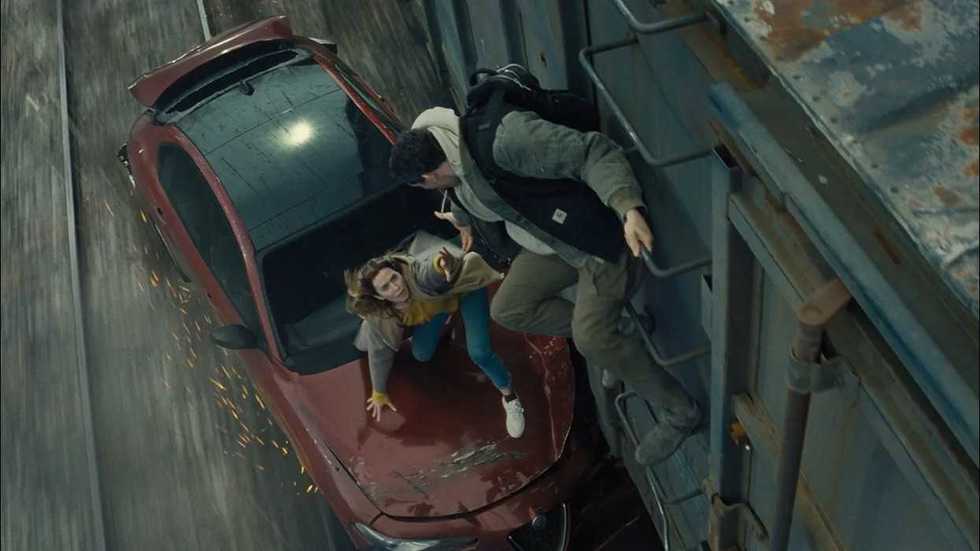
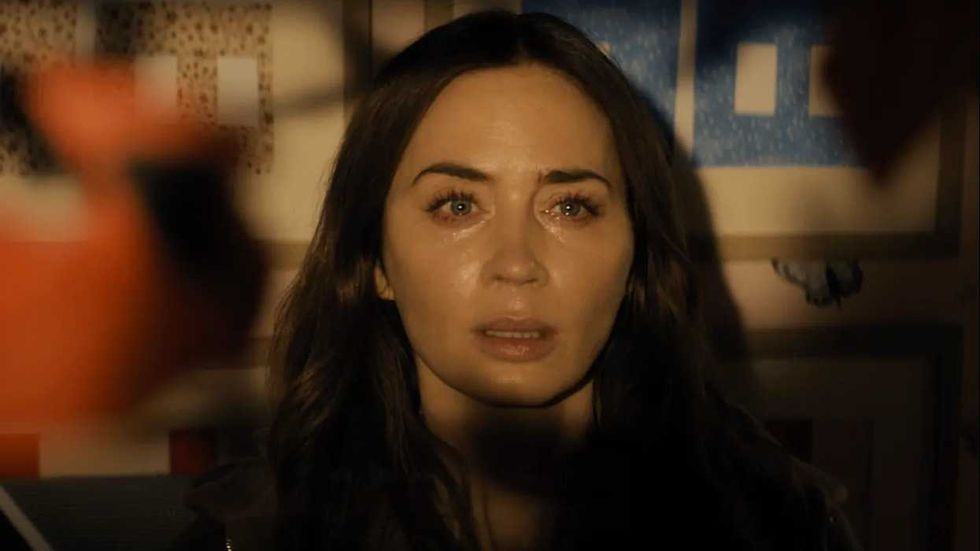
Emily Blunt’s character in the film suffers from chronic PTSD and mental health impairments from a traumatic event in her childhood, revealed to be the benevolent, albeit scarring, probing from the visitors. Throughout the film, she laments all of the uncertainties and unexplainable phenomena around her, as it seems that every time she gets closer to understanding herself, she runs away from it again.
Despite all of this, when she finally relives her memories in the model home made by Colman Domingo and crew, she experiences true peace and power for the first time in the film…simply by allowing herself to be seen.
Tying Everything Together
That’s what the film is ultimately arguing. See each other, see yourselves, and allow yourself to generally be less cynical and terrified of things you’re simply ignorant of. The ways the film presents these ideas, as well as many others not discussed today, are already proving to be divisive. It’s a sentimental message delivered by a sentimental filmmaker, but in my humble opinion, it’s exactly the kind of thing we need right now.