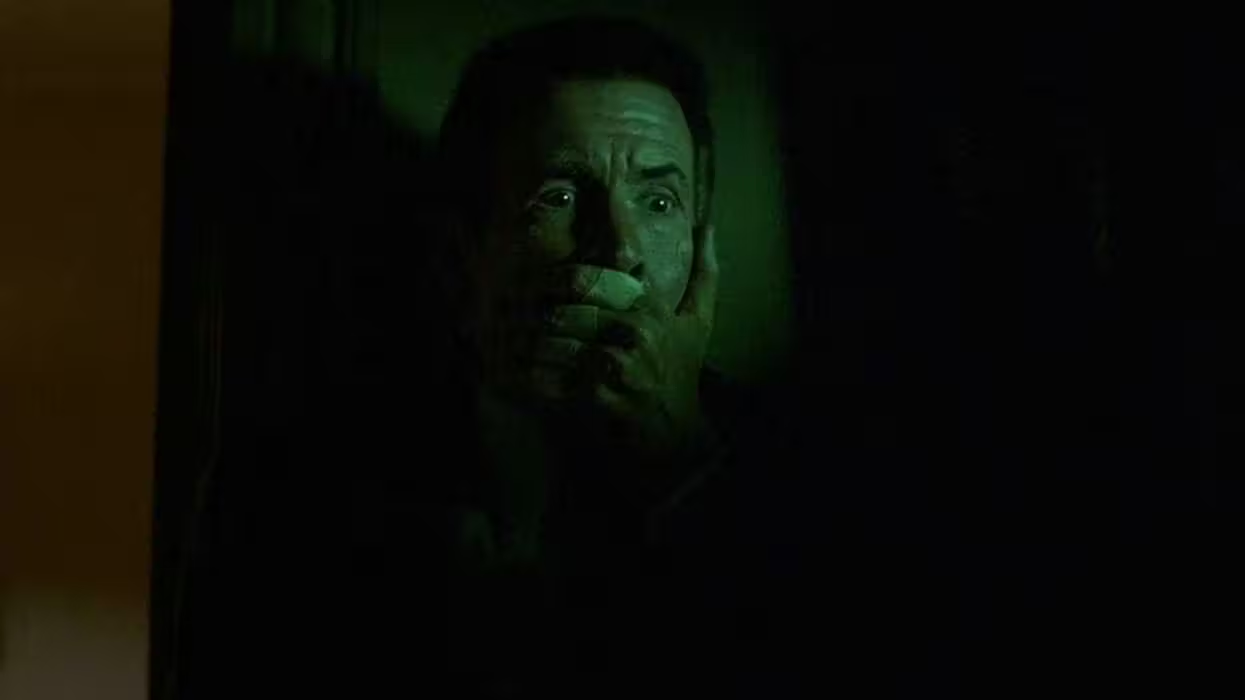
When Alfred Hitchcock died in 1980, he left behind an incomparable cinematic legacy. Many filmmakers have done their best to recapture his particular brand of cinematic magic, with many of these attempts taking the form of remakes of or direct sequels to some of his most famous works. However, a movie that stands above the rest in that respect is 1986’s Psycho III, which turns 40 years old on July 2, 2026.
Where Did Psycho III Come From?
Psycho III obviously doesn’t exist in a vacuum. The most wide-ranging franchise to ever be born from a Hitchcock feature started with 1960’s Psycho, which was the director’s adaptation of the 1959 novel of the same name by Robert Bloch. The movie followed various characters crossing paths with murderous motel owner Norman Bates (Anthony Perkins) while investigating the disappearance of Marion Crane (Janet Leigh), who is stabbed to death early on in the film’s iconic shower scene.
This shockingly outré (for the time) horror film became an instant hit, grossing $50 million against a budget of roughly $800,000 and kickstarting the American filmmaking movement that eventually snowballed into the slasher movie boom of the 1980s. With franchises like Halloween and Friday the 13th dominating the box office in the early ‘80s, enterprising producers saw fit to bring back Psycho in the form of a rare direct sequel to a Hitchcock movie. Perkins returned to reprise his role (opposite Vera Miles as Lila Crane) in 1983’s Psycho II, which is a very good film in its own right, directed by Hitchcock acolyte Richard Franklin (Roadgames).
It was also a hit, allowing the next sequel to come barreling into theaters in just three years rather than waiting another two and a half decades. This time, in addition to reprising his role as Norman Bates, Anthony Perkins took the reins as director (while he would only direct one other movie, 1988’s Lucky Stiff, his son Osgood Perkins would go on to become a major horror director in his own right, helming hit titles including Longlegs and The Monkey).
Psycho III Follows the Beat of Its Own Drum
What a lot of filmmakers don’t realize is that mimicking Hitchcock’s approach to filmmaking is only half the battle. Sure, aspiring filmmakers can learn many important filmmaking lessons from Alfred Hitchcock’s filmography, but that’s just the beginning of the story. Hitchcock was a filmmaker who was always seeking new ways to bring thrilling stories to general audiences, constantly pushing the envelope both in terms of expanding his own filmmaking toolkit and shocking audiences in new and exhilarating ways.
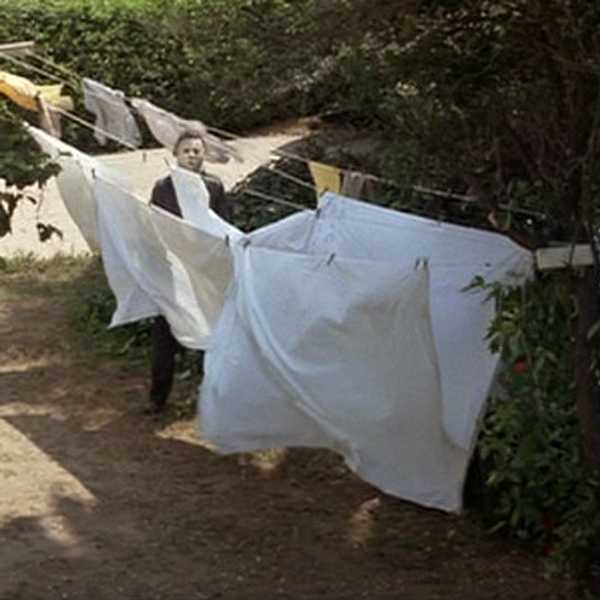
While Psycho II hews closely to the formula of the original movie, Psycho III pulls off a move that Hitchcock himself would have done by bringing on other influences and chasing its own ambitions. This includes Perkins reveling in the ability to drench a Psycho movie in color. His lurid scenes that are lit in cherry reds, sickly greens, and radioactive purples stand in stark contrast to the original movie, which was shot in crisp black-and-white.
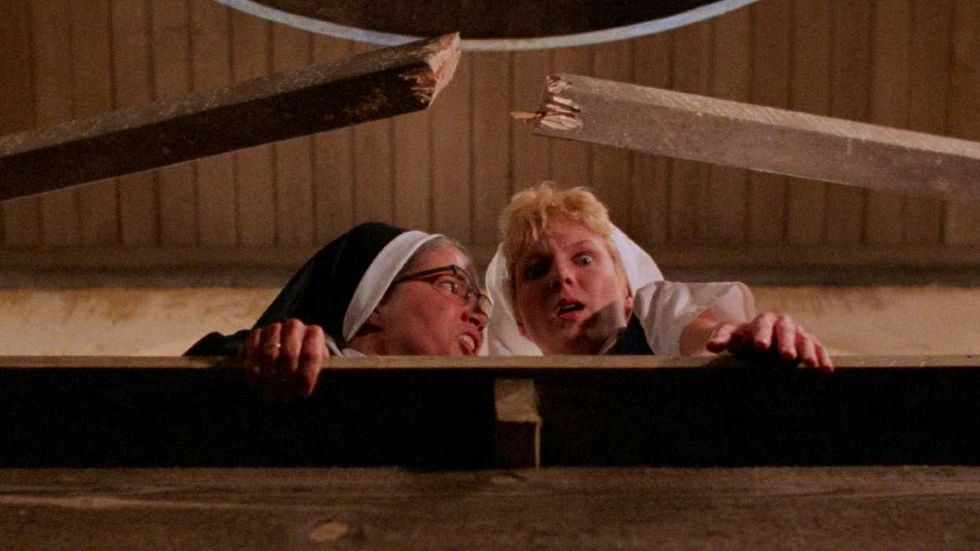 'Psycho III' Credit: Universal Pictures
It also draws inspiration from the wave of 1980s slasher movies that Psycho spawned, emphasizing its themes about Norman Bates being challenged by the reality of the modern era by forcing tropes of the Psycho franchise to do battle with the tropes of its golden age slasher descendants.
While it adds plenty of new material to the mix, Psycho III doesn’t skimp on its Hitchcock influences, either. A scene where Norman is attempting to prevent a police officer from discovering a body hidden in the ice chest at the Bates Motel is a bona fide nail-biter, and there are plenty more like it.
The third installment in the franchise also lives up to the legacy of the envelope-pushing original. Psycho debuted toward the tail end of the Hays Code era in Hollywood and ratcheted up the tension that 1960 audiences would have felt by intentionally breaking many of the code’s rules in ways both big and small (including showing a post-coital Marion Crane in her bra and becoming one of the first - if not the first - mainstream Hollywood movies to show a toilet flushing on-screen).
Psycho III follows in its footsteps with several bombastic measures, including opening on a shot of a nun (Diana Scarwid’s Maureen Coyle) screaming “There is no God!” Most of the other characterizations in the movie are similarly turned up to 11, including Jeff Fahey’s hyperbolically sleazy musician-turned-assistant-manager character Duane Duke.
How the Last 40 Years Have Treated Psycho III
Psycho III was less of a financial success than its two predecessors, only grossing $14.4 million against its $8.4 million budget (and sending the franchise to the small screen with the 1990 Showtime prequel Psycho IV: The Beginning, directed by Mick Garris). While it was nominated for two Saturn Awards, it didn’t receive attention from any other awards bodies. These factors may have been what led to it ultimately losing steam, becoming one of the lesser-known Hitchcock follow-ups in later years.
However, its reputation has been rehabilitated more recently, particularly in the wake of it getting a lovingly assembled Blu-Ray release via Scream Factory in 2013. It greatly deserves this rebound in esteem, too. By treating the original material with reverence but being unafraid to strike out in new directions, Psycho III stands out among the other follow-ups to major Alfred Hitchcock movies after 1980.
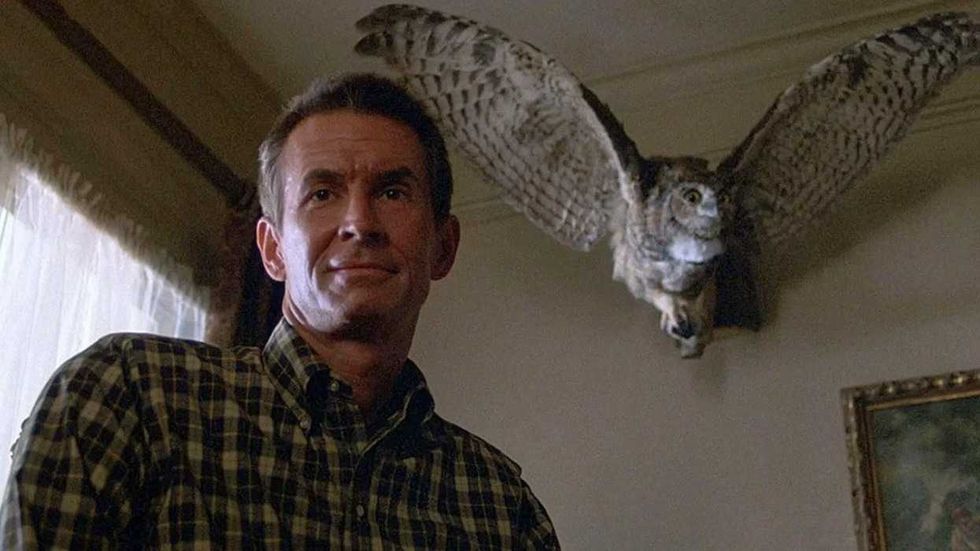 ‘Psycho III’ (1986)Credit: Universal Pictures
While there have been plenty of great films that have aped Hitchcock, like Brian De Palma’s Body Double, Eugenio Mira’s Grand Piano, and Park Chan-wook’s Stoker, most titles that directly follow or reboot Hitchcock classics (including re-adaptations of the same material, like 2020’s Rebecca) fail to hit the mark.
When considered alongside the many such films that have debuted in the past 40 years, including 1994’s The Birds II: Land's End or the 1998 TV movie remake of Rear Window and its 2007 young adult reimagining Disturbia, Psycho III certainly possesses a spark that could only have come from somebody who worked closely with the legendary filmmaker.
So where do you think Anthony Perkins’ Psycho III stands among the films that were directly inspired by Alfred Hitchcock classics? Are there others that you like better than the third installment in the surprisingly robust franchise (which also includes the television series Bates Motel and a 1998 shot-for-shot remake)? Sound off in the comments below!