3 Main Directing Lessons From Alfred Hitchcock
The master of suspense can teach you a ton about directing a movie.
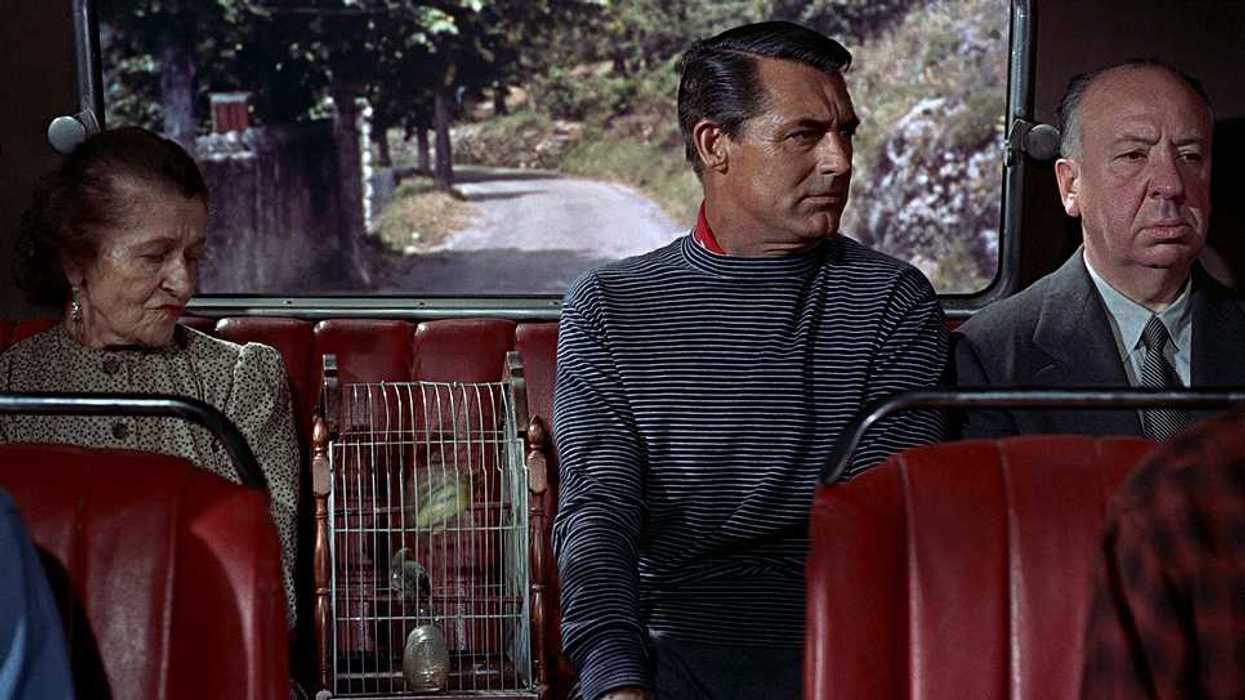
'To Catch a Thief'
I got a book on Alfred Hitchcock for Christmas, so you know that means I have been pulling apart each page and devouring all the stories and ideas they have to offer.
Alfred Hitchcock, the "Master of Suspense," was as much a psychologist as he was a filmmaker. He believed that a director’s job was to "play the audience like a piano."
But the book on him is big, and to share what else I'm learning with you, I decided to break down the main lessons for you to check out.
That way, you can focus on how they can help your work and then find the details within them to lead you down the right path.
Let's dive in.
- YouTubewww.youtube.com
1. Suspense vs. Surprise (The "Bomb Under the Table")
Hitchcock’s most famous directing lesson is the distinction between a sudden shock and prolonged tension for the audience. He believed that suspense is 100% dependent on the audience having information that the characters do not.
That way, you're feeling all kinds of dread as things creep around corners and out of the shadows. Maybe they're birds landing behind you or someone entering while you shower. But they become unforgettable moments.
Whenever possible, give the audience some key knowledge so they can worry about the characters. Or shoot things to open up the POV for the audience and not the character.
2. Hitchcock’s Rule (Size Equals Importance)
Hitchcock was a pioneer of Pure Cinema. That's a philosophy where the story is told through visual images rather than dialogue. He developed a specific cinematographic guideline often called "Hitchcock’s Rule."
The rule was basically this: The size of an object in the frame should be proportional to its importance to the story at that exact moment.
So if a character is talking about a glass of poisoned milk, the milk shouldn't just be on a table in a wide shot. As the threat of the poison grows, the glass should grow in the frame—eventually becoming a massive, looming close-up that fills the screen.
And bonus points if you can make that glass of milk glow.
Look at all your scenes -- can you tell the story of the movie with the sound turned off? Are the actions telling us more than just the words?
3. "The Camera is Not a Camera"
Hitchcock viewed the camera as a voyeur or a character in itself. That camera would peak and roam all around the frame. It could take us into a private moment to expose something to the audience.
The important thing was that it moved. The camera was the audience's point of view.
Hitchcock perfected the "Subjective POV" or the Kuleshov Effect. He would show a character looking at something, then show what they see, then show their reaction. This forces the audience to literally step into the character's shoes and share their guilt, fear, or curiosity.
You can make anyone feel anything that way. It's such a pure manipulation, but it gets to the essence of directing and editing,
Think about how he did it with the "Dolly Zoom" in Vertigo to make the audience feel the physical sensation of actual vertigo.
Don't just shoot, think about the point of view of the shots and what you can make the audience feel.
Summing It All Up
Hitchcock is one of my favorite directors of all time and a guy I go back to again and again to learn lessons about the way Hollywood direction needs to work.
These are the three main ones I come back to, but there are plenty of others. Just watch his work!
Let me know what you think in the comments.
- What Is "The Hitchcock Method" and How Can You Emulate It? ›
- How to Make a Film Like Alfred Hitchcock: A Breakdown of the Master's Techniques ›
- How Alfred Hitchcock Used Visionary Cinematography ›
- Alfred Hitchcock and Francois Truffaut Explain Surprise vs. Suspense ›
- Christopher Nolan Breaks Down the Narrative “Maze” Every Great Director Must Navigate ›
- 19 Times Hitchcock Played “Where’s Waldo” in His Own Movies ›
- 10 Iconic Hitchcock Scenes Every Filmmaker Should Study ›
- Alfred Hitchcock Once Gave Clint Eastwood This Simple Piece of Advice Over a Lunch Meeting That He Never Forgot ›
- Alfred Hitchcock Says Your Dialogue Is Killing Your Story ›
- What Western Directors Can Teach Today's Filmmakers | No Film School ›