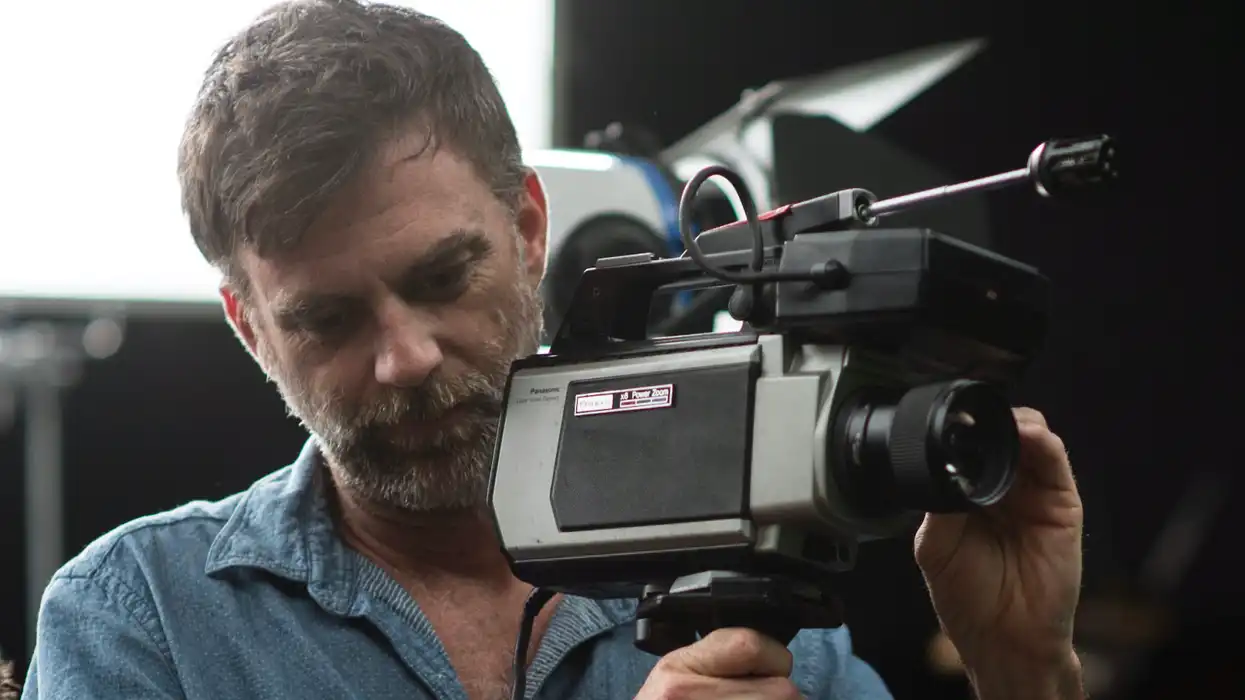
Paul Thomas Anderson spent an hour at Festival Theaters in Palm Springs a few months back, taking questions from critic David Ansen and the audience after a screening of Hard Eight.
He discussed how the film was taken away from him by Rysher Entertainment, recut, retitled, and reformatted. He got it back only after Cannes accepted his version into Un Certain Regard in 1996, which he paid to restore out of his Boogie Nights salary.
But when the questions turned to what excites him about filmmakers coming up now, Anderson didn't hand out much encouragement. It's not a bad thing. We can definitely learn from it. So let's jump in.
- YouTubewww.youtube.com
The Writing Isn't Keeping Up with the Directing
Anderson said he spent his early years fixated on the same things young filmmakers still fixate on. Things like format, gear, all the technical questions that feel enormous when you're 23 and, by his own admission, faking it. Cameras matter, right? Mmm. He waved all of it aside.
"You know a film by its story, by its connection to people always," he said. You can watch a movie and see exactly where the money ran out, and it doesn't matter, as long as the story is strong enough.
His real concern came next. "What I would like to see more of is more writing, more solid writing in filmmakers coming up," he said. He allowed that there's inventive, amazing filmmaking happening right now, but then said the writing underneath it has to be "so foundational and so strong."
In his view, things are wonky and lopsided now. The directing and technical sides might have improved, but writing didn't keep pace. Have you been spending all your energy on camera packages? Maybe reassess.
PTA has been saying for years that when something breaks in your film, you track it back to the writing, and he hasn't softened on it.
The Writers Went to Television
Ansen asked whether the strongest writers had migrated to TV. Anderson agreed and called it one of the problems.
"It used to be that the movies were the coolest things you could do. Now it's like, you know, it's kind of like a stepchild off to the side," he said with a laugh.
He wasn't sour about it. "But it's true that a lot of great writers have migrated to television. And I get it. I understand there's tremendous opportunities there."
If the so-called deepest writing talent has moved to another medium, the bar for a standout feature script is sitting lower than it should be. So maybe a sharp spec separates from the pile faster than a beautifully shot short or TV pilot does. (But who knows? We're trying to be optimistic.)
Nobody's Waiting for You to Get Better
Another part of PTA's answer was about the business. He said he came up at a time when Hollywood would nurture a filmmaker through two or even three films and let a voice emerge from experience. That seems less and less possible now, he said, and instead you watch people make one small film and sprint toward the biggest paycheck they can find out of fear it will vanish. He called it an epidemic.
Mike De Luca greenlit Boogie Nights at New Line before Hard Eight had come out and lost money. And it did lose money, roughly $223,000 in domestic box office against a $3 million budget.
That bet just doesn't get placed today, and it's the same in TV, where a show used to have some time to find its feet but now can get canceled even after a successful first season. The path in has gotten narrower and more crowded, which throws the weight back onto the page. If nobody is financing your development, the script carries it.
Anderson has been doing this for 30 years and still told the audience that every project starts him over.
"You're an amateur every time because every movie is different and it will present a whole new set of problems that you've never seen before," he said.
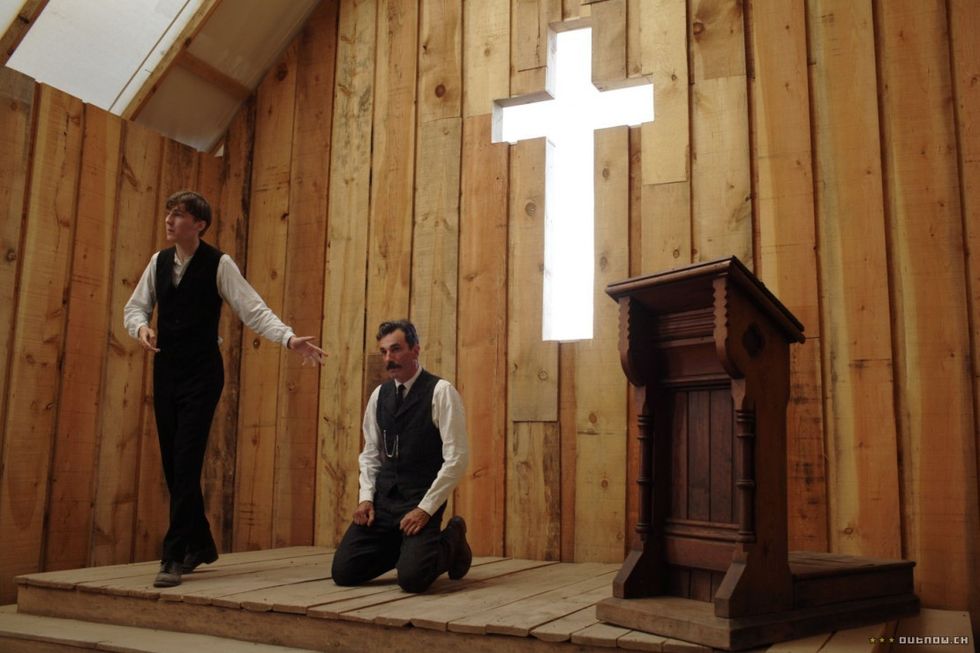 'There Will Be Blood' Credit: Paramount Vantage
Research Is the Writing
Anderson said There Will Be Blood was the first script that forced him to understand a world he knew nothing about. He didn't know how oil came out of the ground. He read his way in over a period of years, and the reading became the process.
"I've found that to be my happiest place when writing is when there's a combination of research to do with the writing," he said.
He's described this elsewhere as filling up the tank before you type. You gather names, places, textures, the small mechanics of how people moved through a world. Huge chunks of that might never end up on screen. But all of it shapes what eventually does, without you even being aware of it.
He gave the same account of Phantom Thread. He knew nothing about fashion and wasn't sure he even liked that world, but he learned that a London dressmaker in the post-war '50s was never going to be the best in the world, because the best were in Paris. That detail helped build the character.
Find the Thing We All Understand
Anderson said he once wrote pages and pages about oil coming out of the ground, imagining something along the lines of the whale chapters in Moby-Dick, until he admitted to himself it was boring. What he was really interested in, he realized, was the man and the child.
"I think you're always asking yourself, what do we all understand?" he said.
Then he applied it to his newest film, One Battle After Another.
"There's so many things going on in that movie, but the only way to keep it anywhere near in focus is to just remember that there's a father looking for his daughter that isn't even his daughter. What's the point? The point is get back to the people that will make it exciting for an audience," he said.
We've written about how that kind of throughline helps a complicated first act, as well as how close the film is to Finding Nemo. When your plot sprawls, how can you ground it again? You go back to the relationship the audience came to watch.
He credited a related version of the idea to production designer Jack Fisk, who told him during There Will Be Blood that they didn't need a special effect they couldn't afford. They had Daniel Day-Lewis.
All of PTA's screenplays are out there to read. Go find out what he means by foundational.