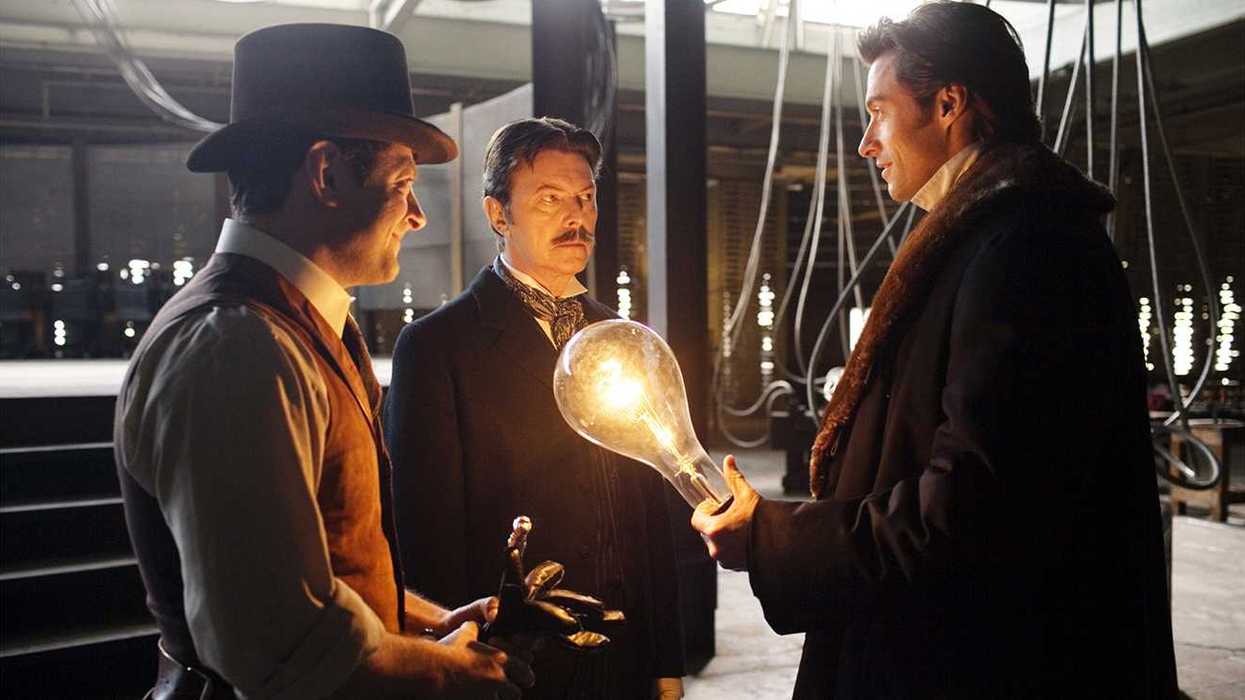
Christopher Nolan's The Prestige is a unique entry in his filmography.
Between the blockbuster ambition of Batman Begins and The Dark Knight, this 2006 period thriller about dueling magicians is unlike anything he made before or since. It mixes magic, science fiction, and psychological drama in unconventional ways, so it makes sense that it wouldn't look like your typical period film.
The project earned cinematographer Wally Pfister his first Academy Award nomination. Shooting a period piece about magic tricks in turn-of-the-century London, Pfister didn't go for elaborate lighting setups or locked-down cameras. Instead, he picked the camera up and followed his gut.
Check out CinemaStix's look at the film in their video below.
- YouTube www.youtube.com
"75% of that film is handheld, and even shots that are on a crane, I'm handholding the camera."
According to The Talks, Pfister operated the camera himself throughout nearly the entire production.
Most period films lock the camera down. The thinking goes that if you're recreating the past, you want audiences admiring the production design and costumes. But Nolan wanted the camera to move with the characters, not around them, allowing the audience to experience the story along with them.
Even when using a crane, Pfister would handhold the Panaflex Millennium XL2. The handheld approach created what Pfister describes as an "interactive perspective" that puts audiences right alongside the characters.
"I guess maybe it is somewhat my point of view or my perspective because you certainly use an enormous amount of your intuition when the camera’s on your shoulder."
Camera operating isn't easy. In American Cinematographer, Pfister said the first five weeks nearly broke him. The Millennium XL2 was no joke.
"After about five grueling weeks, I was finally able to keep up with the pace after sufficiently developing the muscles in my shoulders, upper and lower back."
Scenes could unfold in single takes, with the camera following actors in various positions, which isn't normal on a heavily lit and controlled set. Coverage happened faster, actors had more freedom, and the production finished three days ahead of schedule.
If you're thinking about shooting handheld, know that it requires preparation. Your body needs time to adjust, your framing instincts need to be sharp, and you need to trust yourself to make decisions on the fly.
 The Prestige Credit: Touchstone Pictures
"It's a period piece, so we wanted to keep lighting natural and true to the period."
As the video points out, in 1905 London, electricity was just starting to replace gas and firelight. That historical detail became Pfister's lighting palette for the entire film.
In a 2007 Variety interview, Pfister talked about the lighting.
“Generally, we looked at visuals of turn-of-the-century London. We wanted that flexible lighting approach, but also lighting to reflect that era—lots of practical lights and candles and overhead soft boxes."
According to American Cinematographer, the theaters got electric fixtures—Source Four ERS units with 2K backs, along with tungsten balloons. Scenes in homes or smaller venues used gas lamps and firelight.
Practical lighting might seem easy. Just use what you have and deal with it, or whatever. But you're likely to run into insufficient output that leaves scenes underexposed, harsh shadows from unflattering angles, and mixed color temperatures.
You're also limited in coverage. When Pfister used a museum chandelier to light a scene, he could only shoot from certain angles where the light looked good.
Natural lighting needs a lot of confidence. You have to know what angles will work and accept that certain shots won't be possible.
"Chris never told me who to follow or where to point the camera. Instead, he told me, 'Go with your gut.'"
Pfister mentioned the trust between director and cinematographer in American Cinematographer. They'd had multiple collaborations by this point, so it worked for them, but it's a unique situation.
Nolan wanted the camera to respond to what was happening in the moment, following instinct rather than plan. For Pfister, this meant drawing on his years in documentaries and editing.
"We were often showing 180 to 360 degrees in each location. In certain scenes, Chris empowered me to make decisions about where the camera would be at any given moment. It was a very documentary-like style, and I was helped considerably by the years I’d spent shooting docs and working in cutting rooms."
The approach created what Pfister calls a "very free spirit" in the film. If pieces were missing, they'd just do reshoots.
This is very different from how most cinematographers work, especially on period films, where every frame is expected to look perfect.
- YouTube www.youtube.com
"I really enjoyed not being fussy with the lighting, letting things go raw at times, and sometimes not lighting at all."
Speaking with American Cinematographer, Pfister described his experience on the film as "incredibly liberating."
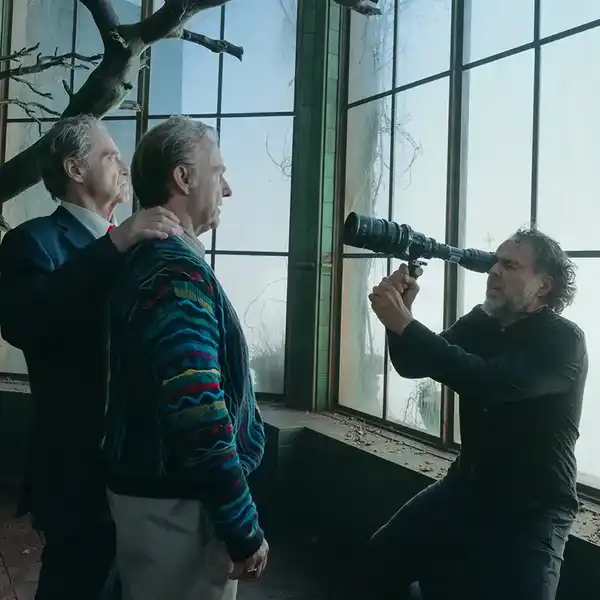
For a sequence, at an ingenieur's workshop—a large loft space with big windows—Pfister lit the entire scene with nothing but natural daylight. Nothing to supplement it at all. This is the rawness he was looking for.
He said he draws direct inspiration from Gordon Willis.
"Willis was never afraid not to use a light. He was never afraid to use practical lights or whatever it took to bring the story to life. Honestly, he’s my absolute hero."
Of course, not every angle will look good with existing light. You need to control where you're shooting from, sometimes giving actors marks when you normally wouldn't. You need to know your stop, understand the quality of light, and recognize when you've pushed minimalism too far.
Here's another resource for DPs looking to work with natural light more effectively.
Summing It All Up
DPs and directors, you don't need to take the expected approach just because you're shooting a period piece or any type of genre piece. The handheld camera work and stripped-down lighting in this film make it feel immediate and alive.
What unique cinematography spin could you give your next project? What's something unique to your background, like Pfister's work in documentaries, that can lend you a singular perspective? How can you use light to tell your story, like they did in different settings here?
Learn more about handheld techniques and working with natural light.
- Watch: How Christopher Nolan Bends Genre to His Cinematic Will ›
- Watch: How Christopher Nolan’s Structure Reflects His Narrative ›
- Bet You Didn’t Notice How 'The Prestige' Is Written Like Its Own Magic Trick ›
- How Christopher Nolan Brilliantly Hides 'The Prestige' in Plain Sight ›