There’s a quote I think about all the time, not just for war movies but for any movie meant to show nefarious characters and anti-heroes getting their due for their negative actions and lives.
“There's no such thing as an anti-war movie” is a quote attributed to French filmmaker François Truffaut, and Sylvester Stallone’s portrayal of John Rambo, particularly in the first film of the franchise, First Blood, is probably the best example of this, as the slow-burn lessons of the film’s thesis are ultimately turned on their head as the series rages on.
Yet, in many ways, the first Rambo film is by far the most poignant, at times brooding, and, almost 25 years later, the most American film to look back at now.
So, in honor of our brave troops who served in Vietnam, and those who have been left out to dry by the country they so much used to admire, let’s look back at First Blood and explore why it’s uniquely American, and what filmmakers today should take away from such auspicious projects, which can, eventually, be turned on their own heads.
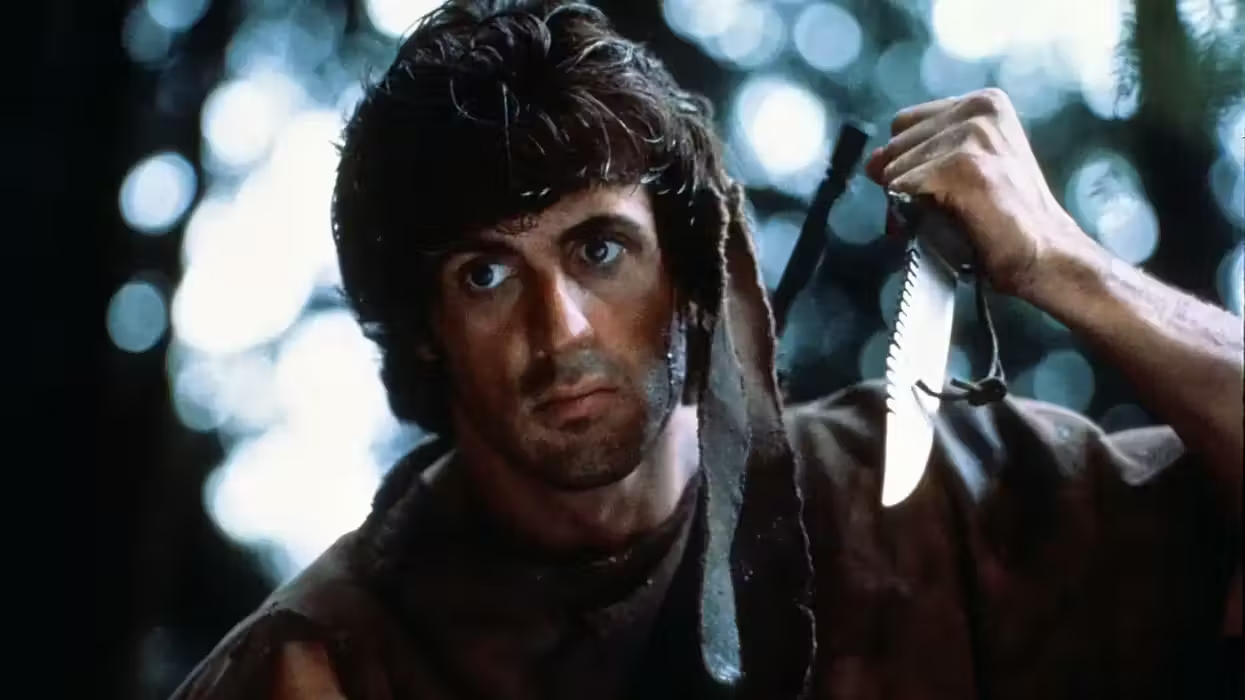
Sylvester Stallone in 'First Blood'
Released in 1982, Sylvester Stallone’s first time portraying the hallowed-out Vietnam War vet John Rambo was in First Blood, a film based on the novel of the same name by David Morrell. Co-written by Stallone with Michael Kozoll and William Sackheim, and directed by Ted Kotcheff, First Blood wasn’t meant to be the balls-to-the-wall action vehicle that the franchise eventually became.
First Blood is a brooding, slow-burning action thriller that has more to say about what it means to be an American than you might remember. The story follows Rambo, who enters a small mountain town simply trying to have a warm meal, only to be chastised and chased out by a cruel sheriff and a country that seems not to want him around anymore.
While the film eventually descends into gratuitous action and violence, for most of the narrative, it explores a level of self-reflection that many audiences were likely uncomfortable with at the time. Rambo, an accomplished fighter of the highest level, is not treated as a hero but as a villain.
An Ultimate American Action Movie
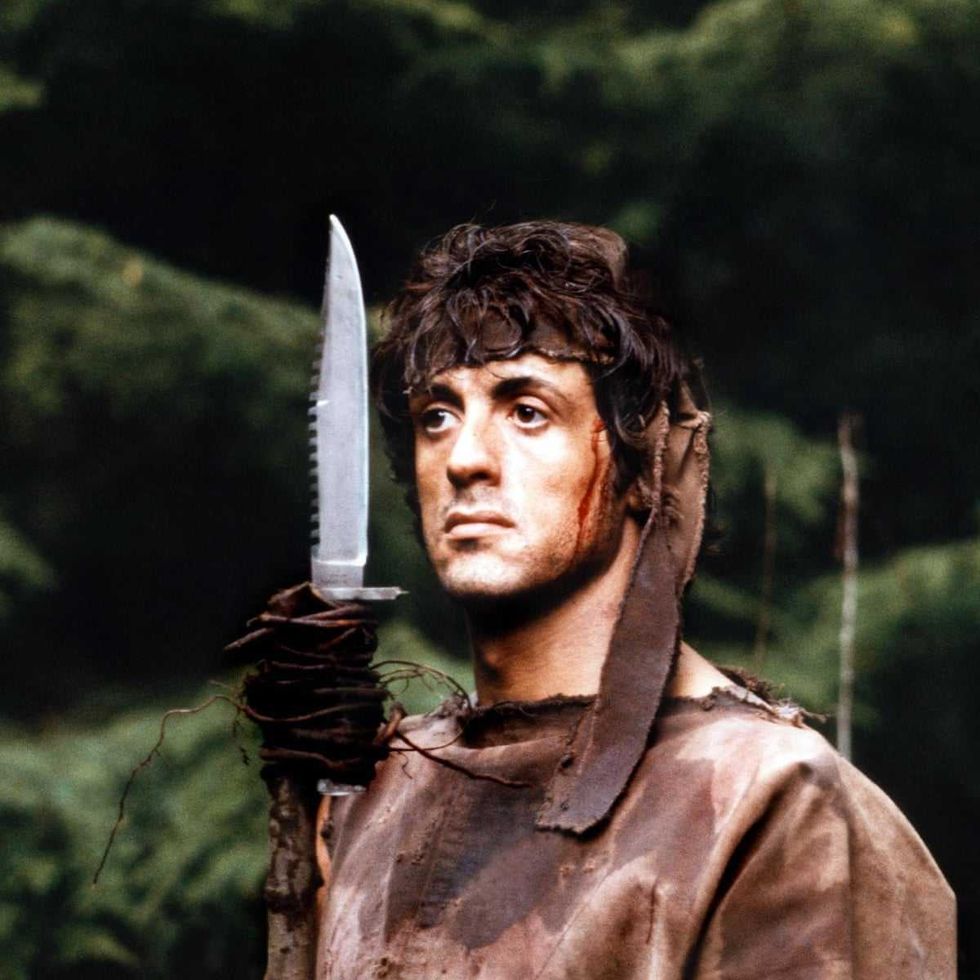
Credit: First Blood
First Blood has always held an odd place in my heart as an action movie fan because, on its own, it’s really a great film about the flawed nature of American exceptionalism, with a bit more to say than many films of the era.
Yet, based on its success and the rise of Stallone as an ultimate action hero in his own right over the coming years, First Blood eventually became the franchise it’s most often associated with as Rambo: First Blood Part II and its other sequels kept elements of the original but moved further into the gratuitous and over-the-top action spectacle.
Even in today’s highly polarized political era, a film like First Blood would undoubtedly be a lightning rod for discussion, cancellations, and angst amongst those who would call it out for its themes of guilt, anger, and disdain for authority.
What Filmmakers Can Learn from 'First Blood'
In many ways, though, First Blood is a masterclass in political filmmaking that can present a subject in a way that is critical of the topic, yet somehow still fodder for those who love the very thing it critiques.
Still, the adage about “there’s no such thing as an anti-war movie” holds true: for many film fans of the era, the film's lessons can quickly be forgotten or replaced by whatever messaging an audience might want to retroactively apply to it.
Yet, when sitting down and watching a film, despite your own disconnections, it’s hard to argue that a film like First Blood has something to say, and it was, at the time and still today, free to say it. Something filmmakers should always strive to do.
- The ‘Rambo: First Blood’ Scene That Stallone Regrets Cutting ›
- 'Rambo First Blood Part II': A Lesson in “Earning” the Action ›
- Every Rambo Movie, Ranked ›
- Looking Back At The Era Of Muscles And Masculinity: ‘80s Action Flicks ›
- Move Over Rocky and Rambo, Stallone’s Most Iconic Action Performance Will Always Be as Cobra ›
- Sylvester Stallone’s Greatest Cinematic Moment Was Showing Us How Ultimate Action Stars Eat Pizza ›
- Best Sylvester Stallone Movies ›
- Why Exactly Wasn’t Stallone’s ‘Over the Top’ a Bigger Hit When It Originally Came Out? ›
- 5 Iconic Roles Sylvester Stallone Turned Down ›