The ‘Rambo: First Blood’ Scene That Stallone Regrets Cutting
The deleted scene would have reframed and layered up Teasle’s hatred of Rambo as generational resentment, not just cruelty.
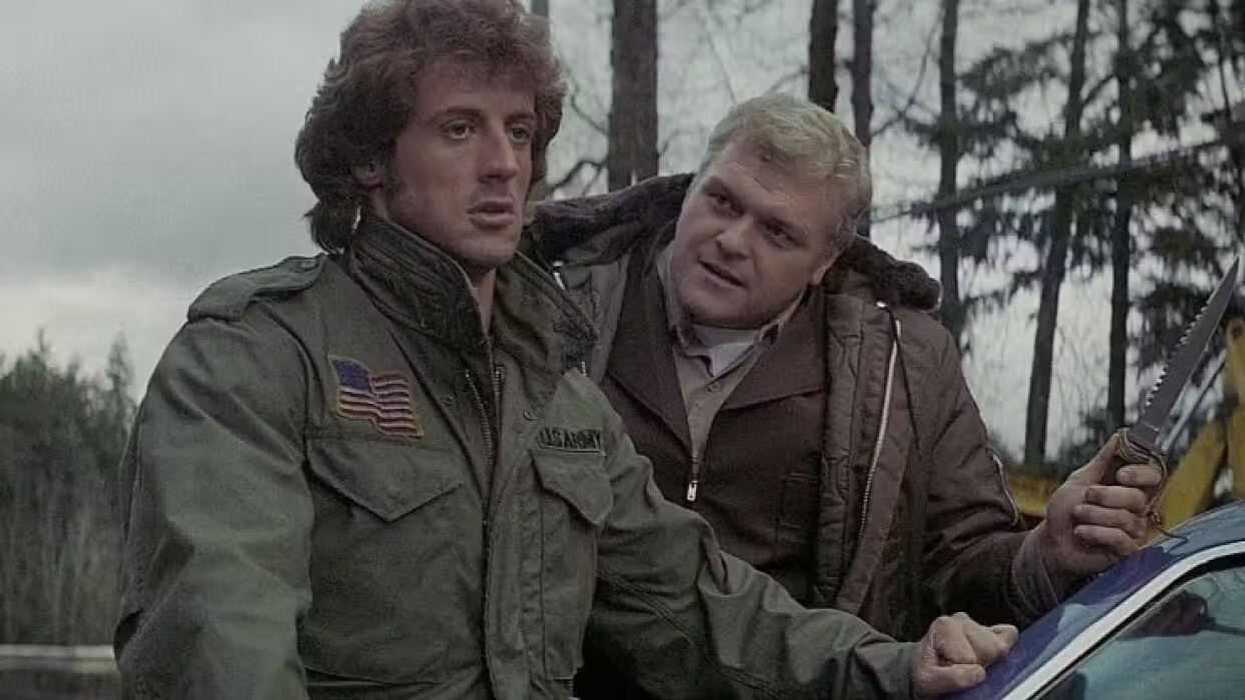
'Rambo: First Blood' (1982)
Assuming you have watched Rambo: First Blood (1982), you must know the protagonist is (in)famously a victim of a small-town corrupt sheriff, driven by ego, arrogance, and vindictiveness. A classic case of a bully cop picking on an innocent civilian. Unredeemable. Right?
But what if I told you the protagonist was a symbol of a louder, more mainstream trauma that overshadowed the corrupt cop’s similar, but often overlooked, trauma that came before it?
Suddenly, there is a wee bit of justification for the bad cop’s behavior. It almost makes you sympathetic.
Well, that sentiment could have been created, and the bad cop would have become a more layered character instead of being a malicious villain, if a certain scene from the movie hadn’t been removed—something that Sylvester Stallone says he regrets even 45 years later. According to him, the deleted scene wouldn’t have just given us a nuanced character instead of the “cruel cop” trope but also transformed the film from a standard action-thriller into a complex study of generational war fatigue.
Behind the Deleted Scene
A traumatized Vietnam War veteran, John Rambo (Sylvester Stallone), after receiving devastating news about his colleague, aimlessly wanders around on foot. When he enters a small town, its sheriff, Will Teasle (Brian Dennehy), harshly judges him as a vagrant and drives him out, rudely warning him never to return. Feeling insulted and belittled, Rambo reenters the town, prompting Teasle to arrest him.
At the police station, Teasle and his deputies treat him badly and, displaying corrupt abuse of power, beat him up. For Rambo, it triggers flashbacks of torture he endured in Vietnam. He fights them off using his knife and escapes.
Teasle takes this affrontation to heart and launches a full-scale hunt for Rambo. From here on, the movie follows the violent, action-packed series of attacks and retaliations.
What the Deleted Scene Was About
The deleted scene shows that Teasle is a Korean War vet. For him, Rambo represents the raw and very public wound of the Vietnam War, while he represents the “forgotten war.” Teasle thinks he is carrying the weight of a war that killed 35,000 Americans, and yet received none of the cultural conversation or sympathy that the Vietnam War vets received. The scene grounded his anger (and corrupt, malicious actions) in this perceived lack of respect.
Why Stallone Regrets the Cut
Without a justifiable motive, Teasle comes across as a one-dimensional villain. In an interview with SlashFilm, Stallone mentions that the deleted scene had elements that made Teasle more sympathetic; it made him a layered character. Had the scene stayed, the whole central conflict would have shown two different generations of warriors. But since it was cut in the editing, Teasle’s character was robbed of a legitimate (albeit warped) motivation for his hostility.
A Tale of Two Veterans
Generational Resentment as a Weapon
What does Teasle hate about Rambo? His long, stylish hair? His tight-muscled physique? His steely attitude? Right now, it may look like it. Because, in the existing version, Teasle comes across as an inherently spiteful person. Someone who is not above petty grievances.
The omitted scene would have given him that edge and depth. Then, Teasle would have become someone who hated Rambo because of the “glamour” of the Vietnam tragedy he carried. Something Teasle couldn’t. Then, his hostility towards Rambo would be grounded in the fact that the world won't stop talking about Rambo’s trauma, while Teasle’s service and sacrifices are not only ignored but forgotten.
It would have added a layer of envy to Teasle’s cruelty and made him a (terribly) flawed human, instead of a plain villain. Then we would see him as a “wronged” war vet wanting to humble a man who represents a war that “stole the spotlight” from his own struggle.
Conclusion
It’s true. The “Korean War” dimension would have altered the way we view First Blood. It would have replaced a regular villain with a man who was struggling with his own emotional scars. By cutting this scene, the film may have improved the pacing but lost a significant amount of emotional soul.
- How Sylvester Stallone Fought to Keep the 'Rocky' Script From Being Sold Without Him ›
- 10 On-Set Injuries that Made It Into The Final Movie | No Film School ›
- 9 Hollywood Characters Who Were Originally Written to Die (And Why Studios Changed Course) | No Film School ›
- Looking Back At The Era Of Muscles And Masculinity: ‘80s Action Flicks | No Film School ›
- 'Rambo First Blood Part II': A Lesson in “Earning” the Action | No Film School ›
- Why Was Kirk Douglas Fired From 'Rambo'? | No Film School ›
- Every Rambo Movie, Ranked | No Film School ›
- The Deleted ‘Shawshank Redemption’ Scene Where Red Has a Panic Attack ›
- Move Over Rocky and Rambo, Stallone’s Most Iconic Action Performance Will Always Be as Cobra ›
- Why Sylvester Stallone’s ‘First Blood’ Should Still Be Regarded as the Most American Action Movie of All Time ›
- Sylvester Stallone’s Greatest Cinematic Moment Was Showing Us How Ultimate Action Stars Eat Pizza ›