The Coen brothers' No Country for Old Men follows three characters who are connected by fate. However, the title is mostly tied to one character and their arc.
It took me some time and multiple rewatches to understand the favoritism… which wasn’t really favoritism, but literary genius.
Sheriff Bell’s arc singularly sums up the core theme of No Country for Old Men. It’s ironic that although Anton Chigurh and Llewellyn Moss are the primary leads alongside Sheriff Bell, they’re actually characters in the latter’s story, if you think about it.
How so? Well, as I said, it’s all in the title.
In this article, let’s uncover the real meaning of the title, No Country for Old Men.
The Story
Let’s start with a quick recap of the movie.
No Country for Old Men follows an ordinary man who stumbles upon a significant sum of money that he thinks will change his life. But he’s stumbled on a drug deal that went south. A cartel hitman is hired to retrieve the stolen money, and a sheriff investigates the chain of killings that ensue as a result.
Themes
The movie explores three important universal themes: fate versus greed, the evolving nature of evil, and the indifference of the universe.
Moss’ desire for a better life motivates him to pick up the money that wasn’t his, taking it from a bloody crime scene. His belief in his fate makes him take an enormous risk with his own life and also his wife’s.
Chigurh embodies both the randomness of death and the ultimate, most advanced, and non-empathetic form of evil. In his hunt for the lost money, he kills many as collateral damage in his mission, and does so without a single ounce of guilt.
Sheriff Bell is the witness to Chigurh’s violence brought upon his town by Moss’ greed.
The beauty of No Country for Old Men lies in how it shows the universe’s detachment from human struggle. As Moss makes a run for his life with the money, Chigurh relentlessly pursues him, and the sheriff tries to tackle the bloodbath Chigurh has caused, the universe is nothing but a silent witness that doesn’t care about divine justice in individual lives, only about the grander scheme of existence.
The Real Meaning of the Title, No Country for Old Men
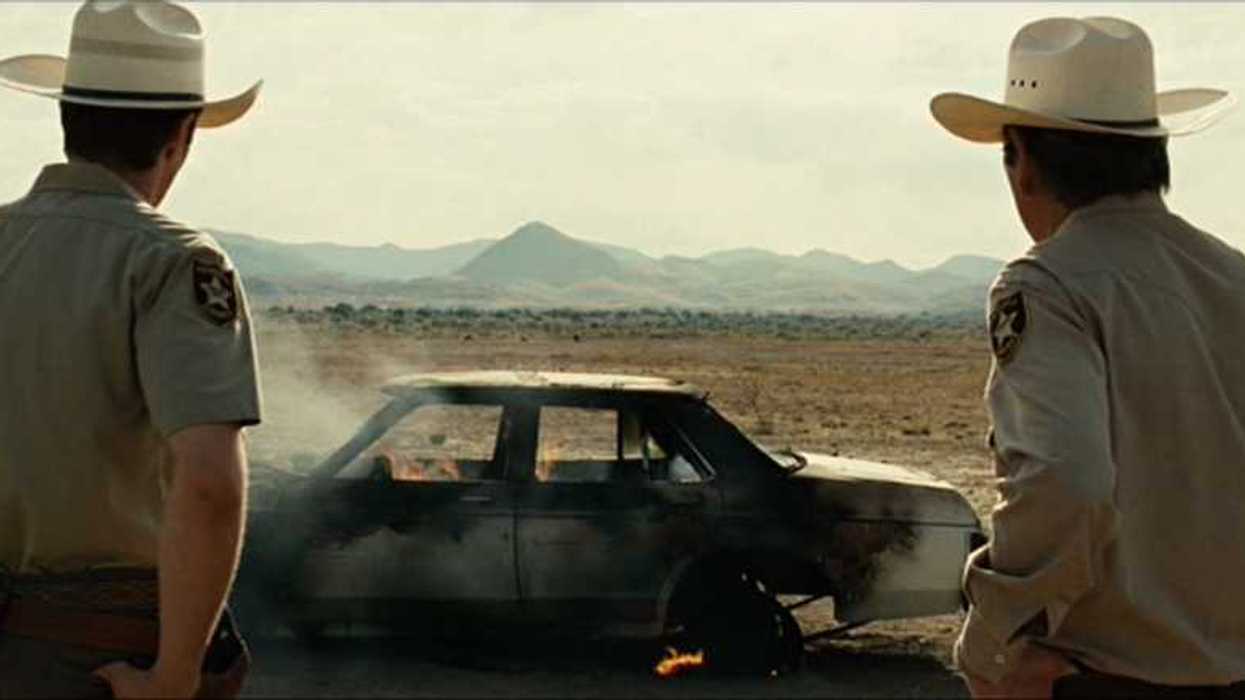
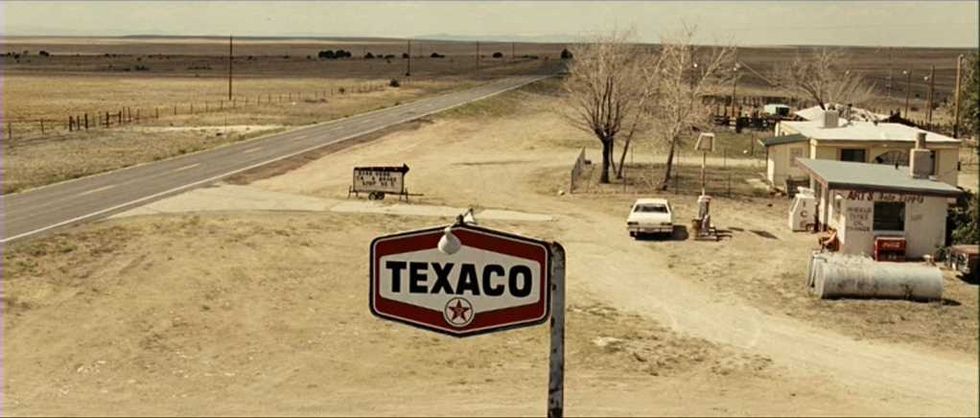 'No Country for Old Men' (2007)Credit: Miramax
The title No Country for Old Men comes directly from the opening line of W.B Yeats’ 1927 poem, Sailing to Byzantium. Cormac McCarthy borrowed the line from the poem, and the Coen brothers retained it for the film.
The underlying central theme of No Country for Old Men, which is that evil evolves faster than our sense of morality, is highlighted right from the opening scene, as the movie opens with Sheriff Bell’s voiceover, expressing how he misses those good old days in Texas, when the sheriffs didn’t even need to carry a gun.
As the voiceover ends, we cut to a police station, where we see Anton Chigurh claim his freedom from police custody by brutally murdering the officer on duty.
So basically, from the second scene, we’re being prepared for the ruthless killings, and it is only going to get more and more psychopathic the deeper into the story we get.
The cat-and-mouse chase between Chigurh and Moss for the money claims the lives of multiple innocent people who have nothing to do with either of them. From the men whose vehicles Chigurh stole when he needed rides to the Spanish-speaking guests at the motel, from the hotel clerk from Del Rio to Carla Jean (Moss’ wife), every death signifies the advancing nature of evil, which only grows exponentially with time.
In the end, Sheriff Bell quits his job as the town’s law enforcer. Not because he is scared of death, but because Chigurh’s evil overwhelms his conscience. Chigurh’s bloodlust is incomprehensible to the sheriff. How can he curb what he cannot make sense of?
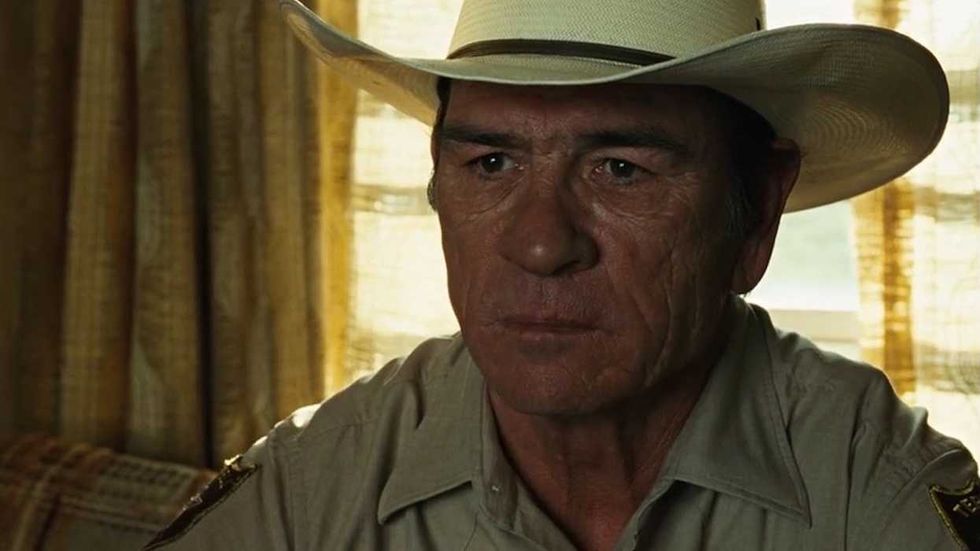 'No Country for Old Men' (2007)Credit: Miramax
Quite literally, the title No Country for Old Men means that there’s no place for an old man, where “old” stands for a belief system that cannot change with time. Sheriff Bell highlights this theme in his character arc.
Chigurh’s indirect encounter with Sheriff Bell, through the kills that he leaves behind for Bell to investigate, renders Bell spiritually and morally outmatched by a kind of evil that he cannot comprehend. So much so that he quits his job.
The sheriff’s scene with Ellis, his relative who was rendered handicapped from a bullet wound, highlights the idea that there is “no country for old men”: for men who won’t accept the changing times and continue living in the nostalgia of the past, which they think is golden.
Story-wise, the Coens’ No Country for Old Men is about a drug deal gone wrong, or a man trying to make his fortune by stealing crime money, or a relentless hitman who knows no mercy, or a sheriff who’s lost trust in humans and the law.
Thematically, it’s a reminder to remove the rosy-romantic glasses and see the world for what it truly is. It’s right there in its title!
What do you think of the title No Country for Old Men?
- 3 Ways 'No Country for Old Men' Maintains Tension in Its Best Action Sequence ›
- The Chilling Intersection of Chance and Fate Behind the Most Famous Quote in ‘No Country for Old Men’ ›
- The Sounds of 'No Country for Old Men' Are What Make It a Masterpiece ›
- Read and Download The 'No Country for Old Men' Script PDF ›
- How the Coens Wrote Their Neo-Western Masterpiece 'No Country for Old Men' ›
- How The Coin Toss Scene in 'No Country for Old Men' Grounds the Theme ›
- 7 Best Lines From ‘No Country For Old Men’ Ranked ›
- Not In Kansas Anymore ›
- The 'No Country for Old Men' Line That Questions Every Rule ›
- Iconic Film Introductions: Anton Chigurh’s First Few Minutes Are a Masterclass in Fear ›