Robert Redford passed away on September 16, 2025, at 89. We've spent time since then revisiting his best films and his Sundance legacy. He's an absolute legend, not to mention one of the industry's foremost champions of independent cinema. We owe him so much.
But in a 2013 conversation with Terry Gross for Fresh Air, he told a story that keeps coming back to us. He almost didn't play the Sundance Kid.
- YouTube www.youtube.com
Casting Butch and Sundance
By the late 1960s, Redford had put in the work as an actor. He had years of episodic television under his belt (Perry Mason, The Twilight Zone, Playhouse 90 and had even done a celebrated Broadway turn in Neil Simon's Barefoot in the Park, which he'd also brought to the screen opposite Jane Fonda in 1967.
He was recognizable. He had credits. But to 20th Century Fox, he wasn't a star in the way the studio understood stars back then. He was the charming young guy from the world of comedy, and they slotted him accordingly.
Fox's plan, according to Andrew Horton's book The Films of George Roy Hill (via Collider), was to pair two established mega-stars in the leads.
Paul Newman initially passed (though that's a story for another day). The crew continued looking for their Sundance. Jack Lemmon was pitched, but he passed. Marlon Brando and Warren Beatty also passed. Steve McQueen was attached at one point but left over the billing order.
The studio had burned through marquee options and still wasn't landing where they wanted. Redford wasn't on their shortlist. He wasn't the kind of name you built a major Western around.
Newman's wife, Joanne Woodward, put his name forward anyway.
The Part Redford Wanted
Director George Roy Hill saw things differently. He'd worked with Redford on Period of Adjustment in 1962 and had a sense of what the actor could do that didn't fit the handsome-guy-in-a-comedy read. When they met in a bar on Third Avenue to talk about the project, Redford didn't angle for the obvious.
Redford told Gross:
George Roy Hill and I met in a bar on Third Avenue and they were putting me up to play Butch Cassidy because I'd done this comedy on Broadway. So they, you know, nobody thinks very deep about stuff like that. They said well, if you did a comedy maybe he should go up for Butch Cassidy. And so we were sitting in this bar and I told him at the time, I said yeah, I can do that. But that's not the part that interests me. I'm more interested in the Sundance Kid. I feel more comfortable in that role. I feel more, I could connect more to that character.
That honesty surprised Hill. It also sold him. The studio was still the studio, an obstacle to overcome.
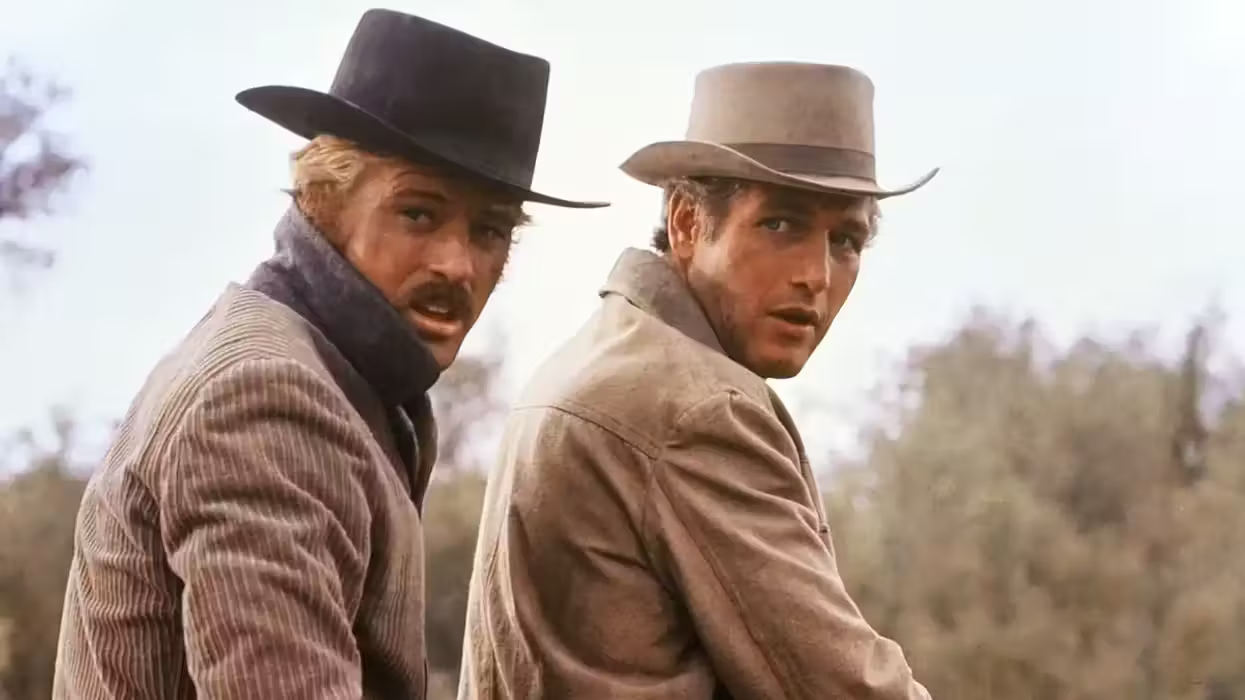
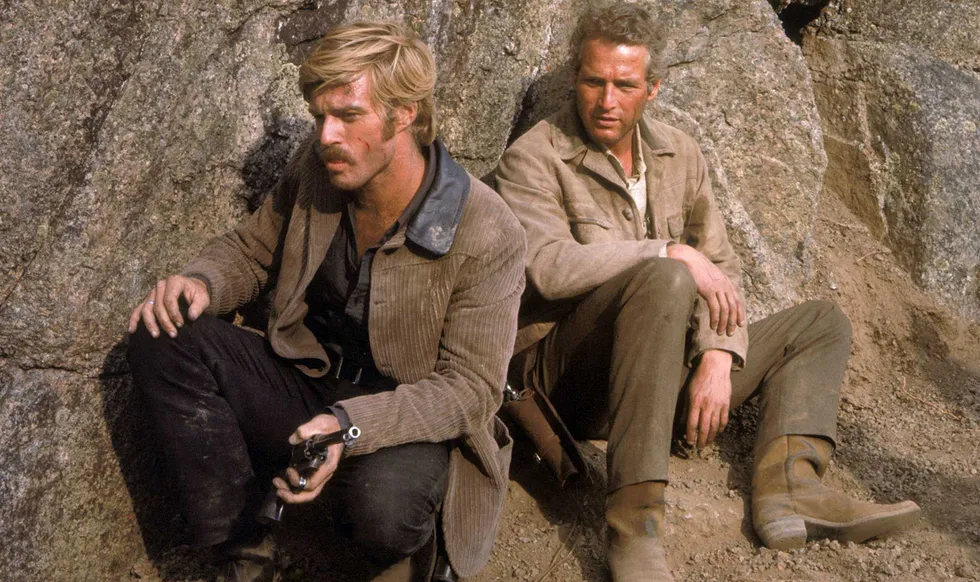 'Butch Cassidy and the Sundance Kid'Credit: 20th Century Studios
"They Tried Everything to Keep Me Out"
"The studio didn't want me," Redford said. "And they tried everything to keep me out of the film at that time. It was 20th Century Fox."
Part of what made Fox resistant was the basic logic of the pairing. Newman was one of the biggest stars in the world at that point, riding the wave of success off of Cool Hand Luke and other hits. As SlashFilm points out, something lost on contemporary audiences is how stark that power imbalance actually was in 1969. Newman and Redford were nowhere near the same tier. Putting Newman opposite a relative unknown was a gamble Fox didn't want to take.
What turned it around was the coalition that formed around the casting. Woodward, as mentioned, was among those who pushed for Redford early on.
In the NPR interview, Redford credits Newman above all else.
And I think it was Paul Newman and William Goldman, the writer, and George, that stood up for me against the studio. But the one that really pushed it aside, of course, was Paul. And when I met Paul he was very generous, and he said, I'll do it with Redford. I never forgot that. That was a gesture that I never forgot and I felt that I really owed him after that. And then he and I, in the course of that film, became really, really good friends. And that friendship carried on to the next film and then it carried on into our personal lives.
The title changed, too. The script had originally been called The Sundance Kid and Butch Cassidy, with Newman attached to Sundance at one point. Once Redford came aboard, and the roles were settled, Hill moved Newman to Butch, and the title flipped so Newman's name came first.
We've looked at what the resulting dynamic between the two characters achieves in our breakdown of iconic Western duos.
Mixed Reviews, Then Word of Mouth
Even after production wrapped, conventional wisdom kept running behind the film. When Redford saw the rough cut, he had immediate, wrong-headed doubts about a specific creative choice.
"But when I saw the rough cut of it, I said, ' Wait a minute. What's that song doing in it?'" he told Gross.
He was talking about "Raindrops Keep Fallin' on My Head," which later won the Academy Award for Best Original Song.
The critics weren't more perceptive, at least at first.
I remember when the film came out, George Roy Hill and William Goldman were very upset and depressed because the reviews were mixed to negative. And word of mouth is what made the film build, but when it first opened it had these mixed reviews.
I didn't read them. I remember they were very upset and depressed. One of the reasons the reviews, some of the reviews were negative was that the anachronism of the dialogue. Like modern day talk then. I found that pretty inspiring and fun. It was just fun.
Butch Cassidy and the Sundance Kid became the highest-grossing film of 1969.
Goldman won the Oscar for Best Original Screenplay. Redford won a BAFTA. And years later, he renamed his Utah ski resort—and eventually the institution that became the Sundance Film Festival—after the role 20th Century Fox hadn't wanted him to play.
The pattern across it all is that Redford knew which role was his before the industry agreed. A few people with real leverage chose to back him. The audience, eventually, decided he was right.
- What Are The Best Western Movies of All Time? ›
- When Robert Redford Found the Future of Indie Cinema ›
- What Filmmakers Can Learn from 3 Iconic Western Duos ›
- 8 Unforgettable Robert Redford Movie Lines ›
- The Best 'Butch Cassidy and the Sundance Kid' Line ›
- Film Quote of the Day: The 1998 Robert Redford Line That Turns a Simple Truth Into a Life Lesson | No Film School ›