8 Unforgettable Robert Redford Movie Lines
Eight iconic lines that defined Robert Redford’s screen legacy across decades.
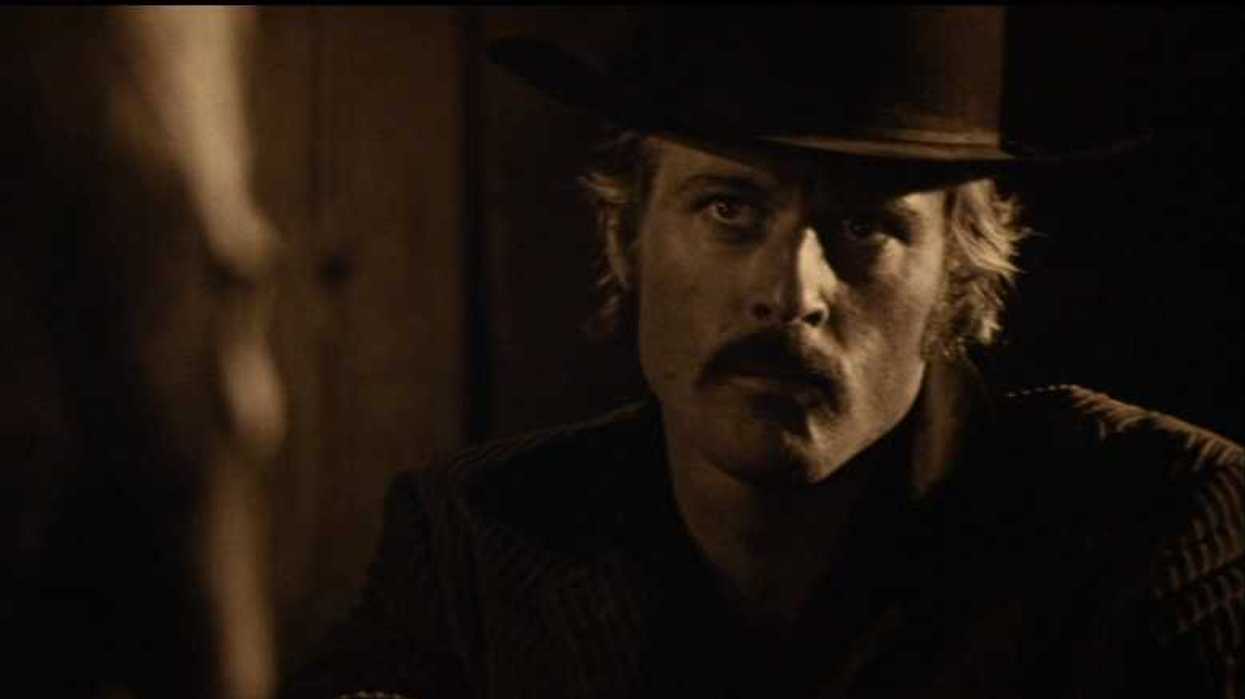
Butch Cassidy and the Sundance Kid (1969)
Whether he was a young, sprightly, and sun-drenched outlaw or an old, weathered survivor, Robert Redford’s delivery has always been about more than just the words he spoke. It was more about the quiet confidence and subtle humor that were deep-seated in his persona. He wasn’t loud, didn’t chase punchlines, nor did he speak for applause. And yet, every time he spoke, it never sounded like he delivered a dialogue; it sounded like he said something accidentally. He was that natural.
Across sixty years that he reigned supreme on the screen, he leaned on clarity, timing, and restraint. Every time he spoke, it felt like either something had shifted or a relationship cracked. Sometimes it felt like a plan was locked. Whatever it may be, it was always the moment when a truth surfaced.
So, let’s dive into eight such screen moments when he spoke, and we listened—very intently.
8 Iconic Robert Redford Movie Quotes
1. “You just keep thinkin’, Butch. That’s what you’re good at.” (Butch Cassidy and the Sundance Kid, 1969)
The film follows the legendary duo, Butch Cassidy (Paul Newman) and the Sundance Kid (Redford), who, to dodge a relentless posse, escape to Bolivia. Here, this quote (and Redford’s delivery) perfectly catches the dynamic between the two leads. In one line, the scene tells us that Cassidy is the “idea man,” while the Sundance Kid is the man of action. It’s a classic example of using dialogue to establish a deep, unspoken bond between two protagonists.
2. “I can’t swim!” (Butch Cassidy and the Sundance Kid, 1969)
At a desperate moment, when, on one end, the posse has cornered them, and on the other, there is the terrifying prospect of jumping into the river far below, Sundance reveals his weakness. He cannot swim. And it, quite funnily so, complicates their escape plan. The rough and rowdy gunslinger that, so far, has managed to exist with swagger, suddenly becomes human—and far more relatable (and likable). Here, the cinematic technique relies on the subversion of the invincible hero trope.
3. “Katie, it was never uncomplicated.” (The Way We Were, 1973)
The film follows the relationship between a passionate political activist, Katie Morosky (Barbra Streisand), and an apolitical, happy-go-lucky Hubbel Gardiner (Redford), as they try to survive the pressure of McCarthyism, different social circles, and their own fundamentally opposite worldviews. This quote, in a way, is central to the film’s thematic core, as it hints at the tragedy of love that cannot survive the ideological divides. It’s worth noting how Redford delivers the line without any melodrama and yet makes it land with maximum impact.
4. “You were right, Henry. It’s not enough… but it’s close.” (The Sting, 1973)
Young grifter Johnny Hooker (Redford) teams up with a veteran con artist, Henry Gondorf (Paul Newman), to seek revenge against a ruthless mob boss by orchestrating an elaborate “big con.” This line appears at the end of the film and mirrors the “high” that comes from a successful con and the satisfying feeling of revenge, and yet doesn’t quite fill the void left by his murdered mentor.
5. “This is terrific work, if you like rejection.” (All the President’s Men, 1976)
The film follows the investigation of Bob Woodward (Redford) and Carl Bernstein (Dustin Hoffman), two reporters for The Washington Post, who uncover the connection between the Watergate break-in and the White House, ultimately uncovering the Watergate scandal. The film shows Redford’s Woodward as a somewhat dry professional, and this quote, in particular, captures the grind of investigative journalism. It also provides a rare moment of levity that underscores the shared exhaustion and commitment of the two protagonists.
6. “You’re a disgrace, colonel.” (The Last Castle, 2001)
General Eugene Irwin (Redford), a war hero, is court-martialed and sent to a maximum-security prison. Once there, he clashes with the tyrannical warden, Colonel Winter (James Gandolfini), leads an uprising, and restores the dignity of all inmates. This moment required a quiet intensity, suitable for a direct challenge to authority, which Redford delivered with his signature restraint. The scene uses tight close-ups to focus on the tension between the two leaders. This is the moment where Redford’s Irwin reclaims his moral high ground by calling the warden a disgrace.
7. “When did Noah build the ark, Gladys? Before the rain.” (Spy Game, 2001)
Veteran CIA officer Nathan Muir (Redford), a day before his retirement, learns that his protégé, Tom Bishop (Brad Pitt), is captured in China. Now, as Bishop’s mentor, it’s upon Muir to navigate a web of departmental bureaucracy and international politics to save him before he is executed. In addition to showing Muir’s cynical wisdom, this quote also explains his philosophy of preparation and foresight.
8. “All is lost here.” (All Is Lost, 2013)
An unnamed man (Redford) wakes up on his yacht, stranded in the middle of the Indian Ocean. With his equipment destroyed and a storm approaching, he must use every ounce of his ingenuity to survive. The quote is a part of the film’s opening monologue, which is spoken in a voiceover as a final letter. The movie is famous for not having much dialogue, but this quote, in particular, sets a tone of stark honesty.
- 10 Best Westerns of the 1970s: Ranked ›
- Richard Linklater Praises Robert Redford's Indie Advocacy | No Film School ›
- Robert Redford's Advice to Young Filmmakers: 'Hit the Road & Have Some Real Life Experiences' | No Film School ›
- When Robert Redford Found the Future of Indie Cinema | No Film School ›
- Robert Redford, Hollywood Icon Who Transformed Independent Cinema, Dies at 89 | No Film School ›
- What Are The Best Robert Redford Movies of All Time? | No Film School ›
- Robert Redford's Iconic Line Questioned What Honesty Means ›
- The Best 'Butch Cassidy and the Sundance Kid' Line ›
- Film Quote of the Day: The 1998 Robert Redford Line That Turns a Simple Truth Into a Life Lesson | No Film School ›