The Pitch Room Is Where Your Ideas Are Most Vulnerable
Stop worrying about people stealing your scripts.
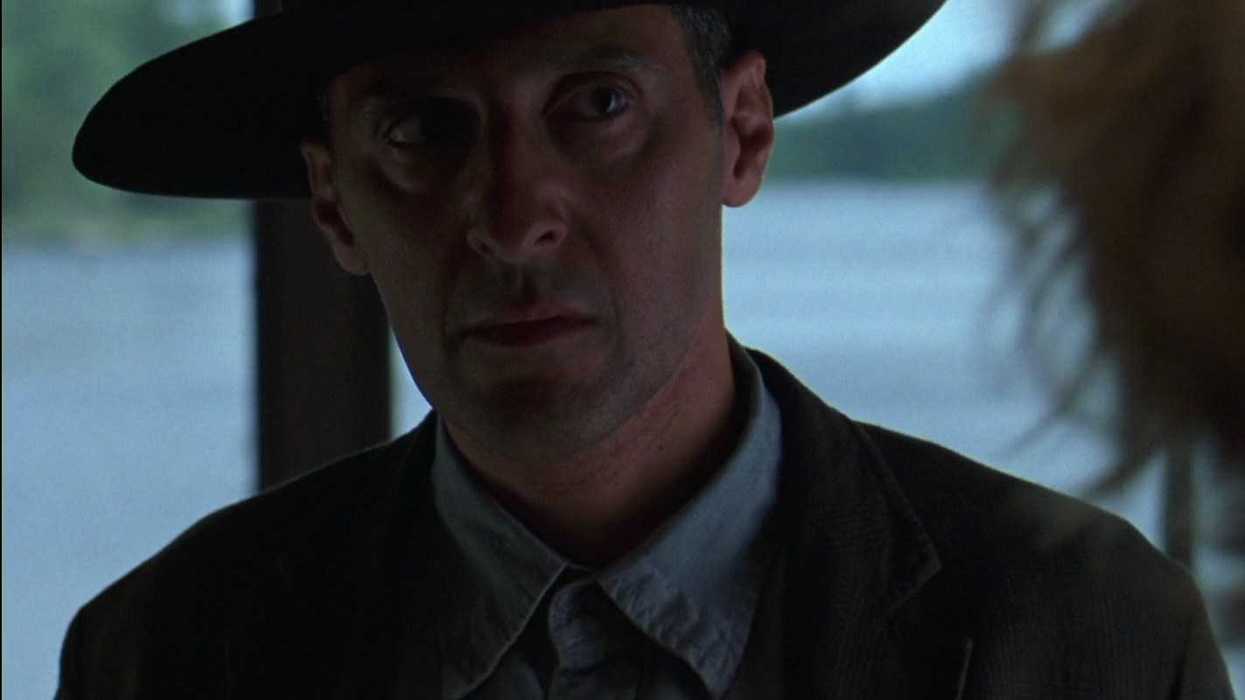
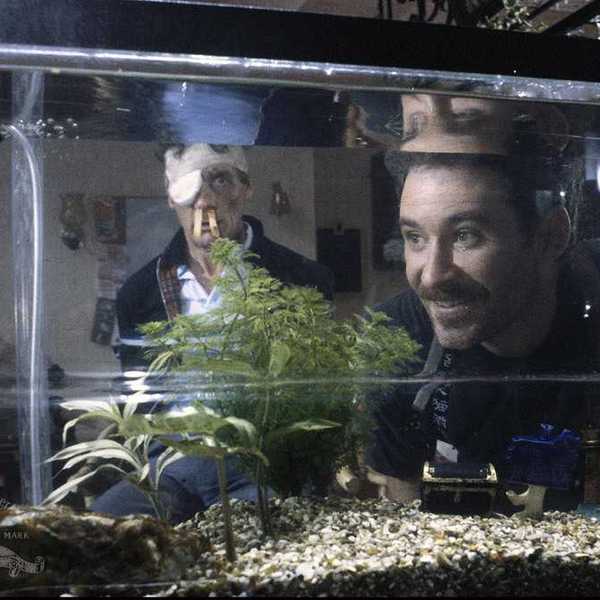
'Secret Window'
I've run into writers who are absolutely terrified that the world is out to steal their script ideas or their scripts themselves. It's like they imagine they're two steps away from becoming the paranoid John Shooter from Secret Window: "You stole my story!"
I've had people insist on getting copyright lawyers involved and protecting drafts with Fort Knox-level security. It feels like the most because it usually is. We're not all Christopher Nolan or Quentin Tarantino, and chances are, many of those highly protected screenplays will never even be produced.
I'm being facetious, but at the same time, I can understand the anxiety. You've poured months into the thing. It's your baby. You want to protect your baby.
But Ron Mita, whose produced credits include S.W.A.T., Robots, Sniper II, and 24 Hours to Live, has a different concern. A written screenplay carries real legal protection.
What doesn't? The idea you pitch in the room. Before you even get to the pages.
"I'm not really ever fearful of being ripped off as a writer, like someone taking my written screenplay," Mita says. "I am fearful of being ripped off in the pitch room."
Mita sold his first screenplay to Columbia Pictures before graduating from Loyola Marymount's MFA screenwriting program and has since worked with Sony, Universal, Warner Bros., DreamWorks, and HBO, among others. He's also been a screenwriting professor at College of the Canyons since 2002. He's watched ideas travel and disappear in Hollywood's development pipeline for a long time.
He discusses this in a recent Film Courage conversation. Let's dive in.
- YouTubewww.youtube.com
The Pitch Room Is a Cattle Call
When you go in to pitch on an open writing assignment, you should know you're not the only writer in the building that week. Studios bring in multiple writers to pitch the same project in what the industry calls a bake-off and then decide who to hire.
You're laying out your best ideas verbally, in a room full of people whose job it is to evaluate them, and the only thing protecting you is the relationship.
Copyright law, as Final Draft's breakdown of the subject makes clear, protects the expression of an idea, not the idea itself. You can register a screenplay. You cannot register a concept you described over lunch.
There's a legal theory called implied contract. California courts have found that when you pitch an idea in a business context, there's an expectation of compensation if the idea is used. But as Filmmaker Magazine points out, proving that someone specifically used your idea, rather than arriving at a similar one independently, is a different matter.
Plenty of writers have sat in rooms, made pitches, and later seen elements surface in films they didn't write. The burden of proof is steep.
The S.W.A.T. Story
Mita and co-writer Jim McClain were brought in to pitch on S.W.A.T., a Sony property based on the 1970s TV series. The challenge they faced was that a SWAT team doesn't investigate anything. They rescue, protect, and attack. How do you build a feature around that?
Over Chinese food, Mita and McClain landed on Walter Hill's The Warriors as their structural frame. In that 1979 film, a gang has to get from one end of New York City to the other while every other gang in the city is trying to stop them.
Their idea was that the world's most wanted criminal offers a $100 million bounty to anyone who can break him out of police custody, and the SWAT team has to run the gauntlet across L.A. to deliver him. The moment they said "bounty," Mita could see it in the executives' eyes.
They loved it. Then Oliver Stone's involvement with another writer knocked Mita and McClain off the project, and Mita immediately felt the vulnerability of what they'd just walked in and said out loud.
"Can't not pitch that idea," Mita says. "We're not going to get the job."
Rather than hand the idea off and hope for the best, they decided to write it on spec. They turned the story into an FBI hostage-rescue team, making it original property, and cranked out a draft in 30 days.
Stone's deal with the other writer collapsed. The studio came back. And now Mita and McClain had something real to negotiate with. They sold the spec. The studio converted it back to a SWAT story.
If you want to think through what that process looks like on your own project, our guide to writing a spec screenplay is a good place to start.
Writing on Spec?
You should do the pitch. Don't save your ideas just because you're scared they'll get stolen. You still pitch to get work. There's just a difference between handing over an idea and handing over a document.
"I can tell you an idea," Mita says. "I can't copyright an idea. You know, I can copyright a screenplay, but I can't copyright an idea."
The spec is what might change the equation. The elevator pitch gets you in the room, but the spec is what you can defend.
A script is copyright-eligible the moment it exists on the page. Mita and McClain's move to turn their pitch into a spec before letting it circulate gave them something concrete when the situation with Stone resolved.
One wrinkle Mita raises is specific to pitching on existing intellectual property. When your original spec ultimately attaches to pre-existing IP (as S.W.A.T. did, since the TV series predated everything) it gets reclassified as a rewrite of their property.
Mita and McClain received "story by" credit on the finished film. Screenplay credit went to David Ayer and David McKenna after WGA arbitration.
How to Register and Protect Your Screenplay
If this piece has you thinking about protection, we've got you covered. There's a difference between WGA registration and U.S. Copyright Office registration.
WGA registration establishes a timestamp on your work and is primarily used to resolve credit disputes in WGA arbitration. It documents that you wrote something on a given date. It has no standing in federal court, but a lot of writers (myself included) consider this far enough.
U.S. Copyright registration gives you legal teeth if you feel like you really need it. You need it to file an infringement lawsuit, and without it, you can't access statutory damages or attorney's fees even if you win.
Copyright protection technically begins the moment your screenplay exists on the page, but that automatic protection is unenforceable until you register.
The filing fee ranges from $45 to $65 through the U.S. Copyright Office and can be paid online.