Full Frame vs. Super 35 and How Sensor Size Changes Your Shot
Woody James clears up the most common questions.
Few topics start a comment-section fight faster than sensor size. Is your 18mm "really" a 27mm on a crop sensor? Does full frame give you shallower depth of field? Or is that a myth too?
If you've ever stood in a rental house trying to decide between a Super 35 body and a full-frame one, the confusion might be real.
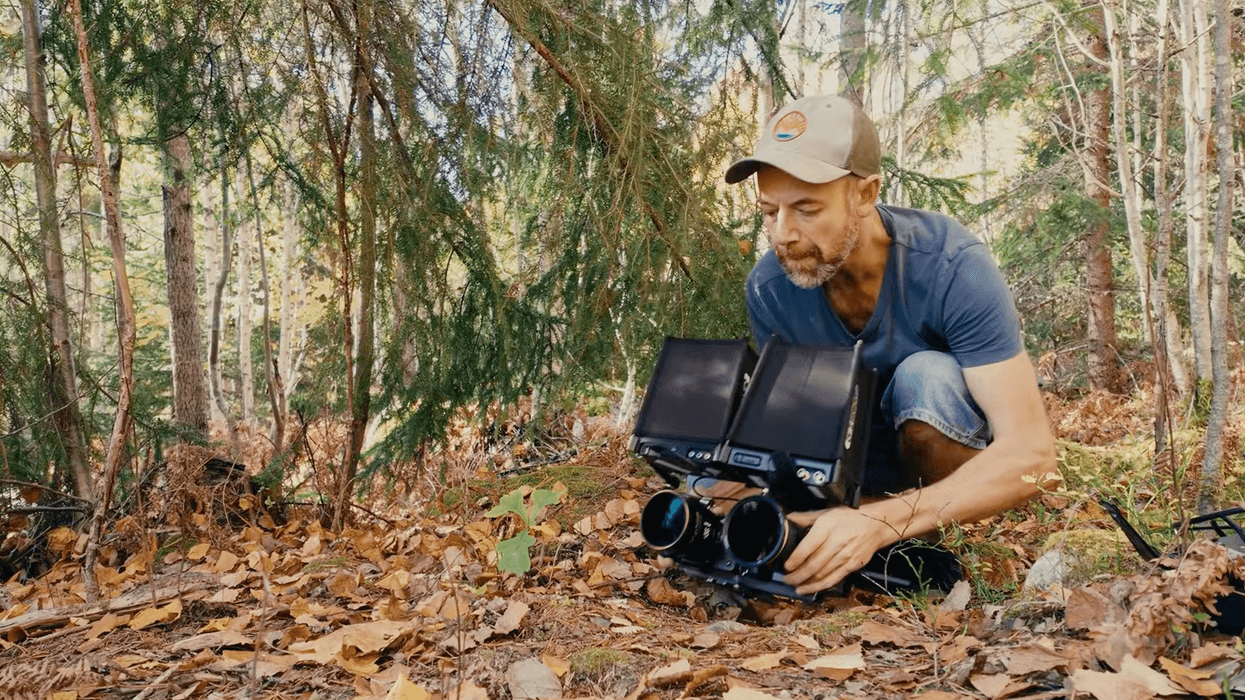
British filmmaker Woody James clears up the most common confusion in a quick new video. He spent about a decade shooting broadcast documentaries worldwide, with his IMDb credits including Hidden Britain by Drone and The Divide, and now shoots both formats almost daily.
Check out the video here.
- YouTube www.youtube.com
A Primer on Full Frame vs. Super 35
If you're new to cameras, the sensor is the chip inside your camera that captures the image, the digital stand-in for a piece of film. Sensors come in different sizes. Two of the most common in filmmaking are full frame and Super 35.
Full frame measures about 36x24mm, modeled on the 35mm still-photo negative. Super 35 is smaller and based on the 35mm motion picture frame, with sizes that vary a bit by manufacturer. For most of film history, cinema cameras shot Super 35. The term "full-frame" took hold once stills cameras like the Canon 5D Mark II started shooting video on their larger sensors.
Focal length is a property of the lens, measured in millimeters. Longer focal lengths magnify the scene more. Field of view is how much of the scene ends up in your frame. Depth of field is how much of the image looks sharp from front to back. Crop factor is the number you multiply by to compare framing between sensors. (For Super 35, Canon puts it at about 1.5x.)
An 18mm Lens Is Always an 18mm Lens
Plenty of filmmakers talk about crop sensors as if they change the lens itself. James says that's backward.
"There seems to be a common idea here on YouTube that if, for example, you put an 18 mil lens on a Super 35 mil sensor camera, you should really be describing that lens as a 24 mil. But it's just not true at all. An 18 mil lens will always be an 18 mil lens, whatever the camera's sensor size; the same with any other focal length."
At a 1.5x crop, the math lands closer to 27mm, but his point stands. What the sensor changes is how much of the lens' image it captures.
"What does change is the field of view. And I think that's where a lot of this confusion starts."
Every lens projects a circle of light onto the sensor. A Super 35 sensor only records the middle portion of that circle, so your shot comes out tighter. Canon puts Super 35's focal length multiplier at about 1.46x to 1.53x, depending on aspect ratio.
By Canon's math, put a 50mm on a Super 35 camera and you'll get roughly the view a 75mm gives you on full frame. Gray Kotzé makes the same distinction on In Depth Cine. The field of view is roughly equivalent, but the two setups aren't identical.
Why Full Frame Looks Shallower
James does a side-by-side test. He matches the framing on both cameras: an 18mm on the full-frame Sony FX3 and a 12mm on the Super 35 FX30, both at 2.8. So they have the same composition, but very different backgrounds.
"We've essentially got exactly the same field of view, the same composition, but just look how different the depth of field is," he says.
The sensor isn't directly blurring your background. Matching that full-frame shot on Super 35 forces you onto a wider lens, and wider lenses keep more of the scene sharp. James makes this point himself, noting that shorter focal lengths have wider depth of field.
The full-frame advantage only appears when you match framing, which is what filmmakers usually do.
Wide and Shallow at the Same Time
For James, this is the real payoff. On Super 35, a wide shot usually means everything is in focus (and it's a more "traditional" filmic look). Full frame lets you go wide and still keep the subject apart from a messy background.
"And this is why I absolutely love shooting full-frame. You can have super wide fields of view, depth of field, and separation all at the same time."
Canon adds another wide-angle perk. Full frame lets you use wider lenses with less distortion. They say that matching a 24mm full-frame view on Super 35 takes a 17-18mm lens.
James also says lens compression stays the same across formats, which tracks, since it comes from camera-to-subject distance rather than the sensor. That said, full frame's longer lenses for the same framing can make backgrounds feel more compressed.
As In Depth Cine points out, "Full-frame often feels more immersive and dimensional, with compressed backgrounds and a pronounced bokeh. Super 35 feels more traditional, with images that keep characters and environments more evenly balanced in focus."
Should You Write Off Super 35?
Short answer: no.
None of this makes Super 35 the lesser format. James himself shot almost exclusively on it for 15 years after buying the original Canon C300. And there are practical reasons to stay.
Lens choice is another factor. Lenses built for full frame work on either camera, but In Depth Cine notes that a lot of older cine lenses were only designed for Super 35, so they'll darken the corners of a full-frame image. That includes much of the vintage and anamorphic lenses people love.
Deeper depth of field means more forgiving focus. It matters on run-and-gun doc and indie shoots without a dedicated focus puller.
How to Choose
Start with the image you want, then work backward to the format.
Wide and shallow for an intimate doc? Full frame makes it easier.
Budget lenses, or easy focus? Super 35 may serve you better.
Match the framing before you compare looks, much like James did in this video. Then you'll have a true sense of what's different. To estimate what a Super 35 setup will look like on full frame, multiply both the focal length and the f-stop by your crop factor.
Before you commit, test both formats in your real location. Hold the composition, subject distance, and stop constant. How busy is the background? How hard will your focus puller have to work? A half-day test can save you a ton of money and headaches later.