A sprightly zither score, the German Expressionist cinematography, and a perfectly gloomy ending are merely a few of the reasons why The Third Man (1949) is a classic film noir.
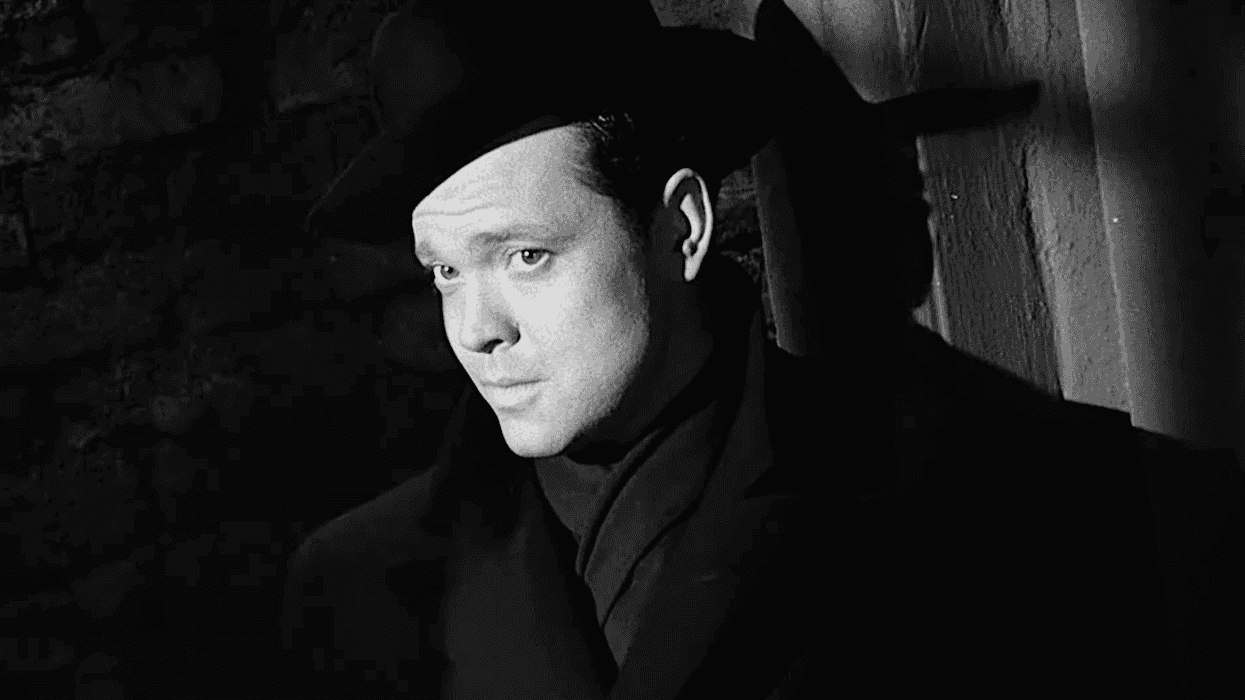
Then, there is Orson Welles, who delivers a speech that sums up how morally bankrupt his character is during a terrific introduction to his on-screen villain. While there is some historical inaccuracy in the dialogue, the famed actor improvised a key line that turned the scene into an all-timer of British cinema.
Let’s look at the speech in The Third Man that gave us a great villain line.
A Ruined City
 'The Third Man' Credit: Selznick Releasing Organization
Holly Martins (Joseph Cotten) is a pulp writer who arrives in Allied-occupied Vienna to visit his childhood friend Harry Lime (Welles), only to be told that Harry was suddenly killed in an accident. The more Holly looks for answers, the uglier the truth becomes.
You see, Harry was involved in a black market racketeering scheme where stolen penicillin was tainted and sold to the people who needed it most: men suffering from gangrene, women going through childbirth, and children sick with meningitis.
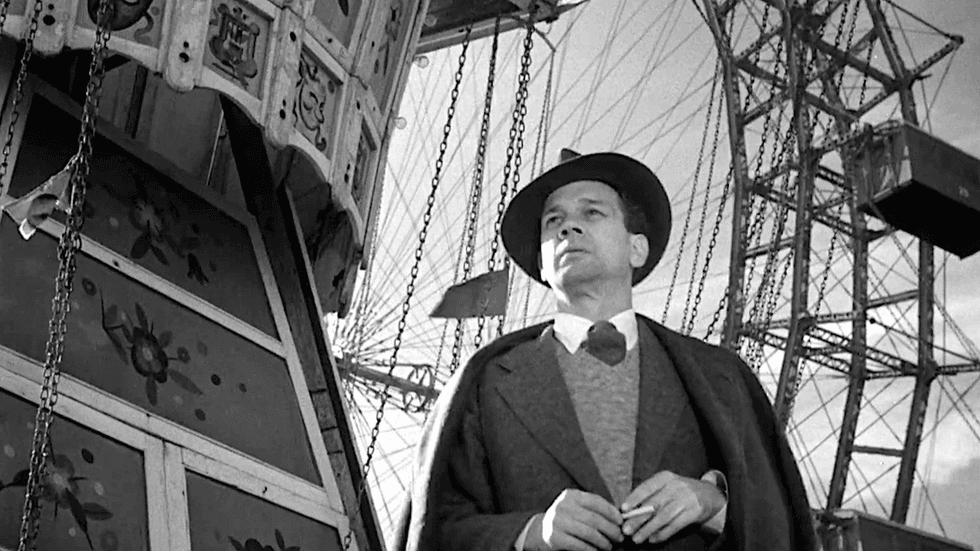
Harry faked his death to avoid being arrested, briefly revealing to Holly that he's alive before they meet for a longer face-to-face on the Wiener Riesenrad in the Prater amusement park. As the ferris wheel brings them around, audiences realize how deeply corrupt Harry is, a crushing blow for Holly, who has spent over an hour of the movie's runtime defending his friend from probing police.
Harry Lime’s Speech
- YouTube www.youtube.com
Harry looks at the people on the ground, asking his friend, “Would you really feel any pity if one of those dots stopped moving forever?”
There is no sign of remorse for the people who died or were severely harmed by the tainted penicillin. For a few moments, Harry even threatens his friend for snooping, before he pivots with a speech that defines the criminal. In the role, Welles is arrogant and amused with himself, with the speech encapsulating this:
“In Italy, for 30 years under the Borgias they had warfare, terror, murder, and bloodshed, but they produced Michelangelo, Leonardo da Vinci, and the Renaissance. In Switzerland, they had brotherly love. They had 500 years of democracy and peace, and what did that produce? The cuckoo clock. So long, Holly.”
These words end Harry's first official scene with dialogue in The Third Man. You are appalled, yet can't get enough of him, even as he admits to seizing upon the desperation of post-war Vienna for his personal gain.
Death and Crime
 'The Third Man' Credit: Selznick Releasing Organization
The four international zones in Vienna, along with the destroyed buildings that Holly wanders by, were not sets built for the movie, but the real environment. Angela Allen, the second unit continuity girl, recalled in an interview that “—the main shopping street was literally full of rubble.”
Although screenwriter Graham Greene, who wrote The Third Man, is responsible for the speech, Allen added that Welles improvised the final line about the cuckoo clock.
The speech already sounds arrogant, but knowing there is historical inaccuracy to what Harry says with such confidence sums up his character rather well.
What Harry Got Wrong
 'The Third Man' Credit: Selznick Releasing Organization
A 1999 article from The New York Times debunked that the Swiss invented the cuckoo clock and mentioned one significant figure associated with the country, the French theologian John Calvin, who escaped to Switzerland from religious persecution.
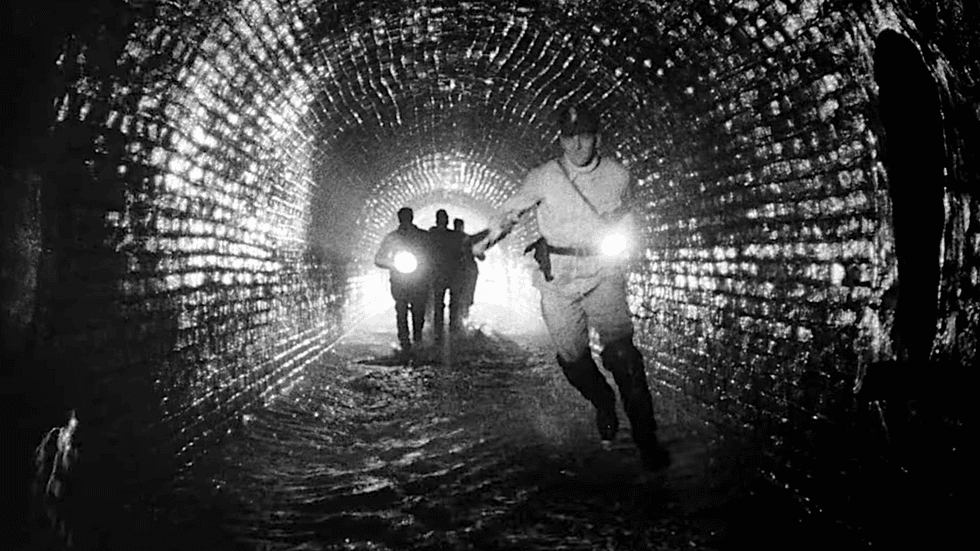
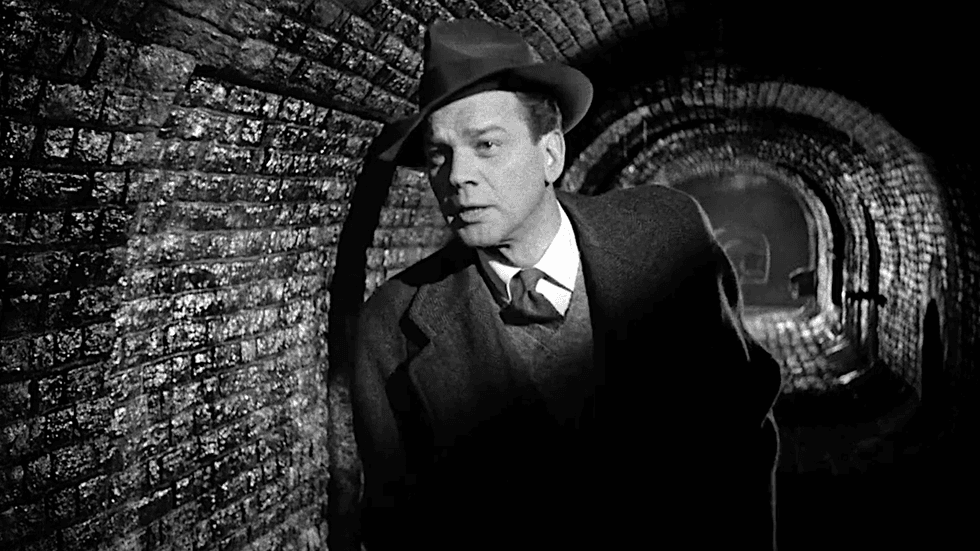
As his last name suggests, there is a sourness to Harry, and his rationale for his criminal behavior makes for a compelling, humanized depiction of what "evil" can be. The irony isn't subtle when he hides from being caught by going into the labyrinth that is the sewer system.
He is a vermin scurrying about Vienna, with a disregard for the human life whose deaths he has caused or for those he has left ill. It's quite fitting then that he meets his fate in this sewer during the famous climactic chase.
The "cuckoo clock" speech is wonderfully written and performed, turning a major character who shows up late in the movie into a splashy villain role for Welles that is still worth discussing all these decades later.
What do you think of Orson Welles’ speech in The Third Man?