98 Years Ago, This 7 Min Cartoon Changed Hollywood Animation Forever
Walt Disney's Steamboat Willie was a cultural landslide that ushered in the future.
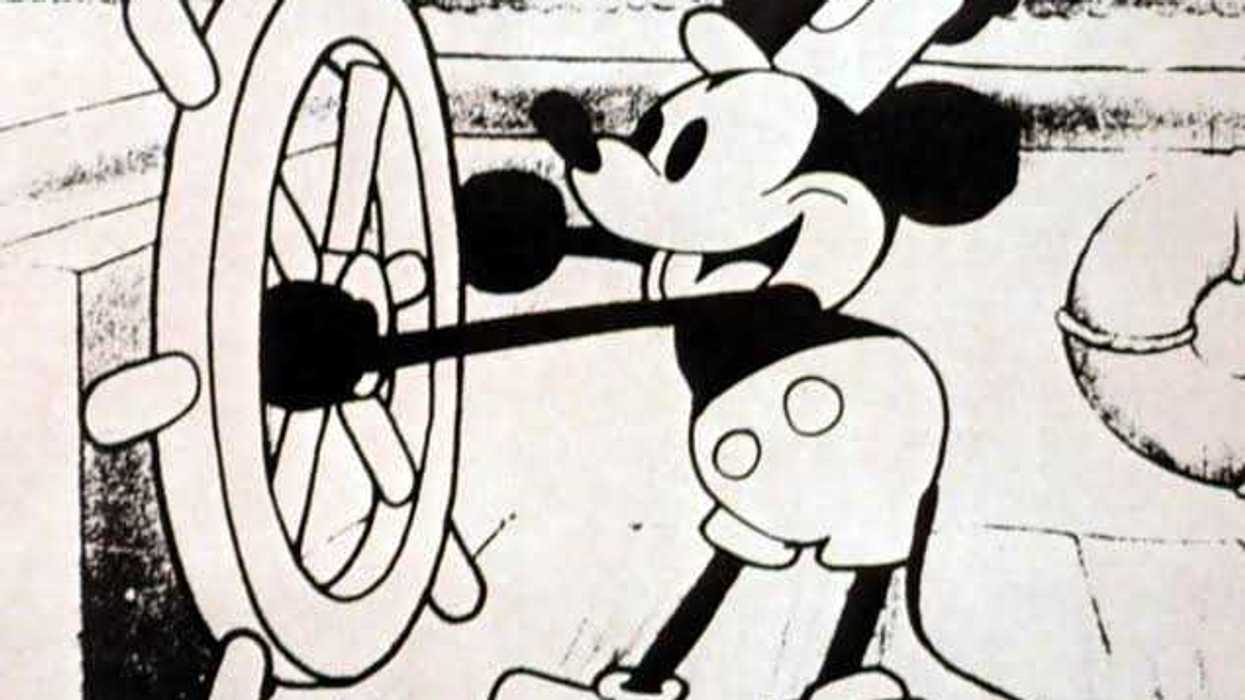
'Steamboat Willie'
On November 18, 1928, audiences at New York City’s Colony Theater were the first to have their lives changed forever. They thought they were seated to see a war drama called Gang War. But before the main titles rolled, they were treated to a surprise cartoon.
Many of them probably wondered what the hell a cartoon is, but that's beside the point.
The point is that suddenly the lights went down, then music rolled, and a talkie animated short played about a mouse on a steamboat that was written, directed, and animated by a guy named Walt Disney. He was a once-in-a-generation genius who was about to embark on one of the most storied film careers of all time.
Now, ninety-eight years later, Steamboat Willie is remembered as the landmark moment animation found its voice and its fiercest advocate, along with its most famous character.
Let's dive in.
- YouTube www.youtube.com
A Gamble on Sound
What if you put your entire future on a 50/50 chance? Well, that's sort of what Walt Disney did when he used sync sound for his debut animation.
See, Walt Disney and his chief animator, Ub Iwerks, had had a bad string of luck lately.
They had this character, Oswald the Lucky Rabbit, that a big corporation stole from them. And those same fat cats also stole the animation staff Walt had curated himself.
To bounce back, Walt had the idea for a mouse named Mickey. But no one wanted his character or idea. And no one wanted a silent cartoon.
Then, The Jazz Singer debuted in 1927, and people were obsessed with talkies and sound. While some called it a gimmick, Disney was all in, and he had the idea of bringing that sound into animation, where he could sync it himself with the drawings.
Disney bet everything he and his company had on a Mickey short with sound. Maybe that would get the attention he needed to bring this animation dream to life.
He partnered with entrepreneur Pat Powers to use the Cinephone sound-on-film system, making Steamboat Willie the first cartoon with a fully synchronized soundtrack.
The "Click Track"
Steamboat Willie was not technically the very first cartoon with sound. There was Max Fleischer’s Song Car-Tunes, which had experimented with audio a few years earlier.
But Steamboat Willie had frame-accurate synchronization between music, sound effects, and the physical action.
They did this by collaborating with composer Wilfred Jackson, who invented a groundbreaking device called a visual metronome.
During the recording session, a bouncing ball was projected onto the film strip at a steady beat (one beat every 12 frames, or half a second). That acted as an early "click track" so the orchestra could stay locked to the animation's tempo.
You didn't need an orchestra to play along while watching; you could just play the reels, and the same music would go with the movie wherever it showed.
In the foley booth, techs used slide whistles, washboards, cowbells, and spit-valves to match every gag in real time while watching the projection. They also got printed to the sound part of the film. Walt Disney himself provided the squeaks, whistles, and chuckles for both Mickey and Minnie.
This collaboration of everyone made the animation come alive.
And it shook that theater during the premiere.
Overnight Sensation and Industry Disruption
The reaction at the Colony Theater was electric and feverish. People had no idea what they had seen, but for seven minutes their imaginations exploded.
Within weeks, Steamboat Willie eclipsed the feature films it opened for. People turned up and bought tickets to see seven minutes of action, then bought more to see the next showing.
Not only was Disney ahead of the game with his sync sound, but every other animator in Hollywood or across the world had to get sound equipment to catch up.
Because these bets paid off, Animation became a premier theatrical art form.
And the animated movies we see today all owe Steamboat Willie a debt of gratitude for being the landmark moment everything changed.
Of course, Disney would continue to push the envelope, and nine years after Willie, we got the feature-length color animation of Snow White and the Seven Dwarfs (1937), and then the entire modern feature animation industry.
Summing It all Up
The legacy of the short is undeniable. In 1994, Steamboat Willie was voted #13 on The 50 Greatest Cartoons list by animation professionals, and in 1998, it was inducted into the U.S. National Film Registry.
What's crazy is, it's now so old that its U.S. copyright expired on January 1, 2024; so the iconic image of Mickey at the ship's wheel has entered the public domain.
The short still holds up, and I like to go back to it from time to time to just revel in how it changed everything.