Breaking Down the "Smokestack Twins" Scene in 'Sinners'
How do you shoot with two parts played by one actor?
'Sinners'
The main thing I love about awards season is that we get to look behind the scenes at a lot of our favorite movies and get so much information about how they were made.
And one of the places that gives us the closest look inside is Proximity Media, Ryan Coogler's production company, where they have a podcast that goes behind the scenes of the movies they make.
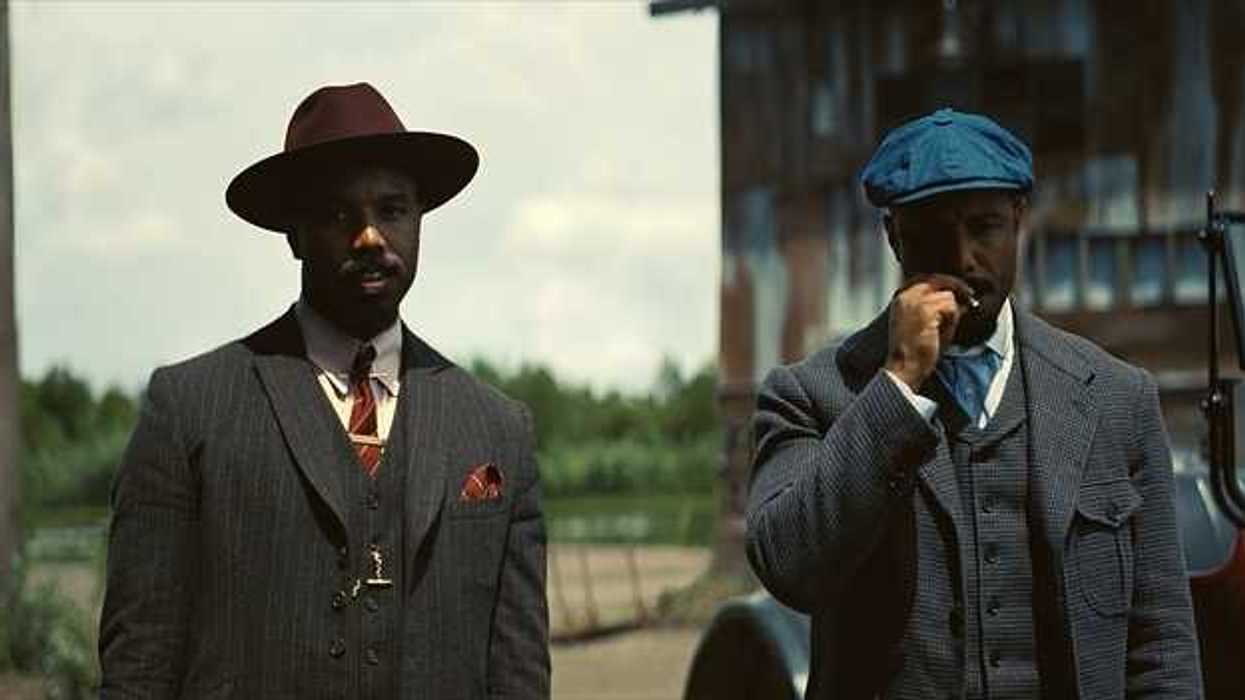
In a recent episode of In Proximity (their podcast), script supervisor Steve Gehrke sat down to break down a pivotal scene from Sinners. The scene features Michael B Jordan playing both "Smoke" and "Stack," twin brothers standing outside a lumber mill.
While the sequence is only 3/8 of a page of script, the breakdown reveals the massive amount of labor and planning required to make a single minute feel seamless.
Let's dive in.
Sinners Scene Breakdown
Sinners was one of those movies that had a little magic in it. I love it when actors play dueling roles, and this movie capitalized on it with Jordan playing twin brothers who were each badasses in their own ways.
But to have Michael B. Jordan interact with himself, the production utilized a locked-off master frame and then shot at different angles to get the coverage they needed.
While Jordan played one twin (Stack), photo double Percy Bell played the other (Smoke).
In the scene from the clip, we see them talking and passing a cigarette, lighting it, and playing with guns. That's a lot of action together from two guys played by one person.
Because the two versions of Jordan would eventually be stitched together in post-production, every movement had to be perfectly timed to ensure their hands and eyelines matched up in the composite.
The Logistics of the Costume Swap
One might assume a director would shoot all of "Twin A's" scenes in the morning and "Twin B's" in the afternoon to save time on hair and makeup. But Gehrke notes that they were constantly switching back and forth.
I have no idea why they did it this way, but it was probably harder to change cameras than costumes.
Either way, they moved from wide shots to close-ups and repeatedly changed Jordan’s costume and character within the same setup to ensure the lighting and performance energy stayed consistent across both "halves" of the scene.
Reading the "Lines and Squiggles"
I think this is a great look behind the scenes on one of the biggest movies of the year. For aspiring filmmakers, Gehrke’s script binder is a masterclass in organization and what it takes to make something in Hollywood.
He explained the visual shorthand used to communicate with the editor:
- Straight Lines: These represent the "coverage." A line drawn through a section of dialogue or description tells the editor exactly which shot (e.g., Shot 6 or 6A) covers that specific moment.
- The Squiggles: If you see a squiggly line in a script supervisor’s notes, it means that the dialogue was delivered off-camera. This tells the editor that while the audio exists, the visual coverage for that specific line is on a different take or angle.
It Took 23 Takes for 3/8 of a Page
If you ever feel frustrated that your production is moving slowly, remember: it took 23 takes to get this 45-second interaction right.
What went wrong? Sometimes the cigarette wouldn't light; other times, an eyeline was off by an inch, or an actor grabbed the wrong bag at the end of the frame.
They eventually landed on Take 21 as the hero take and moved on.
That's the reality of filmmaking.
The Takeaway
Gehrke’s career path is a testament to "learn by doing". The guy started in craft services during the 1984 Olympics, taught himself script supervising by sneaking looks at the official notes he was tasked with delivering to the production office, and eventually became a top-tier professional in the field.
Live the dream you want!
His advice for the "Smokestack" sequence? "Things don't happen in one or two takes".
When you're dealing with complex visual effects or dual performances, patience and meticulous note-taking are your best tools.
Summing It All Up
This was such a cool look behind the scenes of Sinners and into the world of script supervision. I loved seeing how the notes correlated to what was on screen. And I loved imagining how I would have shot the same scene.
Let me know what you think in the comments.