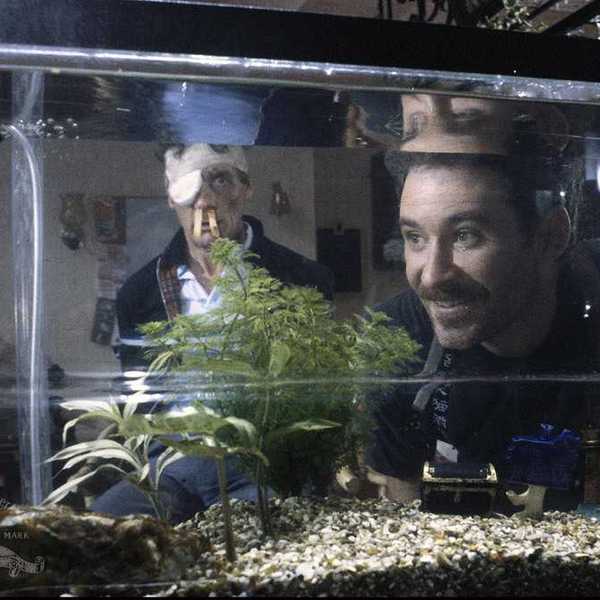
I was scrolling through my HBO Max app the other day and felt like something was just... missing. Not the superhero franchise or the $200 million effects extravaganza. Those are doing just fine. I realized what it was when I saw a childhood classic, Rookie of the Year, pop up.
Where are the mid-budget dramas built around an athlete facing something difficult? A boxer clawing back from rock bottom. A kid too small for any respectable college team. Women playing in a league built to disappear when the men came home.
These were the kinds of stories that could fill a theater and leave an audience in pieces, and the industry's relationship with them has changed substantially. Why is that?
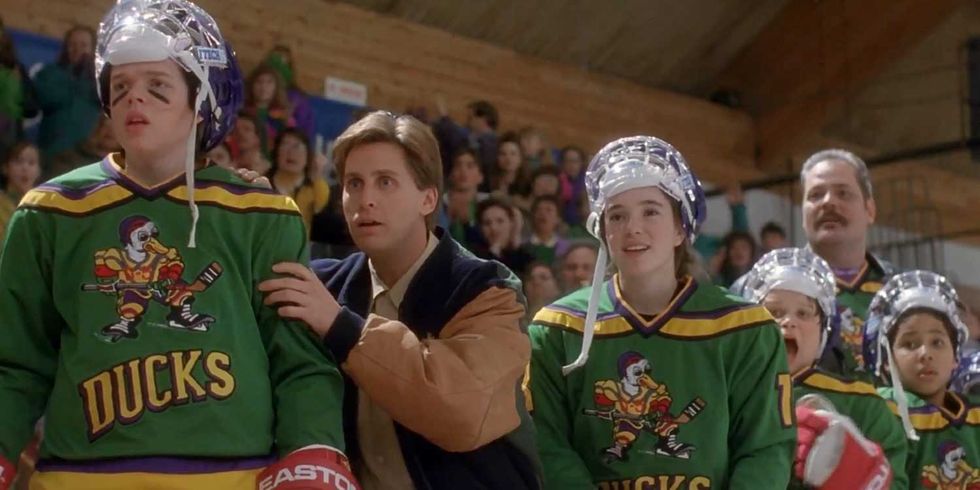 The Mighty Ducks Credit: Disney
The Mid-Budget Problem
Hollywood doesn't know what to do with one subset of its roster anymore—the mid-budget drama.
Rudy cost around $12 million. A League of Their Own cost $40 million. Friday Night Lights cost $30 million. These were films that required a real investment, including big-name talent, location shoots, period detail, and complex athletic sequences.
But they weren't franchise starters. They required well-developed story and character, which is exactly what makes them so hard to greenlight now.
We've tracked how studios are reducing their theatrical slates and concentrating resources on event films, and the mid-budget sports drama has felt that shift as much as any genre.
As Ben Affleck said of this shift in 2020, "You'll either see massive, massive movies getting huge wide-scale distribution or small movies doing little prestige releases in a few theaters but mostly being shown on streamers."
The middle has collapsed, and the sports drama happened to live there. That means there's not a whole lot of room for Rudy, a film too expensive for the micro-budget lane, and too culturally specific to function as a global tentpole. Speaking of worldwide audiences...
American Sports Don't Travel
Directors are fairly candid about the international market problem. John Lee Hancock, who directed The Blind Side and The Rookie, told Script Magazine that the economics had fundamentally changed.
"I enjoyed working on both films, but it is doubtful I'll do another," he said. "There is no international [return] on sports films (even soccer!) and losing that revenue source results in a lower budget to work with, which can be a challenge."
Industry reporting from 2014 put the scale in concrete terms. Draft Day, despite being a highly sought-after No. 1 Black List script, made roughly 2% of its lifetime gross internationally, and Million Dollar Arm pulled in less than $440,000 from outside the U.S.
Studios now count heavily on international receipts to make theatrical releases viable. A movie built around the NFL draft or a Notre Dame walk-on simply does not have that audience overseas.
Meanwhile, the superhero franchise and the action tentpole are engineered from the ground up to cross borders. They run on spectacle and recognizable IP. The sports drama doesn't have those same legs.
We've written about how Hollywood is reorienting around streaming-first distribution in ways that continue reshaping which stories get a theatrical run at all.
- YouTube www.youtube.com
Shooting Sports Is Harder Than It Looks
Hancock talked about this in the same Script Mag interview. A single double play, shot to do justice to the moment, can require up to 11 camera setups, or close to half a day's work for a few seconds of on-field action.
"As for crowd scenes, nowadays it is less expensive to put people in the stands using CG, but when we did The Rookie and The Blind Side, we couldn't afford it, so we used real extras and had to get creative with promotions, etc. to keep them in the stands."
The camera has to be in the right place at the right moment, even though that moment is changing every few seconds. Pete Berg shot Friday Night Lights with multiple cameras simultaneously during game sequences, generating floods of raw material that demanded an equally rigorous editorial process.
Where the Genre Lives Now
The sports film hasn't died so much as migrated. Friday Night Lights, the film, directly spawned an acclaimed NBC series. Screenwriter Mike Rich, who worked on The Rookie and Secretariat, told The Ringer that the genre's definition is evolving, pointing to The Queen's Gambit as a modern sports film that happens to be set around chess, following the same structural blueprint of ascent, setback, and final contest.
That template now lives more comfortably in streaming and limited series, where the international math doesn't punish it.
The Best Films to Learn From
If you've read all this and still think, "Hey, maybe it's time to give this genre another go," then there are plenty of examples you can look at. If you're considering transposing the beats to a limited series on Rich's advice, that might be a viable way to get sports back on our screens more regularly. (Brush up on how to write a TV pilot here.)
The Natural, directed by Barry Levinson and starring Robert Redford as a mythic, late-arriving baseball prodigy, blended the pastoral and the mysterious in ways that still hold up. The film actually helped rekindle Hollywood's appetite for baseball films, which had largely dried up. Levinson said on the Rich Eisen Show that the prevailing attitude in the industry was, "Well, I don't know. Baseball movies. That genre's over."
A League of Their Own brought Penny Marshall's direction and Tom Hanks at his most deadpan to the story of the All-American Girls Professional Baseball League. We've written about that iconic "no crying in baseball" scene and what it says about Marshall's direction.
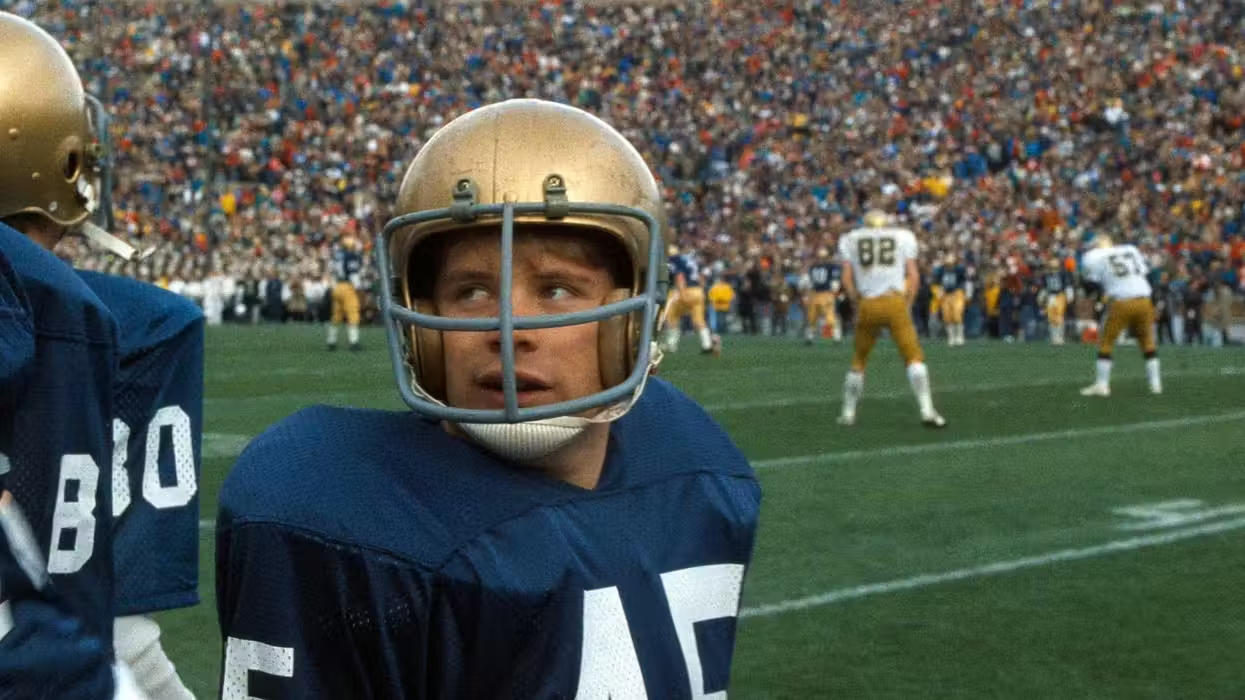
Rudy followed Daniel "Rudy" Ruettiger's improbable pursuit of a spot on Notre Dame's football roster. Not a complex story, but a classic.
Cinderella Man gave us James J. Braddock's Depression-era comeback, with Ron Howard directing Russell Crowe and Paul Giamatti in career-level performances.
And Friday Night Lights, shot in a raw, handheld style by cinematographer Tobias Schliessler, turned one Texas high school football season into something that felt like journalism as much as cinema.
We've covered the best sports films across the genre, and these five belong at or near the top of any serious list.