Hollywood has operated under a specific set of industry rules: Streamers pay big money for premium content, audiences subscribe for that premium content, and filmmakers strive to be the ones making it.
This sort of worked when it came to creating jobs, art, and commerce.
But with reports out of Disney suggesting they'll let consumers use AI to generate their own content, and fears other streamers will follow, what is streaming going to look like in 2030?
Let's dive in.
YouTube Is Winning the War for Eyeballs
According to Nielsen data, in October 2025, YouTube is currently dominating the TV screen. The platform commands 12.9% of Americans' total TV viewing time.
To put that in perspective:
- Netflix sits at 8.0%.
- Disney+ is at 4.8%.
- Prime Video is at 3.8%.
Even if you combine the might of Netflix and Disney, they barely edge out YouTube.
For executives at Warner Bros. Discovery or Paramount, this is a nightmare scenario. They are spending billions on production, marketing, and talent to produce shows like House of the Dragon or Stranger Things, while YouTube is winning the engagement war with content that costs them effectively $0 to produce because people are just uploading their own stuff.
So, how do you compete with people uploading their own stories that later get monetized by the platform?
Well, you just copy it...but with AI.
 'House of the Dragon' Credit: HBO
If You Can’t Beat Them, Clone Them
The industry’s metric of success has shifted. It’s no longer just about raw subscriber numbers; it’s about retention and time spent on the platform.
The goal is to keep the user inside the walled garden for as long as possible.
So, what if I told you that if you were subscribed to one of these apps, you could be creating content using all the IP they owned? Content you came up with that allowed you to make the sortiress using AI.
Want to see the Stranger Things cast team up with Nobody Wants This? Sure, that can happen.
Or maybe you want to see The Lion King cast go on an adventure in the Frozen Universe? Also possible...theoretically.
And if you got really good at this stuff, Netflix or Amazon or Disney may even pay you to make these adventures and slap them on their homepage, for other people to watch, too.
But how can you afford to have all these apps?
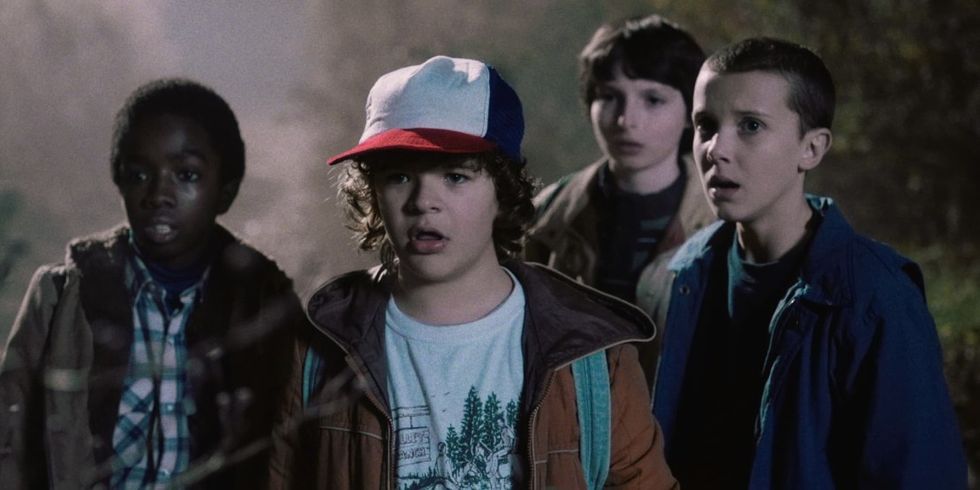 'Stranger Things' Credit: Netflix
The Great Rebundling
Outside of AI, I would expect the number of apps we have to shrink drastically over the next five years.
The era of app-hopping will be largely over. By 2030, the fragmentation that frustrates users today (switching between Netflix, Disney+, Max, etc.) will be replaced by "Super-Aggregators" who are basically cable providers.
You will likely access content through a single operating system (OS) provided by a gatekeeper like Amazon, Apple, or a telecom giant. This OS will aggregate all your subscriptions into one searchable interface. You won't open Peacock; you will just click a show on your home screen, and the OS will handle the backend connection.
Subscriptions will move beyond just TV. A Disney-style bundle might include Disney+, ESPN, theme park discounts, and merchandise perks. An Amazon bundle might pair Prime with grocery delivery and smart home security.
These huge corporations are going to merge with your lives in new and unforeseen ways.
They Care About Advertising
Advertising will be the dominant revenue model, even for "premium" users. It's making streamers way too much money now, and they're driving everyone toward it.
The future will involve you buying the products you see on your favorite shows and movies.
Product placement will be interactive. If a character in a show is wearing a specific jacket, you might be able to pause, click, and buy it directly through your TV's stored payment info.
Ads will probably be extremely localized, so that you're seeing things for stuff around you more than just big national products.
The Cinema
I love going to the movies, but streaming and streamers do not love that idea. They want you in your homes and glued to the TV.
The "Theatrical Window" (the time a movie is exclusive to theaters) will be settled into a strict binary in order to make sure both can survive. And this will be a partnership between streamers and studios.
Imagine a world where movies exist in theaters for a standard 30 days. You can see them there, or you can wait until they hit streaming. While I'd love to see that number around 45 days, it's hard to predict where the market will take us.
The trending theory is that only massive spectacles (Avatar, Marvel, Dune-scale sci-fi) and horror movies will get guaranteed global theatrical releases.
Mid-budget dramas, comedies, and rom-coms—the types of films that flourished in the 90s—will be almost exclusively streaming assets, designed to retain subscribers rather than sell tickets to the general public.
Summing It All Up
The "Streaming Wars" are over, and the "Attention Wars" have begun.
While the idea of The Godfather sharing shelf space with a "Get Ready With Me" vlog is jarring, it’s a reminder that distribution models are fluid.
For filmmakers, the advice remains the same: Make things that are undeniable. but I know that sounds like bullcrap to most people. I'd also say hang on and find a side job tso that you can sustain yourself through a serious few years of flux.
Let me know what you think in the comments.
- This Is Why We Need to Return to Physical Media ›
- How Have Streaming Services Affected Storytelling in Film and TV? ›
- Streaming Services and Residuals—How Do They Work? ›
- James Cameron Rallies Against Netflix's Oscar Chances ›
- Why Your Favorite Streaming Shows Have Shorter Seasons: Sterling K. Brown Breaks Down the Economics ›