The 20-Page Rule: Re-Engineering the First Act for Streaming
You need producers to see the commercial potential in your spec right away.
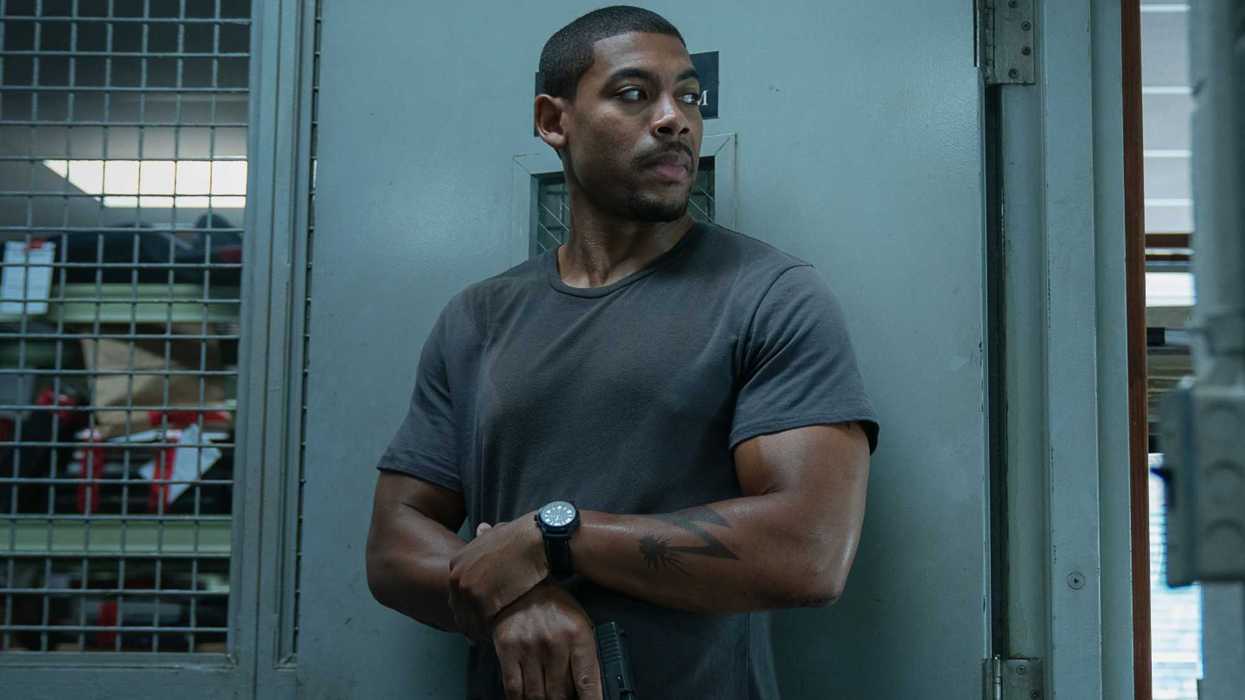
'Rebel Ridge'
Yesterday, we covered this story about Matt Damon, where he talked about Netflix changing the idea of the slow-burning start to a movie.
It was an article I got a lot of feedback on, mostly from people who wanted to know how this changes things on the page. Does it change a beat sheet or outlines, and are producers really paying attention to these things when reading specs?
Well, I decided to go more in-depth on the idea that you need to arrive late and leave early in modern screenwriting. I call this the 20-Page Rule.
The TLDR is that if your script hasn’t gripped the viewer by page 20, they aren't just bored—they’re gone. That is the case no matter where your story lives.
But in terms of the 20-page rule, there are specific things you can do in the first 20 pages to show that your idea might be good to produce for streaming.
Let's dive in.
The Death of the "Slow Burn"
Look, before we dive too deep, I want to reiterate again that these are rumors about Netflix and structure, and this is mostly just a new way to think about storytelling.
The main idea is that traditional screenwriting structure (think Blake Snyder or the Hero's Journey) has the Inciting Incident land around page 10 to 15, with the "Plot Point 1" turn occurring at page 30.
But when it comes to the idea of moving fast and the 20-page rule, we need to get there much sooner.
This is based on the idea that for streaming, page 30 is too late. Streaming platforms track "completion rates." If a significant percentage of viewers drops off at the 18-minute mark, that project is less likely to be promoted by the algorithm.
To keep your spec alive, you have to rework your first act to hook people sooner and keep them watching.
Strategies to Front-Load the Stakes
This is hard to do. And I don't know if jamming stuff into the first 20 pages is worth it, but I do think certain genres like action and horror lend themselves to this much better than something like a character drama.
These are a few tactics I've employed in order to make it all work.
- The "Micro-Conflict" Sequence: Don't wait for the grand inciting incident to show us conflict. Every scene in the first ten pages should feature a character losing something or struggling against a specific, immediate obstacle.
- The "Active" Protagonist: We need to see your lead doing what they are best (or worst) at immediately. Passive observation is a viewership killer.
- The Dramatic Irony Hook: Give the audience information the characters don't have. This creates an immediate "itch" that the viewer needs to stay tuned to see.
And a producer reading may see the potential for this kind of story to hit a streamer.
- YouTube www.youtube.com
Case Study: Rebel Ridge (Netflix)
One of the best movies on Netflix in the last few years was Rebel Ridge. I thought it did an excellent job bringing us into a world with a lot of complicated plot points, but still managed to keep you paying attention.
I also think it starts very fast and tosses us into the action in a way that brings the story to the front right away.
| Traditional Feature Timing | Rebel Ridge "20-Page" Timing | Why it Works |
| Pages 1-10: Ordinary World / Setup | Pages 1-5: The Confrontation | The protagonist is immediately put in a position of unjust vulnerability when he gets arrested on his bike. |
| Pages 10-15: Inciting Incident | Page 12: The Escalation | Terry attempts to pay bail legally and is blocked. The "system" is the antagonist, and his money is stolen. |
| Pages 25-30: Crossing the Threshold | Page 20: The Tactical Shift | By the 20-minute mark, Terry transitions from a victim to a tactical threat, taking the battle to these guys. |
By page 20 of Rebel Ridge, we aren't just "meeting" Terry. We have seen his moral code, his military-grade restraint, and the specific corruption of the town.
The audience is locked in because the stakes are clear: saving his cousin and reclaiming his life savings.
All of this is established with kinetic energy rather than heavy exposition.
Summing It All Up
In the modern marketplace, a producer reading your script is thinking like a subscriber. If they feel their thumb hovering over an imaginary "back" button while reading your setup, they’ll pass.
The takeaway: Look at page 20 of your current draft. If your protagonist hasn't made a life-altering choice or faced a major systemic obstacle by that point, you’re not writing a slow burn—you’re writing a drop-off statistic.
Re-engineer the first act. Tighten the screws. Don't just set the table; start the fire.