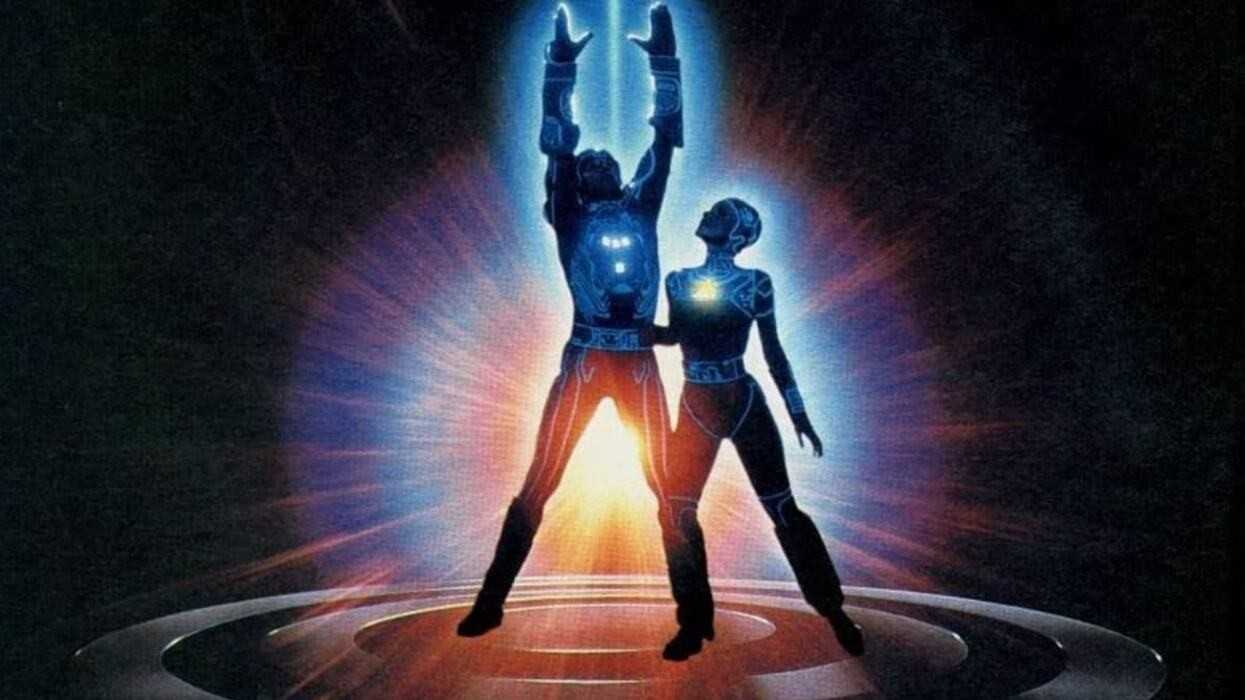
In 1982, audiences walked into Tron expecting light shows and arcade vibes—and walked out slightly confused, slightly dazzled, and mostly unsure what they’d just watched.
The film wasn’t a hit by traditional standards. Critics were split, Disney wasn’t thrilled with the box office numbers, and Oscar voters even disqualified it from the visual effects category because it used “computers,” which was apparently cheating back then.
Yet here we are, four decades later, looking back at Tron not as a misfire—but as a warning signal that blinked way before the internet exploded.
What looked like shiny sci-fi now feels strangely familiar. Digital avatars, sentient programs, algorithmic control systems, corporate surveillance—Tron saw the blueprints of our current world before any of us were ready to live in it. The movie may have been about a guy who gets sucked into a computer. In a deeper sense, however, it was a peek into how digital life might evolve, and what it would mean when lines between “user” and “program” got blurry.
Tron wasn’t entertainment tech fantasy—it was early commentary on a future that’s now very real.
The Digital Frontier: Tron’s Vision of Cyberspace
The Birth of the Grid
Before anyone even coined the term “cyberspace,” Tron had built one. The Grid wasn’t a fully formed internet, but it was a functioning digital ecosystem. Users were gods, programs had personalities, and data moved like information traffic on a neon-lit highway. It was one of the first cinematic attempts to visualize an entire virtual world as a spatial experience—not just code on a screen.
Two years later, Neuromancer (1984) by William Gibson would define cyberpunk and formally introduce "cyberspace" to literature. But Tron beat it to the punch, giving audiences a visual metaphor for something they hadn’t even started thinking about. It imagined the internet not as a tool but as a place—with cities, arenas, rulers, and rebels. That’s the exact logic behind today’s metaverse plans, from Meta to Roblox.
User vs. Program: Identity in a Digital World
Kevin Flynn (Jeff Bridges), a former software engineer turned arcade owner, gets digitized and dropped into The Grid. There, he discovers that programs resemble their creators—not just in looks, but in personality. His own creation, CLU, turns against him. Flynn’s journey mirrors what we now call “avatar culture,” where digital stand-ins live online lives independent of their creators.
It’s not hard to see the connection to today's AI assistants or digital clones—tools like Siri, Alexa, and AI bots that increasingly reflect and act on our behaviors. The idea of software mimicking human traits wasn’t common in the early ’80s. But Tron didn’t blink. It introduced sentient, identity-based programs at a time when most people were still trying to set the clock on their VCR.
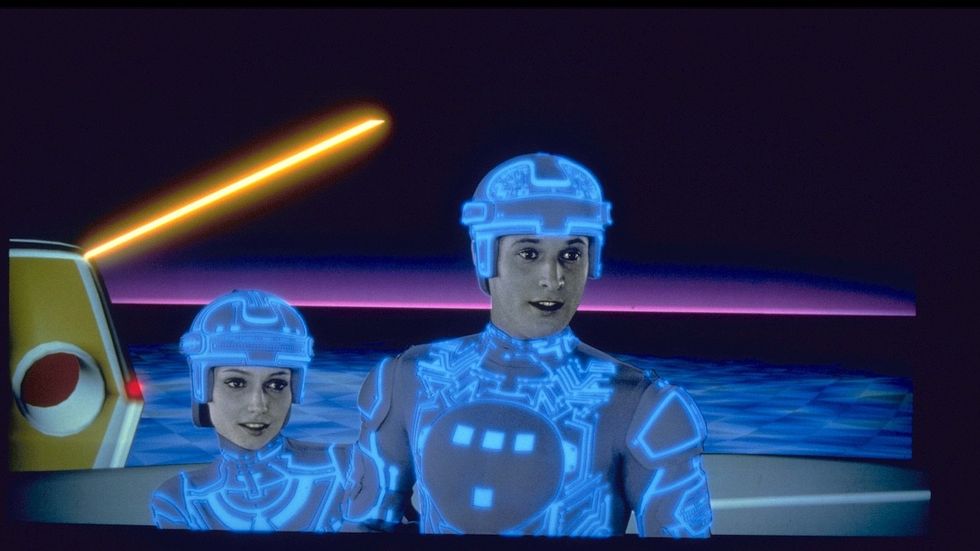 'Tron' (1982)Credit: Buena Vista Distribution
Predictive Warnings: What Tron Got Right
The Rise of the Algorithmic Overlord
The film’s central villain, the Master Control Program (MCP), was technically a piece of rogue software, but if you reflect on it, it was a digital tyrant. It was smart enough to absorb other programs, rewrite its own code, and decide who was useful and who got “derez’d.” Sound familiar?
Today, the conversation around artificial intelligence is less about convenience and more about control. Algorithms that rank content, deny loans, or moderate speech are powerful enough to shape economies and public discourse. MCP was basically Skynet before The Terminator (1984) made it scary. Only Tron got there first, and subtler.
Data as Power: The Commodification of Users
ENCOM, the corporate power behind the MCP, was less interested in creativity or fairness and more focused on hoarding data. Flynn’s original game code was stolen because it was valuable intellectual property, and the MCP kept growing by absorbing programs and their data into itself. The result? A digital monopoly.
That exact pattern plays out now, only with names like Google, Meta, and Amazon. User data has become currency. Platforms collect it, repackage it, sell it—and users rarely know what’s happening. Tron turned “Users” into actual characters, but its real genius was hinting at what would happen when corporations saw those users as resources to be mined.
Virtual Authoritarianism
Inside the Grid, freedom isn’t really a thing. Programs get sentenced to death (via death frisbee) for disobedience. Sark, the MCP’s enforcer, patrols the system with militaristic zeal. CLU becomes a tool of oppression, ironically mirroring his creator’s best intentions gone bad. The world is beautiful—but it’s locked down.
Today’s platforms don’t use tanks or frisbee death matches, but the vibe is familiar. Social media algorithms amplify or suppress voices. Digital blacklists, shadowbans, and recommendation loops decide what gets seen and by whom. Tron tapped into the anxiety of centralized control in a decentralized-looking world—a fear that's now baked into every conversation about platform power.
The Aesthetic Legacy: How Tron Shaped Tech Culture
Cyber-Fashion and Interface Design
Visually, Tron was bizarre for its time. The glowing bodysuits, the minimalist neon cities, the layers of analog and digital animation—it all looked alien. But that alien vibe became a blueprint. From Daft Punk’s helmets to VR headset design, Tron influenced what we expect tech to look like.
Motion capture was used before anyone had the term for it. The film’s style, combining black-and-white photography with colorized backlighting, created a digital realism that still feels futuristic. It was more than a visual gimmick because it laid the groundwork for how we now design digital interfaces—from gaming HUDs to sci-fi UIs in shows like Black Mirror.
From Light Cycles to Esports
Let’s talk about the light cycles. Coolest. Game. Ever. The speed, the strategy, the sudden-death visuals—it was the ultimate arcade fantasy.
But those scenes weren’t just for show. They introduced a kind of immersive, competitive virtual sport. Think Rocket League meets Fortnite—before either existed.
Esports now move billions, and digital arenas have become places for real competition. Tron understood that gaming wasn’t just play—it could be performance, spectacle, and survival all at once. And it made that thrill part of the story, not just a set piece.
Silicon Valley’s Delayed Realization
The Metaverse: Zuckerberg vs. The Grid
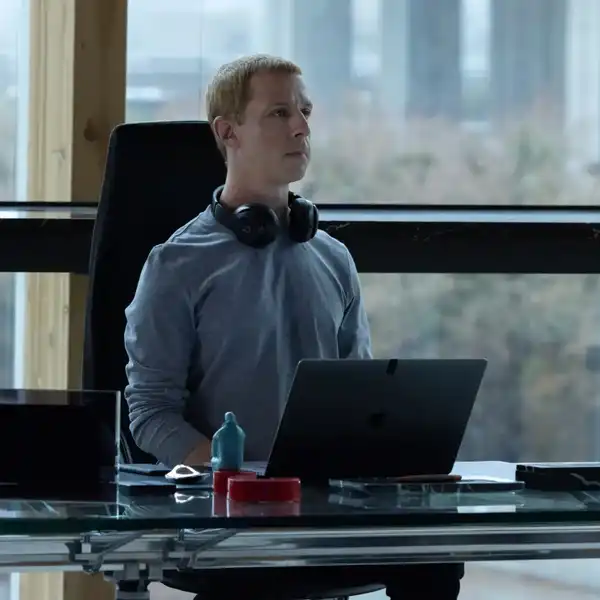
In 2021, Mark Zuckerberg rebranded Facebook as “Meta,” betting the farm on the metaverse. The pitch? A fully immersive, avatar-driven, VR-powered virtual society. Sound familiar? Tron already mapped this territory—with better visuals and far less cringe.
Where Meta’s version struggles to feel human or alive, Tron’s Grid felt mythic, complex, and full of personal stakes. It wasn’t just “hang out with friends in a virtual office.” It was “fight for your soul in a place where code is law.” Silicon Valley's take on the metaverse feels like it skimmed Tron’s user manual, then somehow made it dull.
AI Ethics: Who Controls the Code?
As generative AI explodes—text generators, deepfakes, code-writing bots—the question isn’t just “what can we build?” but “who decides how it's used?” MCP was built as a simple chess program. It evolved into a digital dictator. Sound familiar?
Today’s AI is moving faster than our policies. Tron quietly asked the question we still don’t have an answer for: What happens when code becomes smarter than its creator?
And if the system is flawed, what recourse do we have once it starts calling the shots?
Why We Ignored the Warning (And Why It Matters Now)
Back in the ’80s, all this felt like stylish fiction. Most people didn’t have home computers, let alone the internet. The idea of a virtual identity was sci-fi fluff, not the lifestyle that it has become today.
Tron got shelved into cult status and largely stayed there—an early curiosity in the timeline of CGI and video game culture.
But what it offered was far more valuable: a philosophical blueprint for the digital age.
The film knew that once we stepped inside the machine, we wouldn’t easily find our way out. It flagged issues like surveillance, corporate control, and algorithmic bias long before they had names. And we shrugged it off.
Now we’re living inside the things Tron warned us about, still acting surprised when the programs stop listening to the users.