Western Movie Villains Who Stole the Show
Five villain turns that prove the antagonist isn't there just to lose the final showdown.
'The Cowboys'
Is there anything better than a Western villain? In the lawless frontier, they are usually a man who takes what he wants, regardless of who it hurts, and wields power ruthlessly. The genre's villains sometimes work harder than the heroes to provide an easy-to-understand threat that scares the audience.
These five performances did that and more, changing the genre for the better. Some are the film's actual antagonists, some are memorable faces in a bigger evil, and a couple were played by actors so associated with heroism that their turn to menace was shocking. Regardless, every time they're on screen, they steal the show.
What does it take to steal a Western from the lead? Let's look at these roles to find out.
- YouTube www.youtube.com
Henry Fonda in Once Upon a Time in the West
This was Sergio Leone's most audacious bit of casting. America's on-screen father figure, who had played Tom Joad, Wyatt Earp, Mister Roberts, and the president, was introduced here by executing a child on his family's porch. Henry Fonda shocked as Frank. The Spaghetti Western focuses on a fight over valuable land and its water source.
Leone reportedly rejected Fonda's brown contacts and beard, wanting the blue eyes and a clean-shaven look so the audience would know it was him.
"When he sent me the script, I couldn't believe it," Fonda told Dick Cavett, "and I didn't accept it, but he flew to California and persuaded me."
Casting against type is a way to weaponize an audience's memory of every hero the actor has ever played. Fonda's face carried 30 years of American virtue, so to turn that into fear was no easy feat. Leone made him into the film's opening threat.
- YouTube www.youtube.com
Jane Darwell in The Ox-Bow Incident
Henry Fonda shows up in this one, too, but he's not the villain.
A few years after winning an Oscar for the warm, morally centered Ma Joad in The Grapes of Wrath, Jane Darwell showed up as the only woman in a lynch posse.
She's coarse, gleeful, and the first to volunteer to slap the horses out from under the condemned men—who may be innocent. The film is set in a Nevada town and opens with news of a rancher's murder and cattle theft.
William A. Wellman's anti-mob-justice film is famously bleak, and Darwell's presence lands because we recognize the actor from John Ford's The Grapes of Wrath and can't reconcile her here. It's another example of casting against type and an actor subverting expectations. Not to mention, it was unique in 1943 to see a female character be so bloodthirsty.
The New York Times wrote in 1943, "In a little over an hour, it exhibits most of the baser shortcomings of men—cruelty, blood-lust, ruffianism, pusillanimity and sordid pride. It shows a tragic violation of justice with little backlash to sweeten the bitter draught."
In the film, vigilantism gets a closer look for all the violence it truly is, making this more a Western about frontier ethics than anything else. Darwell's inclusion helps sell that horror.
- YouTube www.youtube.com
Jack Palance in Shane
Shane, a drifter played by Alan Ladd, arrives in Wyoming and gets pulled into a battle between the homesteaders and a cattle baron. Jack Palance, who plays Jack Wilson here, was often a villain and featured heavily in noir and Western films.
In Shane, he's given almost no dialogue and turns in one of the most economical villain performances ever put on screen. In one famous scene, his character goads a Confederate homesteader into drawing, then kills him with a cold smile even after the man hesitates.
"If any actor has ever created a character who is the personification of evil, it is Jack Palance," Woody Allen once said.
Palance earned an Oscar nomination here on fewer lines than most supporting parts have in a scene.
- YouTube www.youtube.com
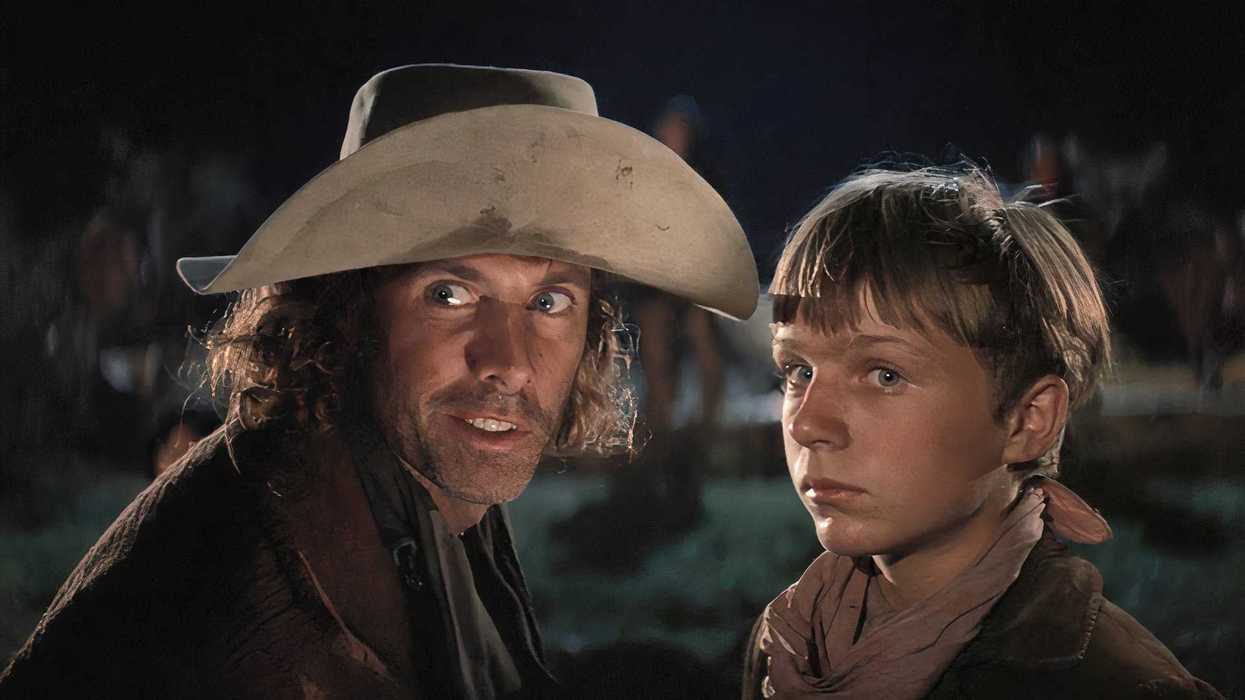
Bruce Dern in The Cowboys
We love Bruce Dern in a Western. In this one, he shoots John Wayne in the back. Everything Dern does before that moment as the fake-friendly "Long Hair" is prepping the audience for a shocking subversion. He plays the leader of a gang of cattle thieves, while Wayne was hero Wil Andersen.
There are people who were furious with the actor for killing their hero. Dern told Cowboys & Indians in 2015:
“But I knew that would happen. I knew on the day when I had to shoot him, when we did that scene, that he had never even had a bullet squib put on him before in his career. You know, he got shot in Sands of Iwo Jima. I think he got killed by some sniper. But this was the first time he actually had a squib put on him, where it was going to be close to his skin and everything else. [Laughs.] I remember he leaned into me at about 8:15 a.m. that morning, reeking of Wild Turkey 101, and said, ‘Is it gonna hurt?’ And I said, ‘Duke, they’re gonna blow your [bleeping] chest off. Get a metal protector to put underneath those squibs so the squibs aren’t next to your skin.’”
- YouTube www.youtube.com
Michael Biehn in Tombstone
Johnny Ringo is easy to hate as the villain in Tombstone, Arizona. He's too smart for his own good, trading Latin phrases with Doc Holliday and leading his men in cold-blooded raids and killings. Biehn plays Ringo as an educated killer who's genuinely enjoying himself, which is a much scarier register than pure malevolence.
In a behind-the-scenes video, Biehn said he loved the role for how dark and complex the character is. He is a mental match for Holliday, but the dark side of his personality.
Biehn said on Just Fooling About that he never felt like he "met" Val Kilmer because Kilmer was always in character as Holliday.
"I never spent any time with what who I would consider Val Kilmer," he said.
Despite keeping their distance for most of the shoot, Biehn and Kilmer collaborated closely to choreograph and rehearse their iconic final face-off. Biehn has called the tense exchange right before their duel and the realization his character feels before his last line his favorite acting moment of his entire career.
- Film Quote of the Day: The 'Once Upon a Time in the West' Line That Made Frank One of Cinema's Greatest Villains ›
- 10 Modern Westerns Destined to Become Classics ›
- The 6 Greatest Villains in Western Movie History ›
- Lawless Malice: The 10 Scariest Villains in Westerns, Ranked ›
- Film Quote of the Day: The Unexpected Wisdom Hidden in This 'Pulp Fiction' Line | No Film School ›