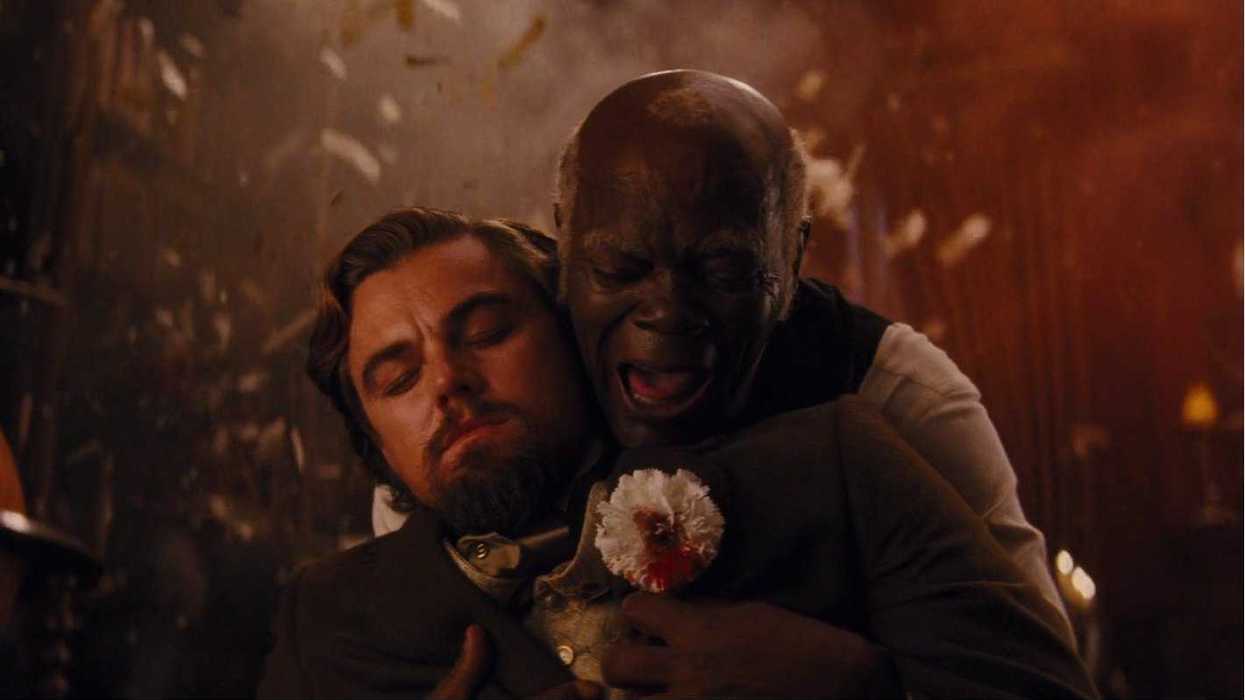
The Old West is about sunsets, expansive landscapes, tense silences, standoffs, quick-draw showdowns, and obviously, strong, morally driven heroes. But there is one more element that gives Westerns their distinct soul—the antagonists.
One of the important “rituals” that has to take place in a Western is surviving the absolute worst kinds of people. They come in many forms: outlaws, lawmen, landowners, cattle barons, business tycoons, bandits, mercenaries, slave/plantation owners, bankers, and bank robbers. Whatever their profession, they break the law (considering it exists), and they break spirits.
Don’t confuse them with the misfit antiheroes. Antiheroes are still the protagonists; regardless of their moral ambiguity, they still have redeeming value. The “big bad wolves” we are talking about here signify total hopelessness. The very dead end of humanity.
These listed Western antiheroes are as much responsible for adding flavor to their movies as they are for raising the stakes. They bring the sort of malice that forces the heroes to either level up or get buried.
10 Scariest Villains from the Old West
1. Calvera (The Magnificent Seven, 1960)
Portrayed by: Eli Wallach | Created by: William Roberts | Directed by: John Sturges
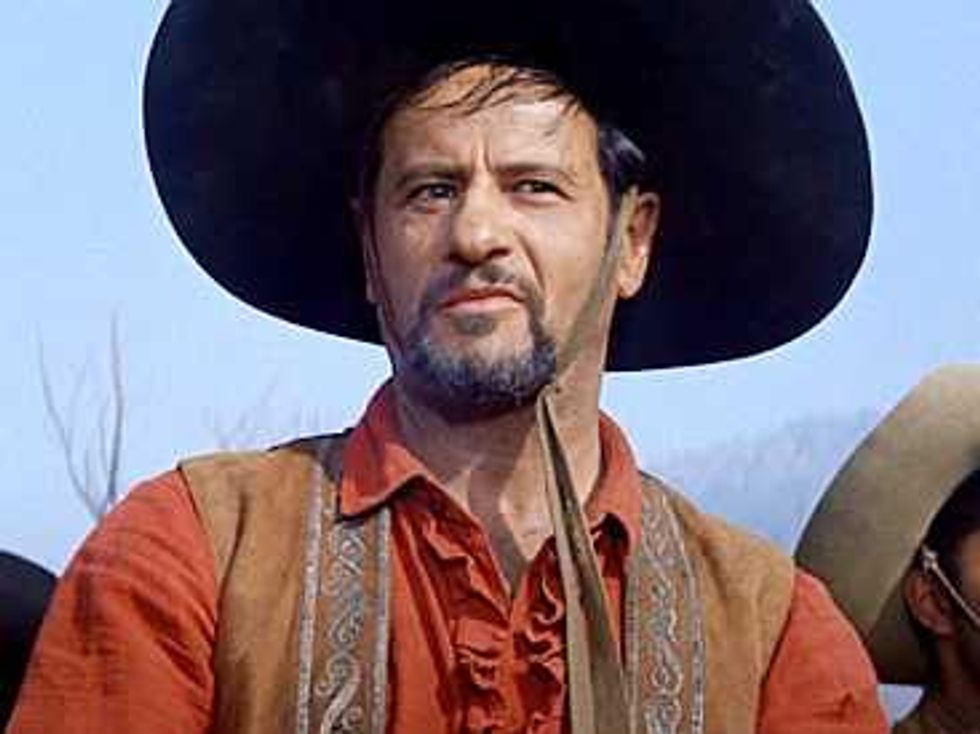 'The Magnificent Seven' (1960)Credit: United Artists
Calvera is charismatic and a capable leader, but the problem is that he leads a group of bandits, sees a farming village as his own pantry, and, to maintain his influence, terrorizes the villagers. It’s easy for him because he is extremely entitled and considers human life to be as worthless as gum on a boot heel. What’s more, he has no idea he is evil; he thinks he is a shrewd “businessman.” In his world, people’s survival depends on how content he is. As simple as that.
2. Liberty Valance (The Man Who Shot Liberty Valance, 1962)
Portrayed by: Lee Marvin | Created by: James Warner Bellah | Directed by: John Ford
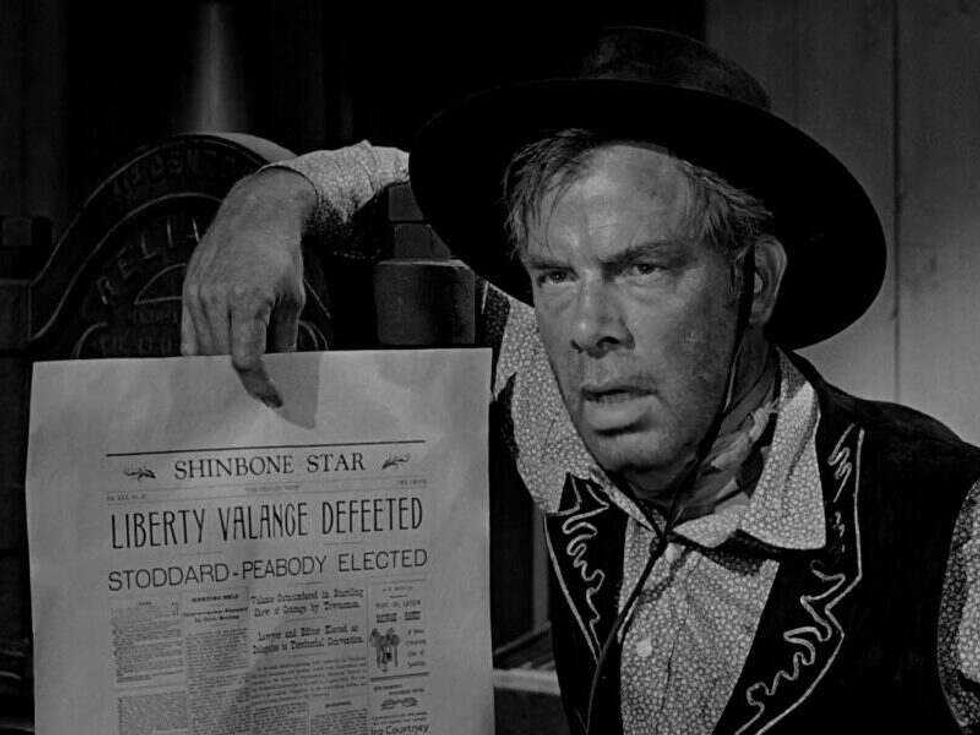 'The Man Who Shot Liberty Valance' (1962)Credit: Paramount Pictures
One of the most iconic Western bad boys, Valance is pure, unadulterated thuggery. He is averse to civil society and the rule of law. He carries with him a silver-knobbed whip and, with his hair-trigger temper, who knows what he will break next. Like all sadistic psychopaths, he relishes humiliating anyone weaker than him. (More and more, he sounds like some of today’s world leaders, doesn’t he?)
3. El Indio (For a Few Dollars More, 1965)
Portrayed by: Gian Maria Volonté | Created by: Sergio Leone | Directed by: Sergio Leone
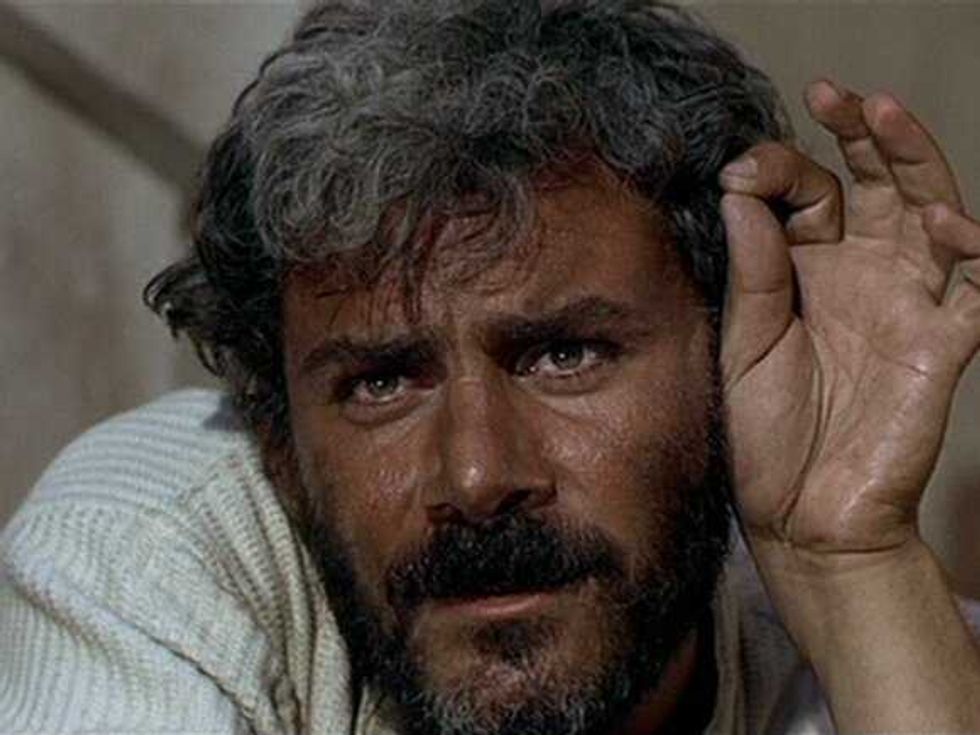 'For a Few Dollars More' (1965)Credit: Produzioni Europee Associati
Indio is a bandit leader, and his thuggery becomes more lethal because of his drug addiction. One of his eccentricities is that he feels peaceful and focused when he listens to his pocket watch chiming, even during his duels. He is evil, but he himself is tortured as well. But unlike benevolent people (Duh!), he chooses to use his gang to disperse and spread his misery among others and across borders. Volonté’s performance brought an unpredictable, lethal energy to this character and made him one of the most unstable threats in Western cinema.
4. Angel Eyes (The Good, the Bad and the Ugly, 1966)
Portrayed by: Lee Van Cleef | Created by: Sergio Leone | Directed by: Sergio Leone
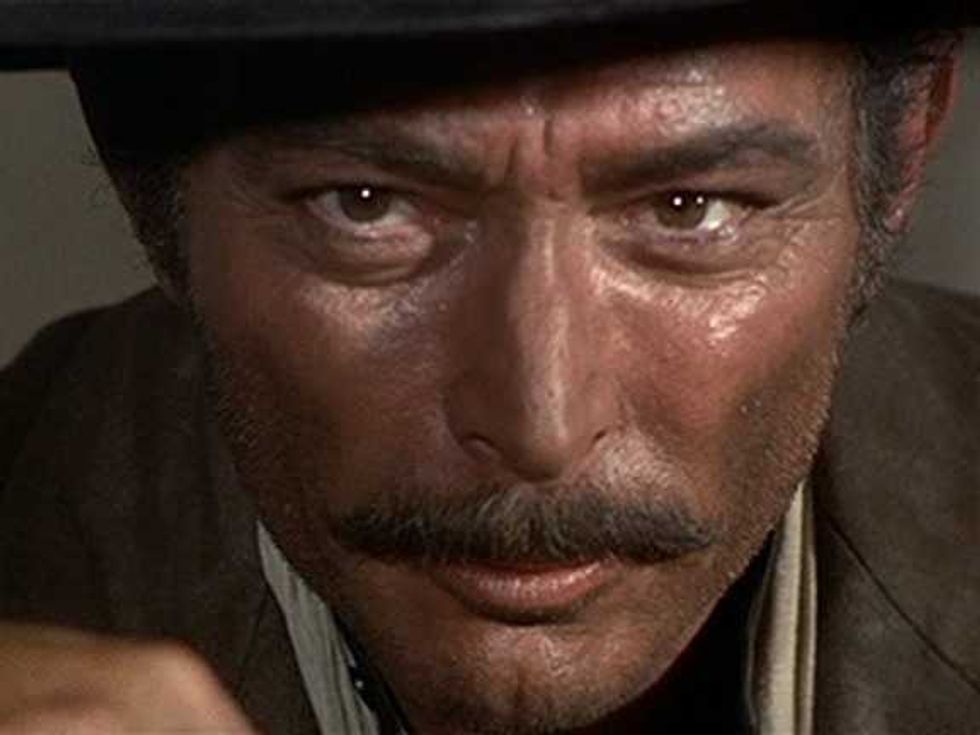 The Good, the Bad and the Ugly' (1966)Credit: Produzioni Europee Associati
The “bad” in the movie’s title alludes to Angel Eyes; that should be enough to get an idea about him. He signifies a total lack of moral ground. He is up for sale for whatever and whoever brings a better offer. He is so deeply involved in his “badness” that torturing someone is like a routine job, and murdering someone is like running a casual errand. His absolute lack of empathy is reflected through his piercing, cruel gaze. You can equate him with today’s war profiteers because the Civil War is nothing but an opportunity for him.
5. Frank (Once Upon a Time in the West, 1968)
Portrayed by: Henry Fonda | Created by: Sergio Leone | Directed by: Sergio Leone
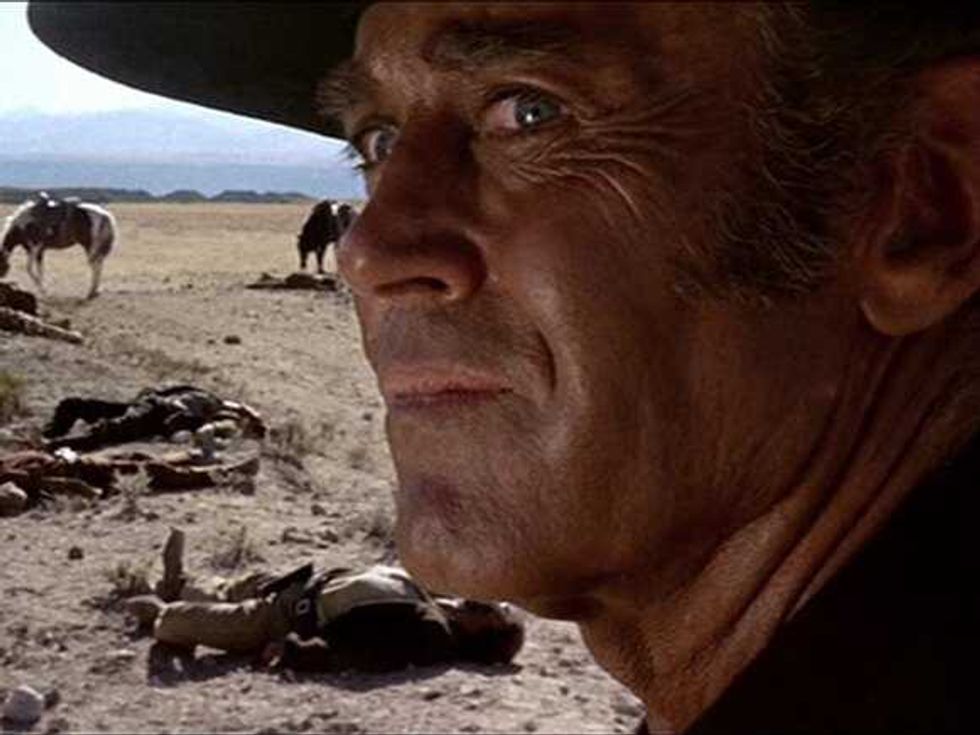 'Once Upon a Time in the West' (1968)Credit: Paramount Pictures
Henry Fonda carried the “good guy” image throughout his career, only to break his “altruistic” streak twice, and both times, in 1968, with “Frank” being the more iconic role. Frank is a cold-blooded murderer who doesn’t have to think twice before killing children. In the film, he is hired by a railway tycoon to clear the way for the railroad. Frank is effective and a testament to the fact that progress often comes at a high cost in body counts. Frank’s introduction in the movie is acknowledged as one of the most shocking introductions.
6. Little Bill Daggett (Unforgiven, 1992)
Portrayed by: Gene Hackman | Created by: David Webb Peoples | Directed by: Clint Eastwood
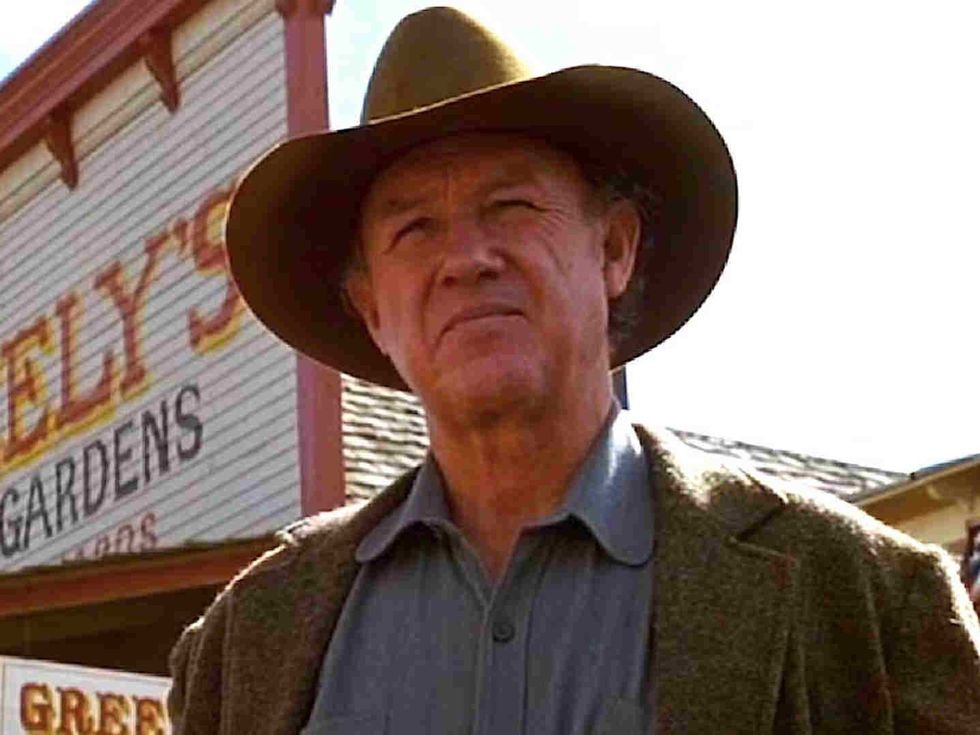 'Unforgiven' (1992)Credit: Warner Bros.
Little Bill is the “corrupt lawman” version of the Western antagonists. He is a terrible reminder that the law doesn’t always mean justice—under his rule, it definitely doesn’t. As a sheriff, he is basically focused on two things: brutalizing suspects and building his own house. This “bully with a badge” genuinely thinks that he is a good guy, as evident from his dying words, “I don’t deserve this… to die like this. I was building a house.” Hackman won an Oscar for his performance in recognition of his creation of a character that was both deeply human and utterly monstrous.
7. Johnny Ringo (Tombstone, 1993)
Portrayed by: Michael Biehn | Created by: Kevin Jarre | Directed by: George P. Cosmatos
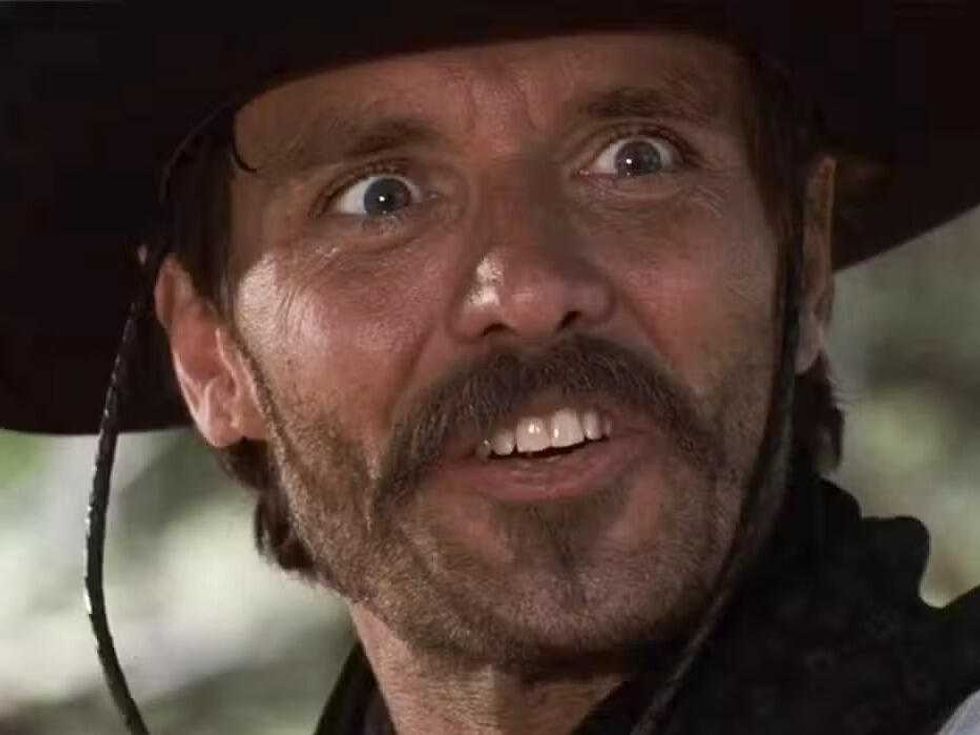 'Tombstone' (1993)Credit: Buena Vista Pictures Distribution
In a quite unusual pivot for a Western baddy, Johnny Ringo is highly literate and formally educated—he even throws around Latin and Shakespeare in a casual conversation. But all this erudition is essentially pointless because it’s used in sharpening his talent for murder. It doesn’t take much effort because he is already nihilistic and kind of hates mankind. He seeks out and engages in fights, not for gold, but for the sake of the kill. If Biehn was attempting to portray Johnny Ringo as a ticking time bomb, then he did it 100%.
8. Anton Chigurh (No Country for Old Men, 2007)
Portrayed by: Javier Bardem | Created by: Cormac McCarthy | Directed by: Joel Coen and Ethan Coen
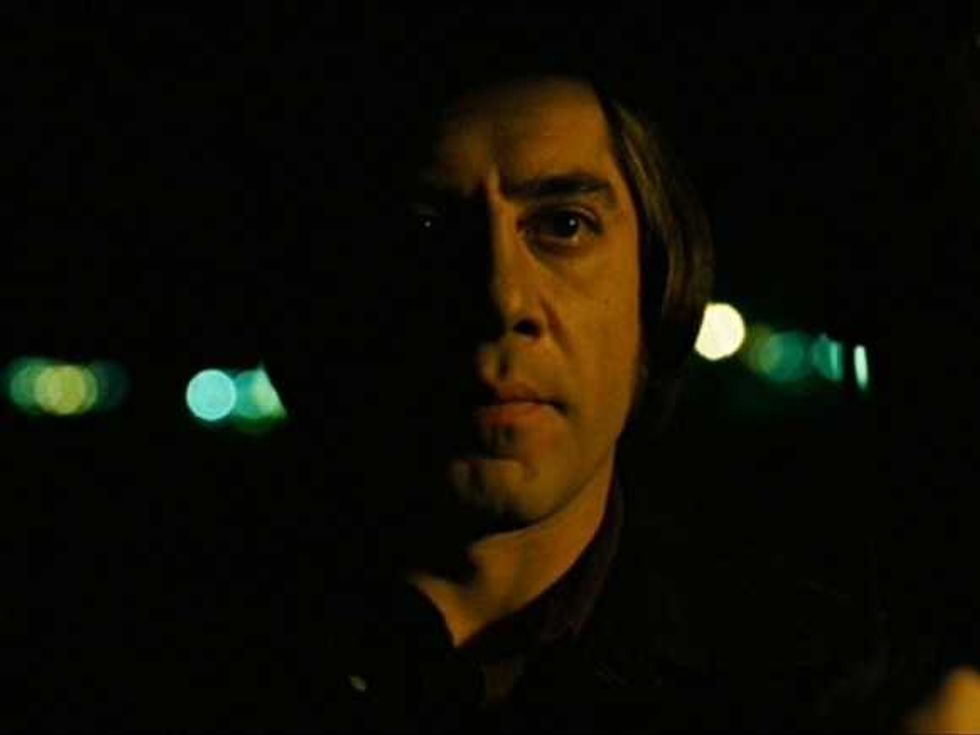 'No Country for Old Men' (2007)Credit: Miramax Films
If there is a visual that can justifiably claim to be synonymous with the film, it’s the visual of Anton Chigurh, the force-of-nature contract killer with a bad haircut. Of course, he sees himself as the emissary of fate—and death. He even carries a coin, which he tosses when he has a “judgement” to deliver. He has no professional code as such, which makes him unpredictable, unstoppable, and difficult to pursue. Bardem, with this Oscar-winning performance, stripped the Western villain of all romanticism and left behind a cold, relentless, coin-flipping vacuum of morality.
9. Calvin Candie (Django Unchained, 2012)
Portrayed by: Leonardo DiCaprio | Created by: Quentin Tarantino | Directed by: Quentin Tarantino
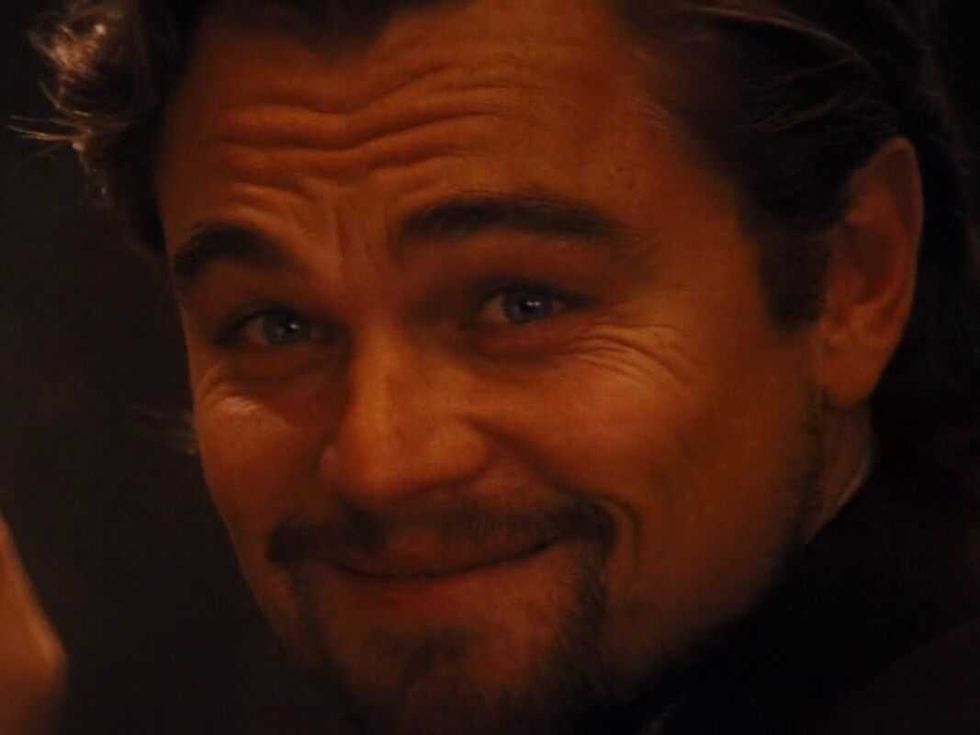 'Django Unchained' (2012)Credit: Lantern Entertainment
Calvin Candie, in a nutshell, is the repulsive face of the systemic cruelty of the plantation era. Human suffering, for him, is sport; literally, he arranges gladiator-like fights at his estate and enjoys their pain. Outwardly, he is charming. Like a snake, but charming. He even feigns clueless French, just to appear sophisticated—I take this pretense as his subconscious awareness that he is the lowest-level human. He is, in reality, nothing but an insecure and violent man-child who hides behind his wealth and status. DiCaprio’s immersive and explosive performance brought out the true horror of Calvin Candie: a villain who believes that his depravity is his birthright.
10. Stephen (Django Unchained, 2012)
Portrayed by: Samuel L. Jackson | Created by: Quentin Tarantino | Directed by: Quentin Tarantino
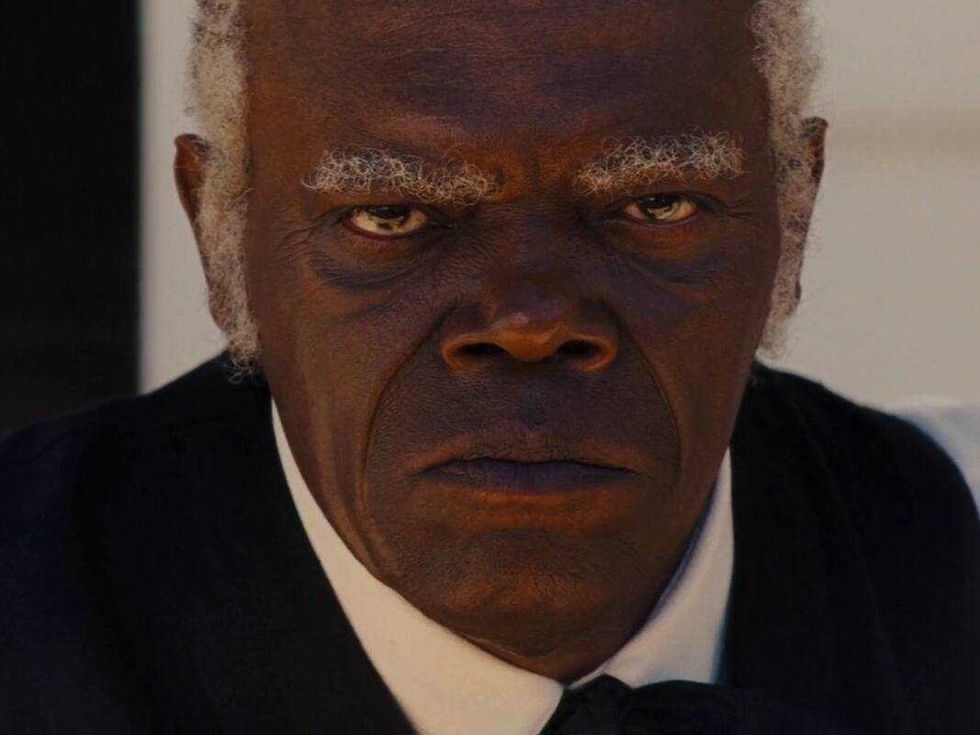 'Django Unchained' (2012)Credit: Lantern Entertainment
If Calvin Candie is the horrific face of Candyland, then Stephen is his rotting, ominous shadow. He is disabled; he limps; he is hunched over; he is just a “feeble old man”—and all that’s a flagrant lie. By faking an “image” all his life, he proves that he is a consummate Machiavellian tactician and perhaps far more dangerous than his master. Technically, he is the head house slave in Candyland, but that doesn’t stop him from weaponizing his intimate knowledge of the plantation’s social hierarchy and enforcing a regime of psychological and physical terror. Jackson’s portrayal of a uniquely loathsome slave with a predatory intellect, in my opinion, is his top-tier (if not the top) performance.
- 11 Funniest Villains in Movie History ›
- 11 Best Movie Villains of All Time ›
- 8 Iconic Villain Final Lines Are Impossible to Forget ›
- 14 Iconic Mexican Standoffs in Cinema ›
- Story of the Rise, Fall & Wild Comeback of the Western Genre ›
- 10 Best Westerns of the 1970s: Ranked ›
- ‘Shane’: The Moral Reasoning Behind a Hero’s Goodbye ›
- “For Me, It Was Tuesday”: Why M. Bison is the Coldest Villain in Cinema History ›
- 5 Horror Western Movies That Prove the Wild West Was Terrifying | No Film School ›
- Western Movie Villains Who Stole the Show | No Film School ›