The first time I had heard the term “button” when discussing a scene, it went right over my head. It was while reading the feedback notes from a colleague on a script that I had given him to read.
“Great work. Only a few scenes are missing their buttons!” read a scribble on the first page after he returned it to me.
Some believe that its meaning is closely related to the literal word “button.” As in “buttoning up your shirt,” an act that signifies completion in our day-to-day life.
Some claim that the term was probably inspired by the “pause” or “next” button on a media player. We’ll never know for sure, I guess.
Understanding what a scene or story button is is pretty easy. However, creating one can be pretty tricky. Let’s just say you can write great buttons if you understand how closely the anecdote “all’s well that ends well” resonates with filmmaking.
In this article, let’s understand what a “button” is and how to write your buttons effectively.
What Is a Button of a Scene or Story?
The “button” is simply the last line of a story or scene in the script. Visually, it’s the final moment or beat of a scene or a movie that decides the final takeaway from it.
Buttons set the final POV and tone of the scene or the movie.
Here’s what else it does:
- Wraps up the scene or movie
- Realigns us with the main emotion of the scene or story
- Drives us to the next scene, when it’s the button of a scene
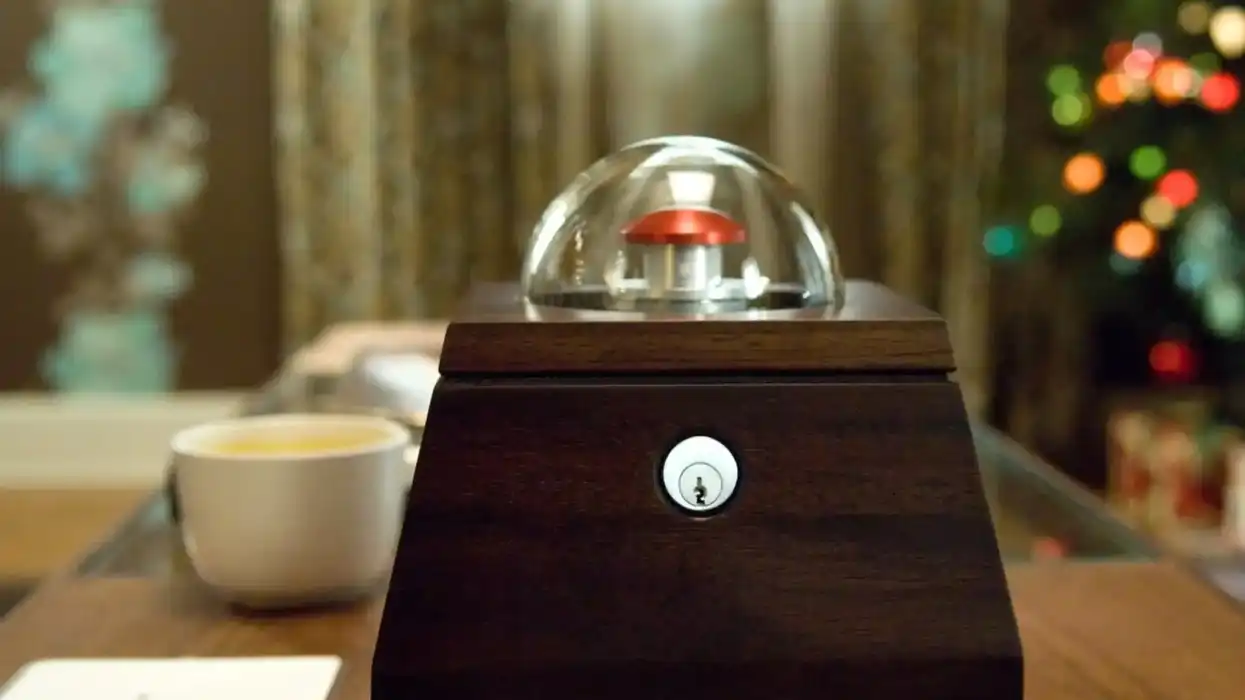
 'Cabin in the Woods'Credit: Lionsgate
How to Write Buttons Effectively
Writing a button may sound easy and largely obvious; however, it’s not as easy as it sounds. Writing an ending that brings out the best in your storytelling takes years of practice.
Here’s where you start:
1. Track Down What Changes, and Double Down on It
I read somewhere that the most common way to develop a scene is to ask yourself, “What needs to happen?” However, the more effective way is to ask yourself, “What changes now?”
A button is supposed to be a well-crafted compilation of all the changes that happened in your scene, or throughout the narrative. Not every one of them—only the major ones.
For instance, if a couple is arguing in a scene, what changes after the fight? Also, who changes? If both do, whose story are we watching?
These are a few questions you can ask yourself while creating a button for your scene. The same logic applies to an entire movie, too.
2. Try to Visualize the Scene Down to Its Every Second
I know it sounds tedious—having to visualize every scene down to its every second, in a 120-page screenplay. But then, nobody said filmmaking is easy.
You obviously do not want audiences to read anything you never intended to say. Visualizing the scene will let you see what the audience will see, more or less, which in turn helps you understand the takeaway your scene is presenting to them. A wrong button just pushes… well, the wrong buttons in your audience.
3. Dialogue and Physical Actions Are Not the Only Buttons of a Scene
Not every scene or film will end with a character’s action, as in something as physical as someone walking out of the discussion, or as clear as making a decision, or even as verbal as a line of dialogue.
Writers often forget the button on an emotional scene, where it all revolves around feelings. For instance, some of the conversations between Celine and Jesse in the Before trilogy, especially in Before Midnight.
4. Get Complete Clarity on the Emotions of Your Scene
Think of the “button” of the scene or story as the aftertaste that is left in your mouth after a bite of food.
Naturally, you wouldn't want the food to leave a bad taste in your mouth. You have hit the jackpot if you can make it memorable with every bite. To make a dish that good, you will need to know your spices to their core—the emotions.
Okay, that’s enough culinary talk here. What I mean is that clarity about emotions will not only help you present the scene or story better, but also help you make an informed decision about the button.
5. End at the Impact
Timing also plays an important role when creating a scene's button.
So, when do you “button” your scene? The answer is right after the moment of impact. Once you’ve figured out all of the above, ask yourself, “Which moment in the scene (toward the end, of course) lands the impact?” That is your cue to button up!
Stretching the scene after that will only cost you the audience’s attention.
As we “button up” this article, let us know what your struggles have been while writing the button to your scene or story in the comments!
- Quentin Tarantino's Best Screenwriting Advice ›
- Check Out This Collection of Brian Koppelman's 6-Second Screenwriting Tips ›
- How to Write a Screenplay ›
- 5 Screenwriting Tips from James Mangold ›
- 3 Screenwriting Lessons From 'The Brutalist' ›
- 3 Things Your Screenplay is Missing ›
- Why Screenwriting Rules are a Myth ›