What a Top Lit Agent Looks for in Your Script
Hint: voice wins all.
Most screenwriting advice comes from writers. This conversation comes from the other side, meaning someone whose job is to decide which scripts go out into the world.
Glenn Cockburn is the founder of Meridian Artists, a premier literary talent agency established in 2005. Based in Toronto and Los Angeles, his agency carries a roster of Canadian screenwriters, directors, and authors.
He got his start in 1996 as a script reader for New Line Cinema and Innovative Artists, then spent 1997 to 1999 as a creative executive at Templeton Productions, which had a first-look deal at New Line. He moved back to Toronto in 2000 to join The Characters Talent Agency, and launched Meridian in 2005.
He recently appeared on The Business of Film Podcast to speak with producer Jesse Ikeman. They discuss what he learned from his time as a reader, why the bar for samples has never been higher, the three mistakes agents see constantly, and more. Dive in!
- YouTubewww.youtube.com
What a Thousand Scripts Teach You
If you ever have the opportunity, read people's scripts. Read, read, read. Unfortunately, it's not so much a paid position anymore with the advent of AI, but there is no better education for writers than just reading everything you can get your hands on and analyzing the writing.
Cockburn talks about his time as an old-school reader.
"I would, about 8:00 at night, I would get four feature film scripts delivered to me by courier. I would have to read the film, write up a one-page synopsis of it, one page of articulate comments that an executive could use in a meeting, and a cover sheet, and have all that coverage on all four scripts faxed back to New Line by 8 a.m."
When I was a reader, I'd get mine by email. Sometimes I'd have a quick turnaround, but the pay would be better in those cases. Cockburn agrees that the time in this position was invaluable because "you're recognizing everything that is not working."
Not only are you recognizing it, but you have to articulate it and explain why it's not working. Learn more about script coverage.
You never stop learning.
"If you think you've figured out screenwriting, that's the end of your creative career right there."
Structure Is the Canvas
Cockburn admits his reader years gave him a bias toward structure. He's also clear that structure doesn't mean every script follows the same formula.
"But at the end of the day, if you can't build a canvas to begin with, then you're just painting on air, and it's not really going anywhere."
If you need a primer on screenplay structure, we've got you covered. Structure isn't binding, but a useful guide. Take advantage of it.
"At the end of the day, a great script in my mind does everything it's supposed to do all the time in every moment," Cockburn says. "That's a great script. And so, you're looking for people who can write things that can convey that density of information and an economy of words."
The Market Shrank, So Your Sample Has to Be Great
It can be so exciting to finish a script and immediately want to send it everywhere, but that's rarely the right move. Wait. Get some eyes on it. Rework it. Let it sit. Then maybe try the big dogs.
Cockburn estimates the industry is about 40% smaller than a few years ago. That's his rough math. Axios reported FX Research's count of an industry-record 600 scripted series in 2022, followed by a 14% drop, the steepest in at least a decade. Ampere Analysis found U.S. streaming orders fell 41% between 2022 and 2025, from 1,144 to 678 (via TV Technology). The world got smaller.
"If the market's contracted 40%, that means 40% of the story editors aren't working, 40% of the co-producers aren't working, or 40% of the co-EPs, 40% of the showrunners aren't working that were working, let alone the people who were trying to get in."
All to say, your script better be amazing, and it had better be the best representation of your taste and personality as it can be.
"And if you're not getting meetings off a sample, it's not good enough."
- YouTube www.youtube.com
Voice Is the Rarest Thing on the Page
"Every single person reading scripts is looking for the same thing. And it is the most rare thing in scripts and that is voice," Cockburn says.
To him, voice is literally the way you write—how do you come across on the page? What's your rhythm, what are your idiosyncrasies?
He suggests that once a pilot draft is done, rewrite the first 10 pages under a new rule. Try more adjectives, or sentences of five words or less, or characters who never finish what they're saying. It can't hurt the draft you already have.
Three Mistakes Agents See Constantly
Here are three things to keep in mind for your next draft.
The first problem starts before page one, with the idea itself.
"'Characters in a setting' doesn't work," Cockburn says.
He means you can't just say a story is "people in a place." His example is a half-hour comedy about the overnight shift at a bakery. The crew shows up at midnight, spends a few hours there, and makes delicious food. Wow, exciting! It doesn't justify a series.
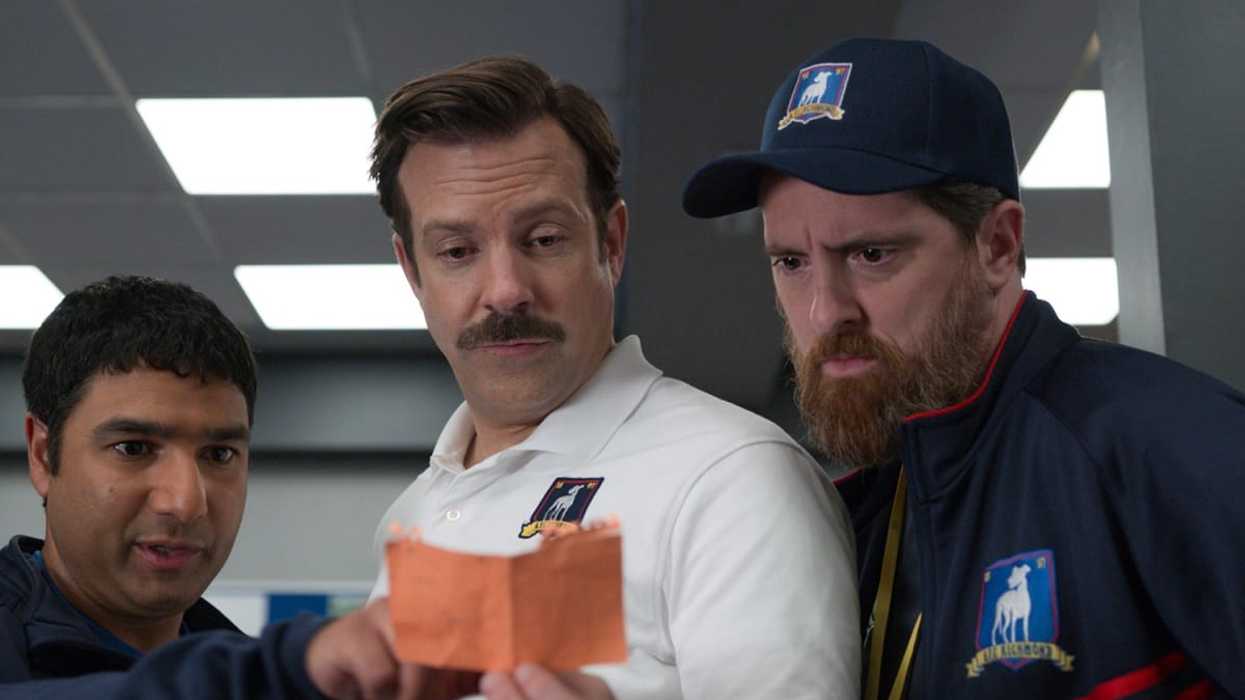
But if you say a show is about an American football coach trying to start over in England as an out-of-place British football coach, that's something else. There's drama and conflict built in.
The second mistake is what Cockburn calls "backend loading." Writers spend the pilot making sure readers understand everything. It's a ton of set-up. By the time the premise arrives, there are, like, five pages left. Some writers even hold back their best idea for later in the season. Don't do that!
"No one is going to buy a show because of the idea in Episode 3. If that's the best idea you have for that series, that is your pilot. Pull that forward," Cockburn says.
The third mistake is scene length, mainly that they go too long. Pick one or two of your favorite shows in the format you want to write. Sit down with a pen and paper, and write down how long every scene runs. He said writers come back surprised nearly every time.
"People are so used to just kind of relaxing and watching a show they're not catching on. That scenes are very rarely longer than a minute anymore," Cockburn says.