In Who’s Watching, writer-director Tim Kasher turns the camera itself into a storytelling device, blending found footage, surveillance imagery, documentary-style filmmaking, and traditional narrative filmmaking.
The idea for this unique approach was originally conceived in 2010 around a conversation he had about “found footage fatigue.”
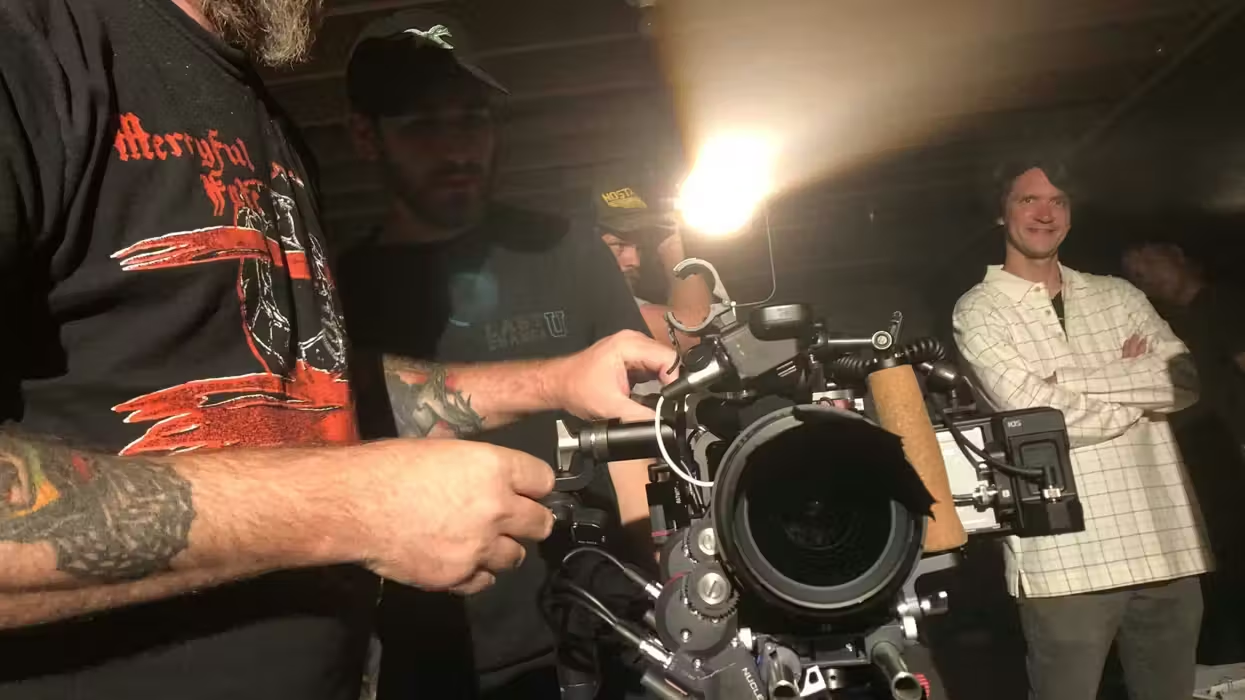
The film evolved into a genre experiment that required Kasher and cinematographer Brian Sowell to build distinct visual perspectives for its characters, utilizing multiple cameras, lenses, lighting approaches, and even a custom camera helmet.
Kasher explains, “We wanted the different perspectives to FEEL like they were being created by different people, despite it almost always being Brian Sowell shooting. In this sense, Brian became an actor of sorts, as his camera became the first-person vessel for certain actors in certain scenes.”
In this interview, Kasher discusses the technical and creative choices behind Who’s Watching, the challenges of executing an ambitious concept on a limited budget, and how camera language became an essential part of the film’s horror.
Who’s Watching is being released on September 18th, 2026. Details on where you can watch are here.
Let's dive in.
- YouTubewww.youtube.com
No Film School: Tim, what first drew you to filmmaking, and when did you realize this was a medium you wanted to pursue seriously?
Tim Kasher: I’ve been wanting to tell stories for about as long as I can remember. Seeing ET as a 7-year-old was the most profound moviegoing experience of my life. I cried the entire film, tears of sadness, sure, but mostly tears of joy. It truly overwhelmed me; I walked away wanting to be a part of it. Being a filmmaker became my lifelong dream, and I found music as a more immediate release for storytelling and expression.
NFS: How has your background in music influenced the way you approach filmmaking?
TK: I tend to have a difficult time with this sort of self-examination: how am I influenced? We’re influenced by everything; I’m being influenced by this question somehow, I’m sure, but I can’t claim to know how. Is that too obtuse? Ha, yes. But there’s a point there: we are constantly taking on influence, just walking through this life. I’ve had folks tell me they can tell I’m a musician by the way I edit, and that makes a ton of sense to me. Some have recognized my musical style in the odd cuts I make, and that is enlightening to me as well. I agree with them, but hadn’t made that connection until confronted with it.
 'Who's Watching' Credit: Dark Sky Films
NFS: Of all the stages of filmmaking—from writing to production to post—which feels the most intuitive to you as a storyteller?
TK: Oh wow, lots to think about. I suppose those initial kernels of ideas and expression that occur during writing- that’s what I connect to the most. Very raw, unfiltered storytelling in just writing it down while you’re alone. I love that part - the writing - so much, even if it can feel like such a slog at times. The production part is daunting; I tend to feel inexperienced, and damn it is such an intense rollercoaster ride. I just try my damnedest to stay on top of everything, and thankfully I’ve been capable. But being a director is a means to an end for me; I feel like a storyteller at my core, and being a director comes with a lot of technicality. Don’t get me wrong, it’s terribly, terribly thrilling, and I ADORE watching actors bring the script to life. WHAT A DREAM. But there is so much on the line during production; it’s a bit tough for me to ‘enjoy’ it when I’m in the throes of the production. But as soon as it’s over, I want to start again. I love roller coasters!
I’m going loooong on this question, and haven’t reached post. Editing brings the production back to core writing; I really enjoy editing. As many have said, that’s where the story is being told, and it’s so true. So I love that; I love the small victories of properly assembling a scene.
 'Who's Watching' Credit: Dark Sky Films
NFS: What was the initial idea that sparked Who’s Watching, and what made you want to explore it as a horror film?
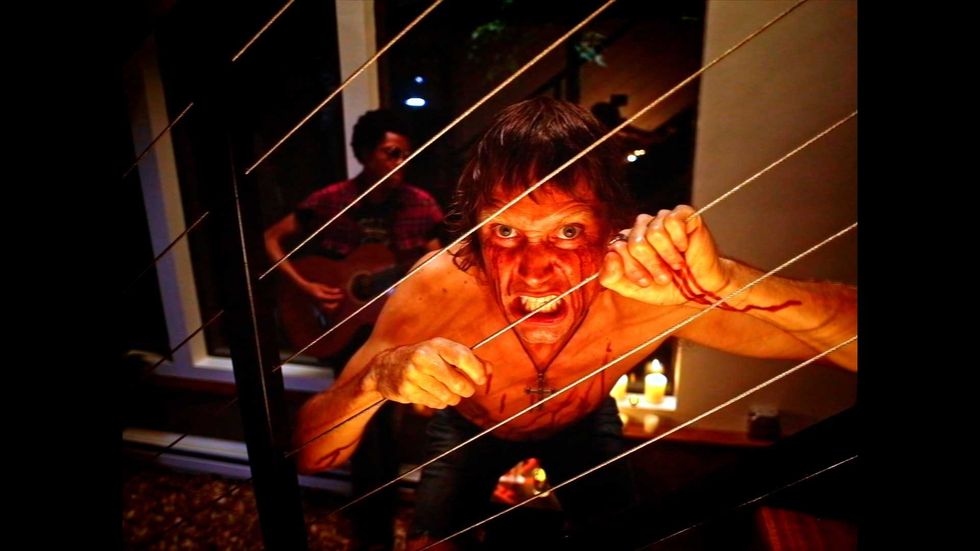
TK: The initial idea for Who’s Watching was actually more of a technical idea. I wrote the first draft WAY back in 2010 when articles were being written about ‘found footage fatigue’. It had me thinking about the genre, and that’s when I first came up with these ‘meta’ ideas of blending found footage with narrative storytelling and omniscient storytelling, and that’s when these ideas first surfaced. From there, I needed a story to build around, and I realized I wanted something based around stalking and/or surveillance since I wanted to tell a story both WITH and ABOUT cameras. I’m not in love with stalking as a genre, but it’s such a core fundamental of existence, as scary as that sounds. It’s raw storytelling of WANTING. Yikes. That is certainly horrific. Thus, the idea became a horror script.
NFS: Was there a particular scene or sequence that was especially challenging to pull off from a directing standpoint?
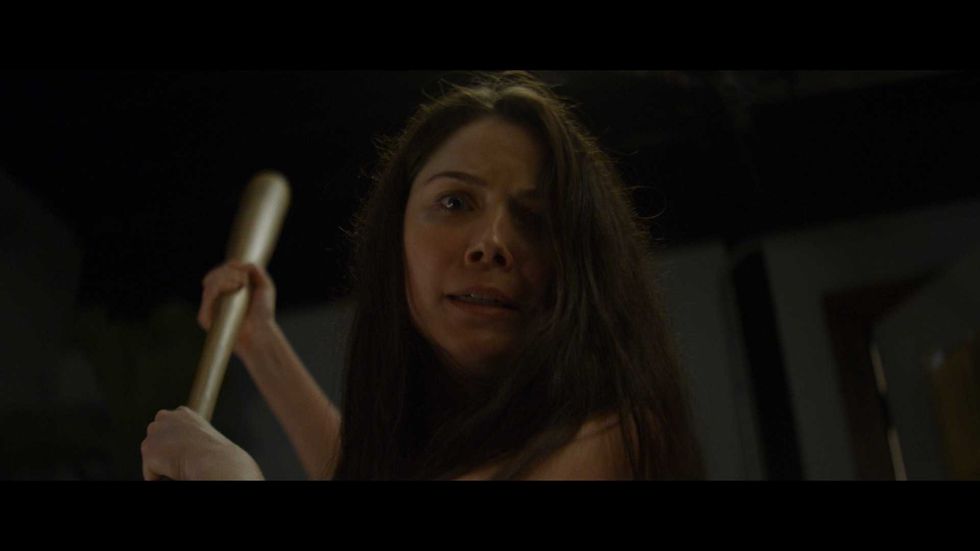
TK: Yes, lots of them!! This is a difficult film to chat about without spoilers, so I’ll just say this story was a bit too high concept for our low budget. We could’ve used B units, to be sure!! I’m speaking obscurely now, but there are many, many scenes that needed to be shot multiple times from multiple perspectives… and we shot each of them individually, recreating each scene over again.
 'Who's Watching' Credit: Dark Sky Films
NFS: What camera package did you use on Who’s Watching, and what made it the right choice for the film?
TK: Our DP, Brian Sowell, used the Sony FX6 for the bulk of the film. We play with different perspectives in the film, which demanded different ‘looks’, so he also used an anamorphic lens for sections of the film. A Sony Handycam and a Sigma FP were also used. I can’t speak for Brian, but these different cameras were essential for creating different feels for the different perspectives. Also, nothing was too bulky, so we could get into tighter spaces - the crew even developed a ‘camera helmet’ that Zachary Ray Sherman wore for certain surveillance scenes!
NFS: Did you have a particular visual style or camera language in mind when deciding how to shoot the film, and were there any films or filmmakers that inspired the look?
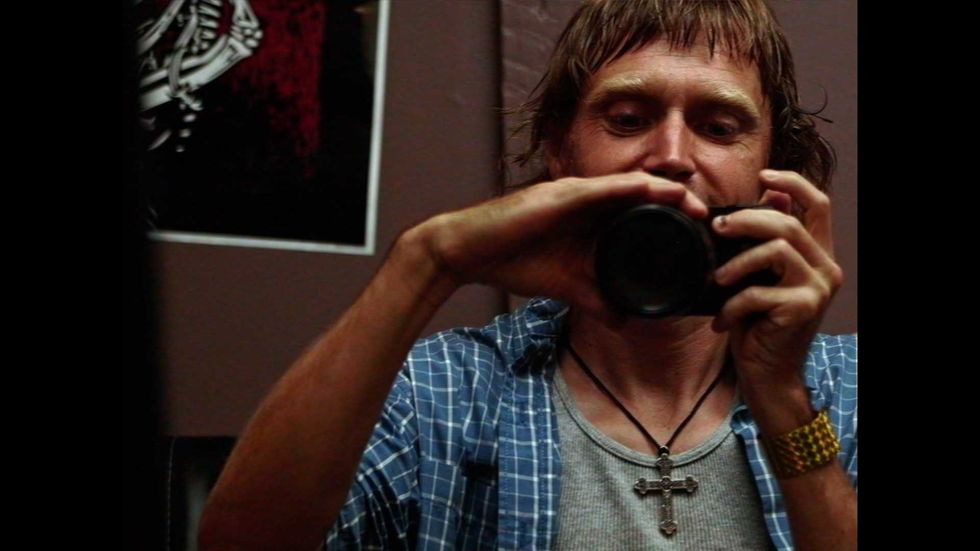
TK: We wanted the different perspectives to FEEL like they were being created by different people, despite it almost always being Brian Sowell shooting. In this sense, Brian became an actor of sorts, as his camera became the first-person vessel for certain actors in certain scenes. We discussed at length how the different characters would have their own cinematic approaches and would try to implement those ideas into their scenes. We tried to maintain a reverence for these different perspectives, asking ourselves how this character would shoot this scene. How would that character shoot another scene? It was a fun exercise. Sadly, I can’t recall what some of our touchstones were for the look and feel of the shoot, but I do take influence from Michael Haneke for this film; I like his approach overall, and I’m sure the surveillance shots were influenced by his work.
NFS: Did you have a specific lighting philosophy going into the production, or did the lighting evolve based on each location and scene?
TK: Similar to the different approaches for shooting/cameras, we discussed how things would be lit more and less for the differing perspectives. We worked with Jake Basnett, a total professional and a great fella to work with. We didn’t get into the weeds as much with lighting choices, but as some of the film is more of a documentary style, that would always affect how Jake would light the scene, vs ‘omniscient’ scenes that were more of a classic narrative feature approach.
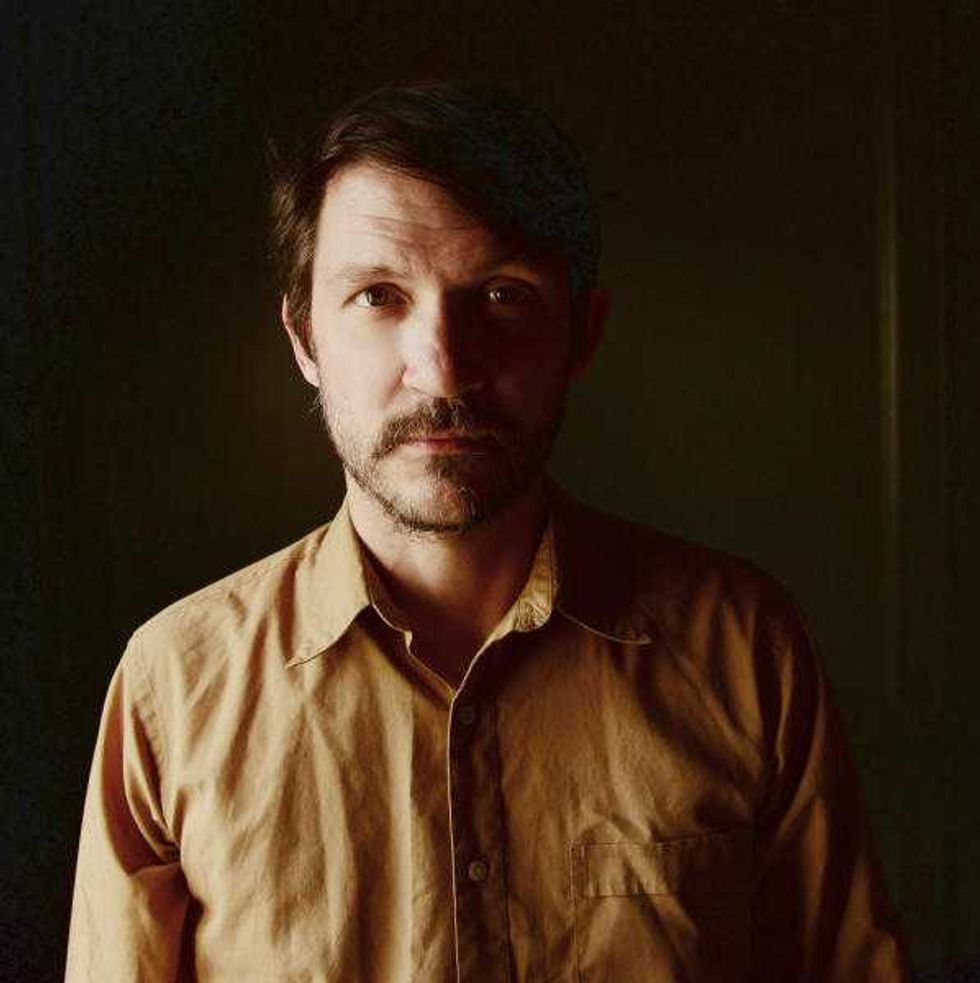 Tim Kasher Credit: John Sturdy
NFS: What advice would you give to an emerging filmmaker who has written their first feature and is trying to figure out how to actually get it made?
TK: Um, this is a less popular opinion in some circles, but I like to write things that can be pivoted to a micro-budget, assuming I can’t find funding. If you write a dinosaur movie, you’re gonna need dough. So… I don’t write dinosaur movies. I like to come up with ‘high concept / low budget ideas’, stories that could really pop on screen but don’t require a lot of funding. I always want to feel like there is some way to get to that first day of production, even if you have to lean on your own resources.
NFS: What do you think is the biggest misconception people have about what it takes to direct an independent feature?
TK: Feature filmmaking is certainly a beast, one hell of a mountain to climb, but it doesn’t have to be as daunting as all that. I shot my first feature out of my apartment for 35K, and looking back, I bet I could’ve managed it for even half that cost. But that’s getting VERY cheap… but we see it every year, don’t we? Micro-budget films that make an impact. That could be you!!!