Why Childhood Scenes Are Mostly Warm-Toned in Movies
Analyzing the warm tones as emotional anchors in a narrative.
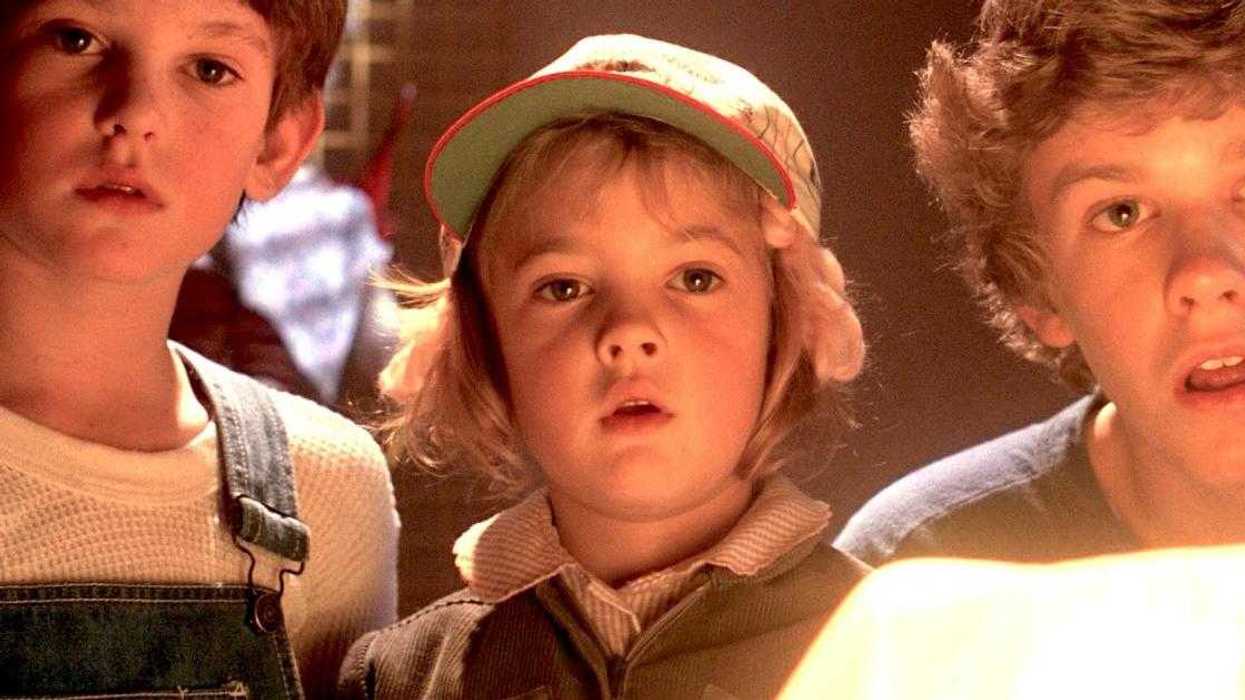
'E.T.' (1982)
Moments from a character’s childhood not only reveal the person’s background but also help the audience form an emotional connection with them.
Naturally, using a flashback to a character’s childhood as an expository tool might be a cliché, but more often than not, they prove to be extremely effective if presented with intention.
For a long time, black-and-white sequences were synonymous with flashbacks. However, warm colors slowly took over, especially in scenes involving childhood.
In this article, let’s analyze why childhood scenes are usually warm-colored in movies.
How Childhood Memories Impact a Narrative
Childhood is an important part of character development. Your story may not include that phase of your character’s life in the timeline, but it certainly affects their choices and perspective on life in the present.
Here’s what these sequences or montages can do for your narrative:
- Establish the character’s background
- Justify their purpose in your narrative
- Reveal an important detail or motivation that drives the narrative
- Incite an emotional connection between the audience and the character
Why Warm Tones Are the Go-To Choice for Childhood Scenes or Flashbacks
Color can affect our emotions — we know this. Warm tones are often associated with positive emotions. But colors can be dichotomous in nature, too. You know how red, on one hand, represents aggression or violence, but on the other, it also represents passion and love.
Crimson reds or deep blues are often used to represent emotional or psychological extremes. That being said, yellow feels more balanced and softer, and therefore induces less psychological polarity.
Yellow is not too overpowering, and yet it doesn’t get lost in a crowd of colors. At the same time, in many cultures, yellow represents youth and joy. Anything yellow inherently tends to make us happy. From sunflowers to a bright sunny day, yellow has a very welcoming energy.
Psychologically, certain warm yellows incite a kind of emotional warmth that’s often associated with childhood.
Childhood is supposed to be carefree, warm, and joyful. That phase of life is supposed to be the best time of our lives.
For a character who’s had a safe childhood, anything related to that time brings joy, a sense of safety, and nostalgia. Warm tones have a similar psychological relationship with us. They aren’t overpowering but have a distinct personality, making them stand out in a way that doesn’t overwhelm you.
With that in mind, it is only natural that warm tones, in yellows, soft oranges, and reds, are the most appropriate colors to paint a character’s childhood on screen.
Now, coming to a character who’s had a rough childhood, warm tones in childhood scenes hit slightly different. It is also because, for these characters, the warmth is restrained with high-contrast lighting, with shadows framing the visual compositions.
The light falls harshly on the characters against a warm color palette, which induces a sense of unease as you watch those traumatic childhood sequences. In many cases, blacks and whites are also added to these sequences, with some motion blur, depending on how intense the filmmaker envisions it.
Examples of the Use of Warm Tones in Childhood Scenes
1. E.T.—Elliot’s House
Steven Spielberg’s E.T. centers on the friendship between a young boy and an extraterrestrial creature who is left behind on Earth. Elliot’s bedroom and the whole house are lit in warm yellows and ambers, generated by practical sources such as lamps and bulbs, with soft diffusion.
The visual contrast becomes striking when scientists invade the space, and the warm, homely atmosphere is replaced by the clinical lighting of medical equipment—fluorescent, cold, and sterile.
2. Toy Story 2—Jessie’s Flashback with Her Original Owner
For toys, I’m guessing the time with their first owner can be considered their childhood. In Toy Story 2, when Jessie recounts her time with Emily, her original owner, the sequence is bathed in warm yellow and golden hues. Although the memory is painful now, the yellows underscore the joy that is now left behind.
3. Forrest Gump—Meeting Jenny
Forrest’s childhood sequences are color-graded in bright yellow hues that feel fresh on our eyes. In the scene where he meets Jenny for the first time, the bus is shady, while the outside is bright and sunny.
The moment he meets Jenny and she asks him to sit down next to her on the bus, the dark interiors disappear momentarily. Everything is bright and breezy.
In the next sequences, we see them together, playing and talking under the golden sun. The sequence ends with them sitting in the tree, holding hands, during golden hour.
Yellows and warm tones exude intimacy, safety, joy, and connection, making them the perfect choice for childhood scenes.
Which are your favorite scenes that follow this color theory?