This may sound like a bit of a mean-spirited, gotcha headline, but it’s meant to be the exact opposite of that. What often separates a great writer from the rest of the herd can actually be simplified quite often.
Let’s take a look at this interview with legendary writer and poet Charles Bukowski on why he believes a lot of writers are boring. And let’s also talk about what you can do to avoid some of these traits yourself.
Repetition of Delivery
When you’re young as an artist, you’ll become pretty hyperaware of what moves you and what haunts you very quickly. For me, I know when I’m both watching and writing, I’m very moved by concepts involving grief, memory, and human evolution. Odds are, for the rest of my life, I’m going to be dealing with some element of these themes in nearly all of my work.
The issue Bukowski raises with this concept in the interview is that alongside life itself, as you age, experiences, while objectively different, start to repeat themselves in progression and outcome. You start to realize you’ve seen everything before. He goes on to say that’s why he doesn’t have that much of a fear of death, but at the risk of getting too existential, we’re going to pivot from that conversation real quick.
The point I want to make in conjunction with Bukowski’s observation is that it is easy for writers to become complacent and comfortable in how they deliver the concepts that move them, instead of allowing those parts to evolve too.
I think a perfect side-by-side artistic comparison is Martin Scorsese and Paul Schrader, a duo whose collaborations over the years have had an indelible impact on cinema history. But their trajectory in recent years has been far from similar.
People like to joke about the thematics of Scorsese’s films almost always being about the same kind of thing: a somewhat tortured, yet fundamentally toxic man gaining some level of power, not knowing what to do with it, and then succumbing to it by the end, and occasionally bringing some innocent people down with him. But when you look at the countless movies he’s made with that subject matter, they almost all have aged so gracefully. Because since they were made at different times in Scorsese’s life, his perception of these themes has evolved parallel to his filmmaking style, and it shows. Goodfellas and The Irishman are the same movie in a lot of ways, just made thirty years apart. But I feel completely different emotions with each of them.
Schrader, on the other hand, has also been criticized in recent years for essentially just remaking the same movie of a tortured man sitting at home writing in a journal, reflecting on his past, and building towards some Travis Bickle-esque tragedy. And most people, even fans of Schrader’s early work, would tend to agree. Because his perceptions of the things that drive him as an artist haven’t evolved in how they’re delivered. It’s all more of the same.
Writing With Efficiency and Weight
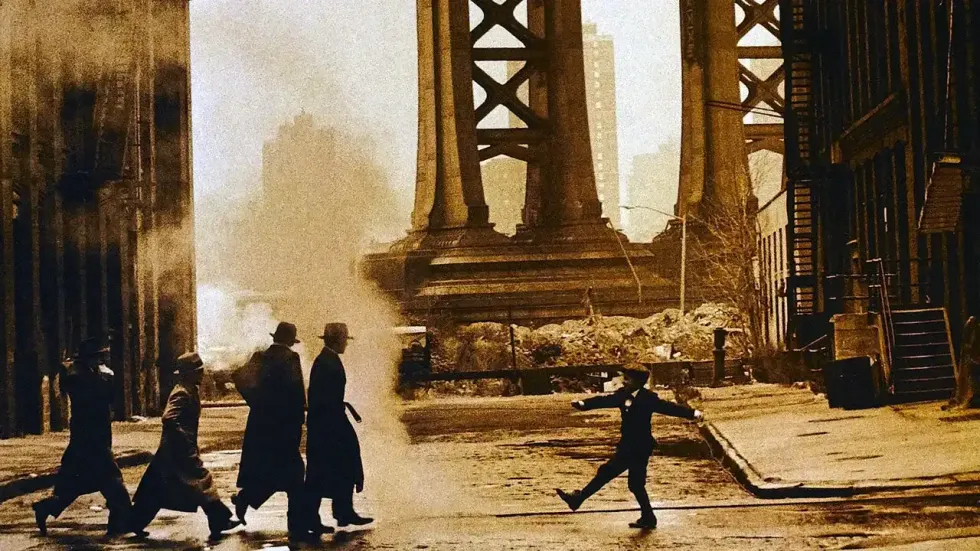
'Once Upon a Time in America'
Credit: Warner Bros. Pictures
The last thing I want to advocate for without a good reason is making art shorter and more efficiently composed, because our brains are already rotted enough, but I think Bukowski’s point, raised much before the rise of Instagram reels, is a fascinating one. I included a frame from Sergio Leone’s Once Upon a Time in America for this point, because I think it illustrates both sides of his point.
Every single moment of an artistic work should be trying to maximize its emotional weight. Whether it’s a twenty-five-page short story or a four-and-a-half-hour gangster epic, you should be able to emotionally and thematically defend the existence of every punctuation mark of your writing as if you’re Captain America facing off against Thanos and his army.
Pulling From Your Own Truth
There’s an inherent allure behind wanting to write the next great American novel, or direct the next great American epic, but the major thing that tends to get lost on those who attempt both is the inherent need to pull from your own lived experience.
There’s nothing wrong with writing something high-concept. But the Wachowskis didn’t just write The Matrix because they wanted to have an action movie highlight reel. That film has stood the test of time the way that it has for its groundbreaking action, yes, but more importantly, because of how much the lived experience of the Wachowskis present in that film has resonated with audiences all over the world for nearly thirty years.
So if you want to go out there and write the next Lawrence of Arabia or The Matrix, that is absolutely fantastic. But you better remember what actually connects with people, even if they don’t realize it: the inherent emotions and experiences we all deal with. Not just a massive scale and timeless action sequences.