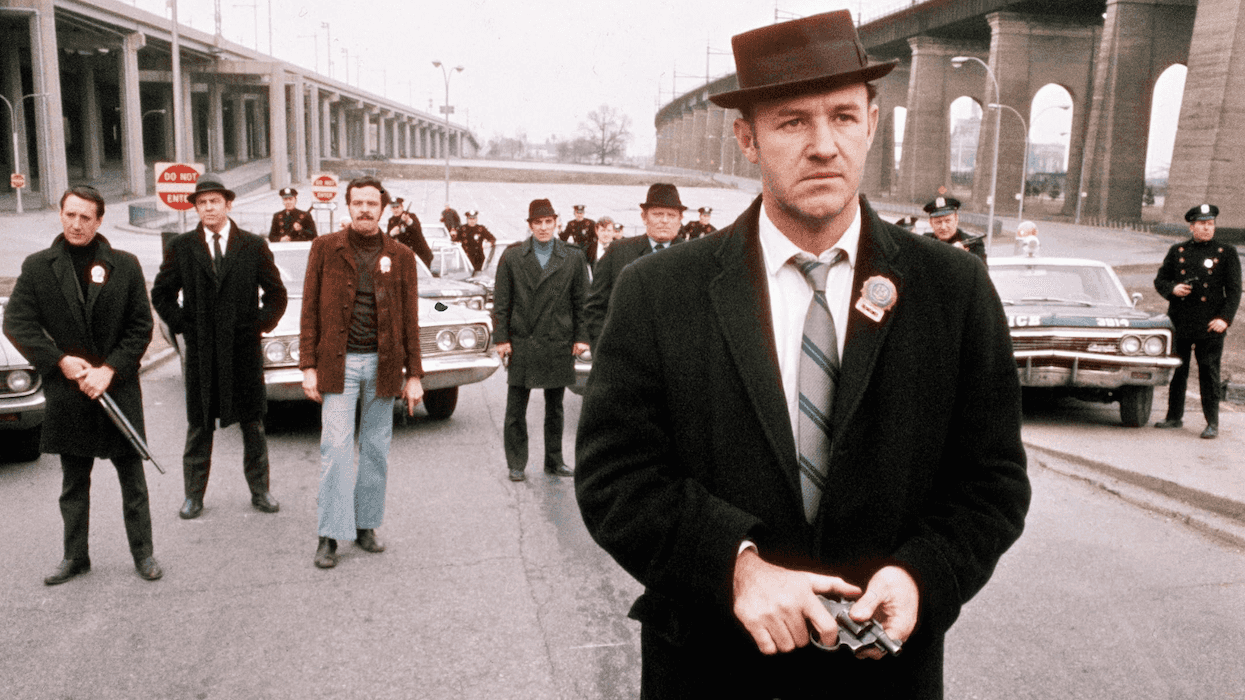
William Friedkin made The French Connection, which won five Oscars, including Best Director and Best Picture, and became the first R-rated film to take the top prize. Two years later, he made The Exorcist. You'd assume a director with that record would be totally chill on a set.
Not true.
He once said the night before every shoot brought him close to paralysis.
Friedkin barely graduated high school, never went to college, and had exactly one filmmaking lesson when a rental house employee showed him how to load a camera and sync sound. He told all this to students at the New York Film Academy's Los Angeles campus a few years ago, after a French Connection screening. Friedkin died in 2023, but we're still learning from him.
It turns out he was always afraid, but he kept working anyway. Let's learn about his fears (like the "one-ton pencil") and what we can take away.
Check out the full talk below.
- YouTube www.youtube.com
Even an Expert Feels Dread
If you've ever worked on a project, nerves are pretty normal even if you're not a newbie. So much has to go right on a film set, including everyone showing up on time. It's a miracle anything ever gets done. When you're pushing boundaries in film, the pressure is even greater.
During the Q&A, a student asked whether Friedkin ever felt pressure or fear about doing something no one had done, and how he got past it. His answer was blunt.
"Every time I've set out to make a shot, I have had to overcome almost a paralysis of fear. The night before I have to shoot something, I go through absolute dread. My mind starts—this is after having done this for about 50 years now—my mind will start to wander on everything that can go wrong.
He might be eager and excited during preproduction, but as the date nears, anxiety takes over. He really spirals into every possible disaster that could happen.
"I become really sour and, um, almost impossible to talk to or to deal with. I've never gotten over that," he said.
Even if you have the expertise as a director, there are still forces outside your control that can contribute to your nerves.
"The older you get and the more you do it, it doesn't make it any easier. In fact, it gets harder because the zeitgeist is always changing."
The One-Ton Pencil
Part of that fear for Friedkin comes out of the necessity of everything falling into place, which we already mentioned, "because film is, as you all know, is the most collaborative of media."
He says a painter needs a canvas and a writer needs a keyboard, but a director needs everyone.
"If you want to make a film, you have to work with a great many other people to realize your vision, and you have to first communicate with them before you can communicate with an audience. You have to first communicate with what Orson Welles called the one-ton pencil. And he meant this massive crew, you know, more than a ton, but he called it a one-ton pencil."
Friedkin actually misquotes here. Orson Welles is often given the quote "a poet needs a pen, a painter a brush, and a director an army," which Friedkin paraphrased. The thought about the "one-ton pencil" is actually attributed to legendary broadcast journalist and CBS producer Fred W. Friendly (a 1962 New Yorker profile about Friendly carries the title).
The one-ton pencil is all the gear, all the mechanisms that are required to make a movie happen, so the thought applies.
"The main thing a director needs to have is the ability to communicate, first with your cast and crew, and ultimately with an audience," Friedkin said. "That's all you're doing is communicating your vision."
The fear comes down to communication, which makes it something you can work on. Friedkin made a similar point in another quote, saying that direction is communication on all levels.
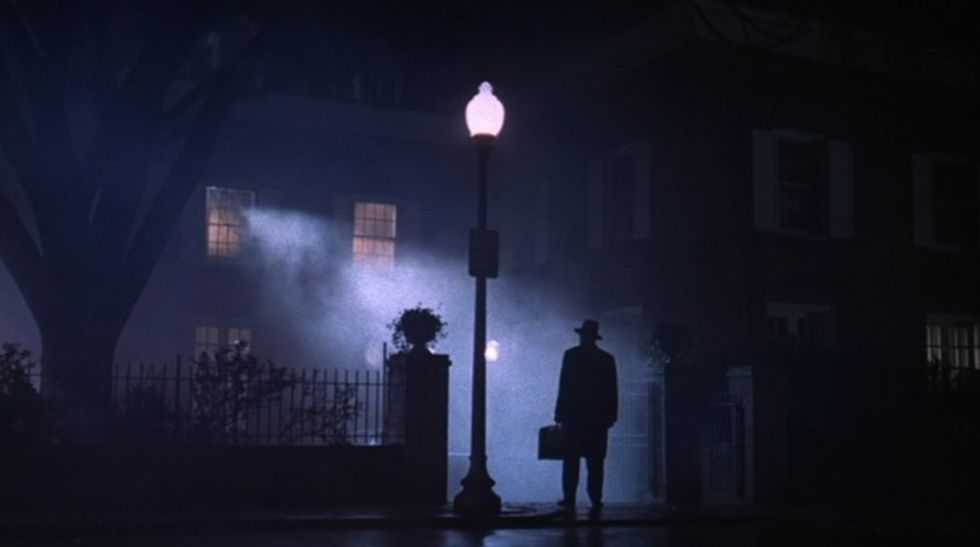 'The Exorcist' Credit: Warner Bros.
See the Sweater Before You Knit It
His defense against that fear was to have the film finished in his head before he got to set.
"It's like knitting. You have to see the sweater, or whatever it is you're making, in your mind's eye before you start knitting it. Same thing with a film. I never did a storyboard of this chase, or, or anything I've ever done ... You have to see it first. You have to think about it and envision it. Then you go out and do it one shot, or one stitch, at a time."
He noted that he did storyboard opera because he was not as familiar with the medium.
The Academy's recap of its 45th-anniversary screening confirms Friedkin didn't storyboard or write down the chase. That same chase was shot through live city streets, often without permits.
Friedkin's planning lived in his head, while Hitchcock, whom Friedkin told the room to study, was known for meticulous preparation. The bomb-under-the-chairs setup Friedkin walked students through is Hitchcock's suspense vs. surprise theory. Friedkin has been pushing Hitchcock on young filmmakers for years, including his "leave film school" advice.
Sometimes the Horse Knows the Way
One student asked whether the finished film ever turned out better than what he had imagined.
"No, it never is. You have to know that too, you know, because the whole process is compromise. It's all about compromise, and how willing are you going to be to compromise your vision. But it is compromise, because you're working with other people. They will have ideas. Many of them will have good ideas, and you have to be open and listen to them."
If you try to control every bit, you risk everything backfiring. Mistakes will feel world-ending. For instance, he rehearsed The Exorcist for six weeks, then threw the rehearsal out, seeing that actors were feeling rigid in their parts.
For all his talk of compromise, Friedkin said he never made a film for himself; he made them for audiences.
"Sometimes the horse knows the way, you know? Sometimes you have to let the horse go."