Brandon Violette's first screenwriting credit took about 10 years, and he had a lot of unproduced work behind it, including "10 feature-length specs, a handful of shorts," and notebooks full of unrealized ideas.
Violette was a temp at Hasbro Studios who became a script coordinator on Stretch Armstrong and got his first credit there. Since then, he has been head writer on Disney's RoboGobo and Pupstruction and co-creator and head writer of CoComelon Lane for Moonbug and Netflix. He also hosts The Story Series Podcast. In a Film Courage interview this year, he explains what changed between his amateur and professional years. He suggests nine major differences based on his experience.
Check out the full interview below.
- YouTube www.youtube.com
Pros Stay in Motion
Motion means that you're doing the work. Even when it sucks, even when it's just for yourself.
"I really think the definition of a professional is someone who stays in motion," Violette says. "Meaning an amateur might freeze. Professional stays in motion. And even if that motion is bad writing, and the reason I think that’s important is because you need to get to the end."
It's easy to start a script and not finish it. Most people hit a hump after the first act, then leave that Final Draft file in a lost corner of their computer memory somewhere. But pushing through and just getting to the final page is a practice in itself, even if the whole script never gets touched again. Write it, and write it badly if you have to. It's what even successful filmmakers do.
Pros Never Start from a Blank Page
This might seem counterintuitive, because you have to start somewhere. This trick came from Guy Toubes, his head writer on Tots and later his CoComelon Lane partner.
"What I learned from him was for a script, he would take the outline, copy it into Final Draft, and start moving it around. And I thought, Oh yeah, that’s the bad version. That’s like the skeleton. And then the writing is rewriting."
Maybe you don't outline, but you probably have something. If you start with a writing exercise or character beat sheet, try that. It’s a concrete way to get started. The work you’ve already done becomes your first draft.
Pros Know What Writer's Block Really Is
Some writers get really offended if you bring up writer's block. Everyone does get stuck sometimes, but some writers use it as an excuse to stop.
Violette names it so he knows how to get past it.
"It’s not that writer’s block is that you don’t have any ideas," he says. "It’s that you have too many and you don’t know which one to write. And so you’re spending too much time up here, and it’s like get it on the page and start moving it around."
Make decisions—again, even if they feel wrong. Just keep moving forward.
Pros Expect Every Script to Be Hard
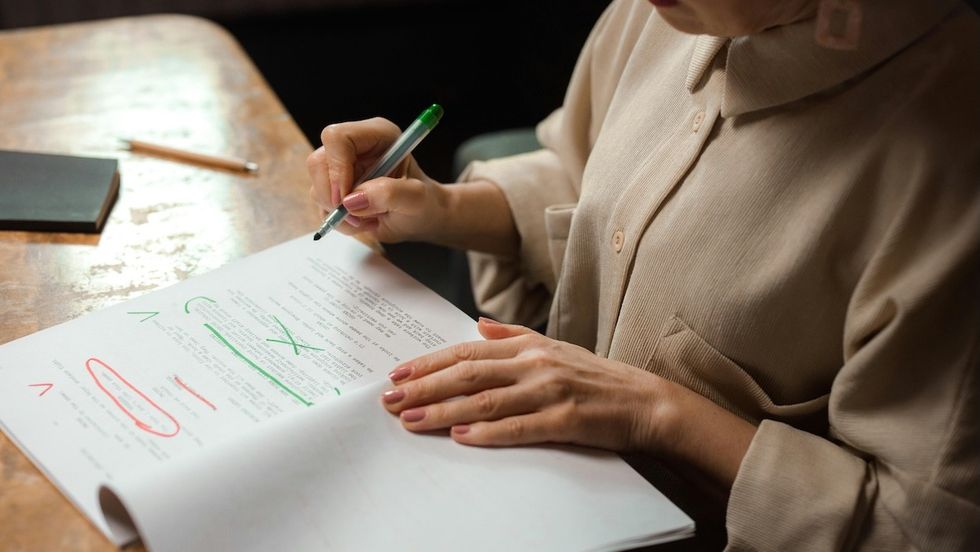
“I think the script is the hardest part," Violette says. "And every script is hard. Even doesn’t matter how long I’ve been doing this now, maybe nine years or so. Uh, every script for TV is hard. But it’s hard in, like, the engaging way, the way that makes it fun. And so if it’s ever easy or too easy, it’s like this probably not a great script and maybe not a great fit for me anymore."
What changes with experience is confidence in the process, so you spend less time talking yourself out of the work.
 Credit: Ron Lach
Pros Make the Head Writer’s Job Easier
Pros Don’t Count the Job Until It’s Signed
In this industry, a lot of deals happen via handshake. An actor will get attached, a director will show interest. But even if those announcements make it to Deadline, they're not set in stone until everyone signs a deal.
“Booking your next writing job is when you sign a contract, not when you’re promised anything,” Violette says.
As a TV writer who needs to get staffed, he starts letting people know he’ll be available about three months before a show wraps. He also uses slower weeks during a show to set up lunches, so the next job never turns into an emergency. He treats waiting as a skill. Keep several things in motion so that one closed door doesn’t stop you.
Pros Worry About Getting Paid, Not Pigeonholed
You might hear about a writer who writes a romance, then only gets offers to write romances. That might strike some fear into you, if you're interested in writing everything. Violette says this shouldn't be a concern. Don't you want to be a working writer?
"Worry about getting paid, you know, like seriously, just get pigeonholed and then figure out your way out of it."
He never planned on animation, and then he didn’t want to write preschool TV. Both turned into the jobs that built his career.
Pros Don’t Panic Over Notes
You will get notes, and sometimes they will sting. What you have to do is hear them, then figure out how to implement a fix. Early on, a long page of network notes ruined Violette's night. Then he watched the head writer and creator calmly reduce the notes to one real issue.
"I think you have to take your cues from the people that are more experienced than you and hopefully they’re good models," he says.
Don't argue over notes. That's an amateur move.
Pros Learn the Rules Before Breaking Them
Again, we harp on the basics because they're important.
“I would say especially with starting out, follow the rules when you’re starting out because there if you don’t know what to do and you’re flailing, just follow the rules," he says. "Do what you’re expected. Do what you’re supposed to do. And then there’s going to be some wisdom that comes, and you’re going to say, 'You know, I don’t have to do that part. Actually, that part doesn’t work for me.'"