Let's get this out of the way right at the top: unless you're handing your script over to a close friend, no one reading it is giving you the benefit of the doubt.
You have maybe three pages for them to decide if they're going to keep going. And if they keep going, they're probably going to decide every five pages whether to stop there.
Executives, agents, and managers have a lot of scripts to read every week. They are going in ready to move on to the next one until they think they strike gold.
So what can you do to hold their attention and to keep the pages turning?
In his recent guide, screenwriting professor Jacob Michael, from Big Red Stripe, breaks down some popular screenwriting hacks to help.
Let's dive in.
- YouTubewww.youtube.com
1. The Element of Surprise
One thing that you should think about before writing anything is that you need to have a bit of a new take on any idea. Why are you diving into this story, and what do you have to say that's different than everyone else?
Predictability is the death of engagement. If a reader knows exactly how a character will react to news, they’ll start skimming.
- The Hack: Give the audience something they didn’t see coming. It doesn't have to be a plot twist; it can be a tonal shift.
- Pro Example: In Good Will Hunting, Robin Williams’ character tells a story about his wife’s idiosyncrasies (specifically, farting in her sleep). It shifts a tense, guarded scene into something intimate and heartbreaking in an instant.
 'Good Will Hunting' CREDIT: Miramax
2. The Power Flip
Nothing creates tension like a shifting hierarchy of who is in control. A scene is most compelling when the person "holding all the cards" at the beginning loses them by the end.
So how do you enter a scene with confidence and see that slip away, or vice versa?
- The Hack: Start with one character in a position of dominance and watch that power migrate to someone else by paying off what you set up in the scene.
- Pro Example: The opening scene in Inglourious Basterds. The Nazi Colonel enters with absolute control, but the scene is a constant, terrifying dance of power shifting between him and the farmer, with him taking over and killing everyone.
 'Inglourious Basterds'Credit: TWC
3. The "Silent Scene"
Be confident in your abilities as a writer. Dialogue is often used as a crutch. Beginners use it to explain everything; pros use it as a last resort.
Do you have a long and intense scene that has no words? What can you show and not tell us?
- The Hack: Try writing a scene with zero dialogue. When you strip away words, you are forced to rely on visuals, behavior, and subtext.
- Pro Example: Wall-E. The first act is virtually silent, yet it communicates deep character and emotion through action alone.
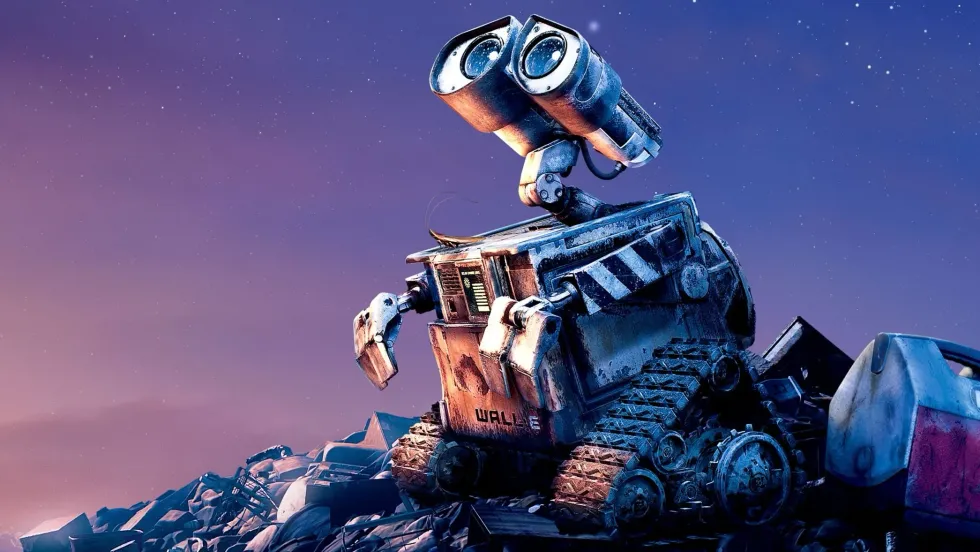 'WALL-E' Credit: Walt-Disney Studios Motion Pictures
4. The "Scene Thief"
Your story has a lot of characters in it who may only be in there for one scene. How can you maximize them and their voices in order to steal the spotlight?
While the protagonist is the heart of your story, they shouldn't own every single moment. If every scene focuses solely on the lead, the world feels small.
So make that world bigger and incorporate these b characters into the story.
- The Hack: Let a supporting character take the wheel. This breathes fresh life into the script and creates roles that actors are desperate to play.
- Pro Example: The Dark Knight. While Batman is the lead, the Joker and Harvey Dent frequently "steal" scenes, making the world feel expansive and dangerous. And then his arc gets paid off in the end.
 'The Dark Knight' (2008) Credit: Warner Bros. Pictures
5. Character Business
In real life, people rarely sit perfectly still and talk. They are cooking, fixing a bike, or folding laundry. This is called "character business."
So what are you having people do in every scene? What keeps them active and gives them stuff to play with or to find at every juncture?
- The Hack: Give your characters something to do with their hands. Show them performing a mundane task to tell the reader more about their internal state.
- Example: In Little Children, a dad plays with a train with his son. We see the Dad's train being overpowered by the little boy, and his annoyance that the little boy doesn't take him seriously.
 'Little Children' Credit: New Line Cinema
Summing It All Up
Let me know what you think in the comments.